Description
A detailing product on a household shelf
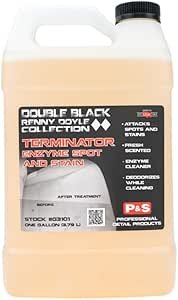
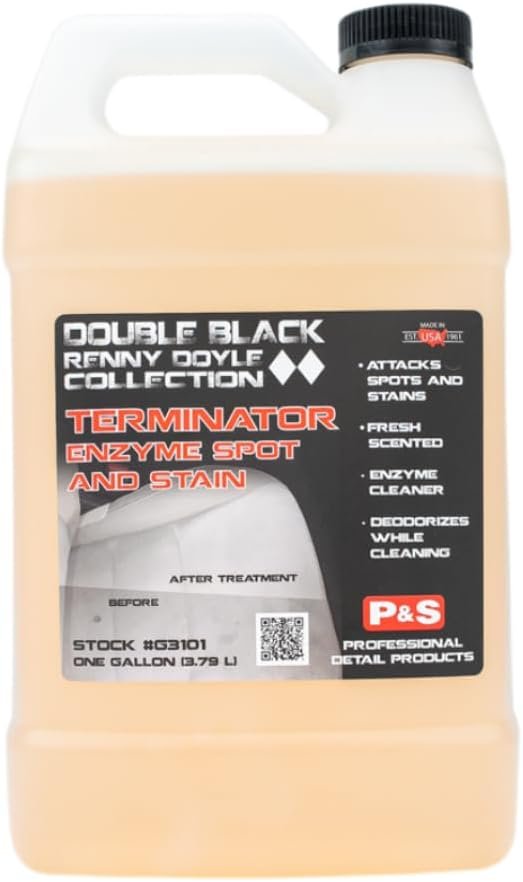
P and S Terminator is a one gallon enzyme based spot and stain remover for upholstery and carpet, model number G3101, made by P and S Detailing Products and part of what the company calls the Renny Doyle Double Black Collection. The listing dates to November 2017, gives a shipping weight of 8.91 pounds, and places the product 15,038th in Health and Household and 18th among household carpet spot cleaning sprays.
The origin matters. Every line of the description is written for a vehicle interior: fabric seats, headliners, carpets in a car, a more enjoyable driving experience. This is a professional automotive detailing chemical that has been listed into a household cleaning category. That does not make it unsuitable for a living room carpet, since car carpet and house carpet are both synthetic pile, but it does mean the instructions, the packaging and the pricing were all designed around a different buyer.
The gallon size is the clearest sign of that. A household spot cleaner is sold in a 13 to 32 ounce trigger bottle. A gallon is a workshop unit, bought to refill a sprayer. Anyone buying this for occasional household spills is buying a professional quantity, and unless it comes with a sprayer, which the listing does not say, they will need one.
Enzymes, and what an enzyme product needs to work
The listing describes advanced enzyme technology that breaks down contaminants at their core and works at a molecular level. That is marketing language. No enzyme is named. Protease, amylase and lipase do very different jobs, and knowing which are present is the difference between a product that works on a pet accident and one that works on a food spill. There is no ingredient list, no concentration, no pH figure and no safety data reference on the page.
What can be said usefully is how enzyme cleaners behave, because their requirements are different from every other product in this category and getting them wrong is why people conclude they do not work.
Time and moisture, not scrubbing
Enzymes are catalysts. They break down organic matter over time, and they need to stay wet to do it. A surfactant cleaner works in the thirty seconds it takes to wipe. An enzyme cleaner may need many minutes, and for a set in pet stain sometimes hours, kept damp under a towel. The listing says to spray, let it dwell, and watch it lift the stain, without ever giving a dwell time. That number is the single most useful thing a label can provide for an enzyme product and it is missing here. Read the jug.
Three things stop enzymes working. High heat denatures them, so do not use hot water and do not steam clean over the top of a fresh application. Chlorine bleach destroys them, so never combine the two or apply one after the other without a thorough rinse. Extremes of pH deactivate them, which means following an enzyme treatment with a strong alkaline degreaser or an acidic cleaner wastes the first application.
Surfaces, and the one that catches people out
The listing names carpets, fabric seats, upholstery and headliners. Test everything on a hidden area before committing, and check for dye transfer by blotting with a white cloth.
Headliners deserve a specific warning that the listing does not give. A car headliner is fabric glued to a foam backing glued to a board, and saturating it dissolves the adhesive and causes the fabric to sag away permanently. If you use this on a headliner, mist lightly onto a cloth and wipe, never spray directly onto the material and never soak it.
In a house, the same caution applies to anything with a glued or padded backing. Wool and silk are protein fibers and a protease enzyme is designed to break down protein, which makes an unlabeled enzyme cleaner a genuine risk on a wool rug. Test, and if in doubt use a product that names its fabric exclusions, as the Carbona carpet cleaner does. Leather is outside the scope entirely. Anything carrying an S care code is solvent clean only and should not get a water based product.
Using it correctly and safely
Blot the spill dry first with a white cloth, working inward from the edge so you do not spread it. Apply the product, let it dwell for whatever time the label states, and keep the area damp for the whole of that period. Blot out with a clean damp cloth, then rinse the area with plain water and blot dry. That water rinse matters even though the listing promises no sticky residue, because any residue left in carpet pile collects new soil and the spot reappears darker weeks later.
The listing does not say whether the gallon is ready to use or a concentrate, and it gives no dilution ratio. Do not guess. Check the jug before decanting anything into a sprayer.
On safety, ventilate the space, and ventilate a car interior generously since a closed cabin concentrates anything you spray in it. Keep it off skin and out of eyes, wear gloves for extended work, and keep the jug capped, upright and out of reach of children and pets. Never mix it with another cleaner in a bottle or a bucket, and keep animals off a treated area until it is dry. One more note on the odor claim: the listing says the product neutralizes bad smells and leaves a fresh scent, which means it adds fragrance as well as treating the source. Anyone sensitive to fragrance should know that going in.
Cost, and what else does this job
Cost per treated stain is where a gallon earns its place. If you clean carpets and upholstery regularly, a professional size container used a few ounces at a time is far cheaper than repeatedly buying trigger bottles. If you treat three stains a year, most of the gallon will still be in the garage when the fragrance has faded.
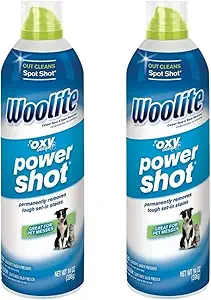
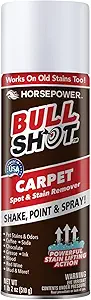
Compare it by mechanism. For organic color stains such as wine, tea and fruit, an oxygen based product like the Bissell Oxy Deep Power Shot attacks the color directly, which enzymes do not. For quick everyday spills where convenience beats chemistry, the Bull Shot foam spray is the household format. For a dried in pet accident on a pad, a lifting product such as the Bissell Stomp N Go pads takes a different approach again. Browse the aisle under carpet spot cleaning sprays, and if the whole floor needs doing, the carpet machine detergents are the correct tool.
Who should buy it and who should not
Buy it if you detail vehicles, run a cleaning business, or have enough carpet and upholstery to justify a gallon, and your problem stains are organic: food, pet accidents, body soil. Enzyme chemistry is the right answer for those and a professional size container is the economical way to buy it.
Do not buy it if you want a grab and spray bottle for the occasional spill, because a gallon is the wrong format and no sprayer is mentioned. Do not use it on wool or silk without testing, since an unnamed enzyme blend on a protein fiber is a real risk. And do not expect it to work like a surfactant cleaner: without dwell time kept damp, an enzyme product will look like it failed.