
Description
A gallon of deodorizer, and who buys that much
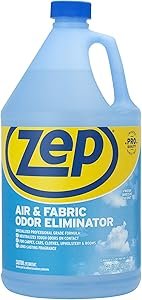
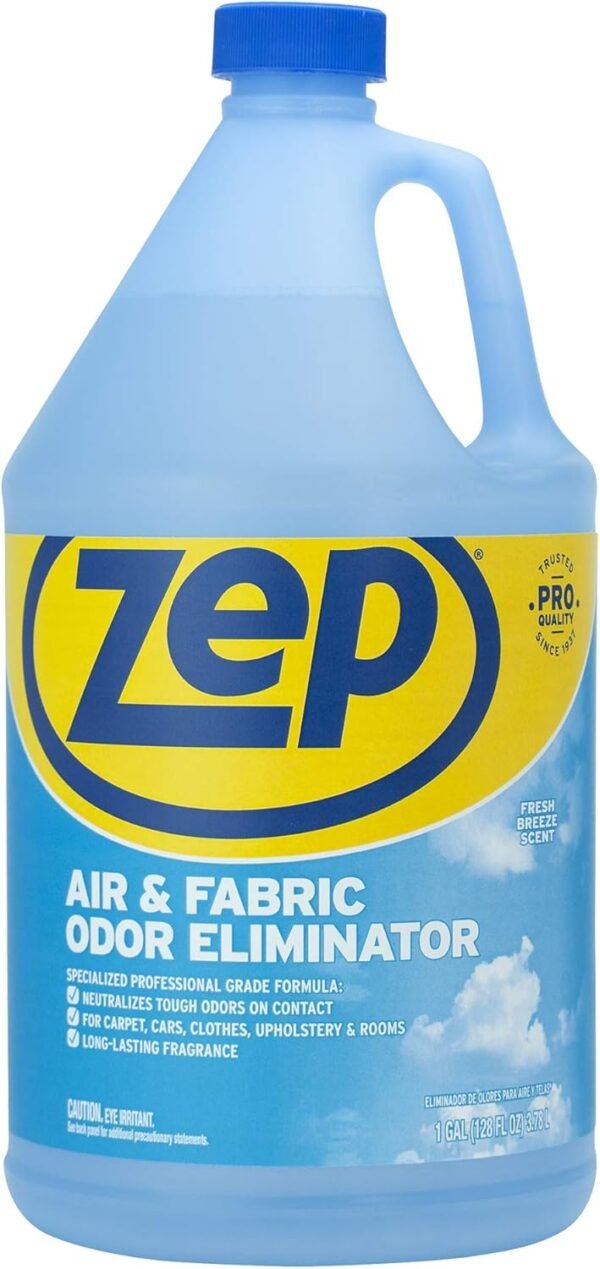
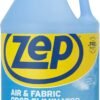
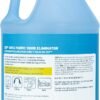
Zep Air and Fabric Odor Eliminator arrives as a single 128 ounce jug, model ZUAIR128, weighing eight pounds. That format tells you the intended customer before any bullet does. This is a commercial pack sold into homes: cleaning businesses, landlords turning over rentals, gyms, offices, car detailers and anyone who deodorizes as a routine rather than an emergency. A gallon is roughly four times a large trigger bottle, and the whole economic case rests on decanting it yourself.
The job is odor on soft surfaces and in the air. Zep names carpets, rugs, upholstery, clothing, bedding and cars, and offers the same bottle for freshening a room by spraying across it. That dual use is common in the category and it is also where expectations go wrong: a fabric deodorizer treats the smell held in the fibers it lands on, and an air spray treats what is airborne at that moment. Neither addresses a source. If the smell is coming from a damp carpet pad, a litter tray or a spill under the cushions, deodorizer buys you an hour and the source buys it back.
How Zep describes the formula
The listing publishes no ingredient list, no active and no concentration. What it offers instead is a mechanism claim, stated twice in nearly identical words across two bullets: an advanced technology formula that neutralizes odors rather than masking them, and that absorbs leaks and spills. Zep also promises a fresh, long lasting scent, which means the product is fragranced, so a portion of what you smell after treatment is added perfume rather than the absence of the original odor.
Neutralize versus mask, and what the listing does not settle
Odor neutralizing products generally work in one of three ways: a molecule that binds or encapsulates the odor compound, a surfactant that lifts the soil holding the smell, or an oxidizer that chemically alters the compound. Each behaves differently on a set in odor, and each has a different risk of staining. Zep does not say which of the three this is, so a buyer cannot predict how it will perform against, for example, cat urine, which is notoriously resistant to anything that is not enzymatic. If the odor source is biological and set in, an enzyme based spot treatment such as the Terminator enzyme spot and stain remover targets it by a different route.
The phrase about absorbing leaks and spills also sits awkwardly. A sprayed liquid does not absorb anything; absorption is what a powder does. Powdered carpet deodorizers such as the Hoover carpet deodorizer work that way and get vacuumed up afterward. It reads like language carried over from a different product.
Fabrics it names, and the ones to test
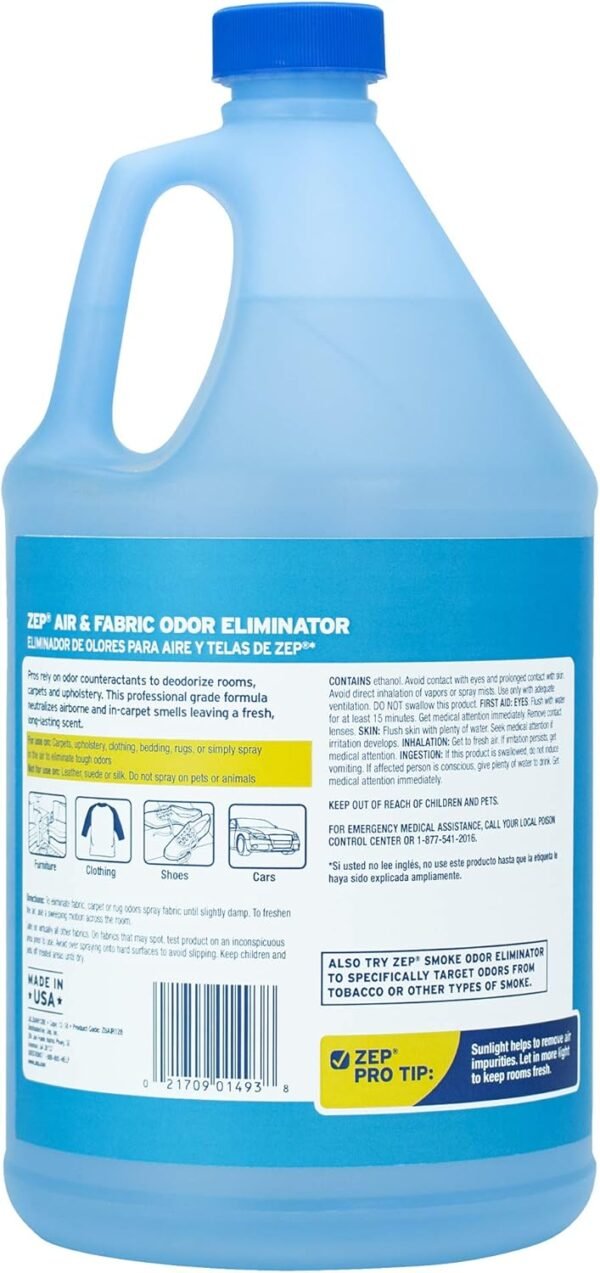
Zep’s own directions are refreshingly explicit for this category, and they include the most important caution: the product is described as safe on virtually all fabrics, and on fabrics that may spot, test the product on an inconspicuous area before use. Take that seriously on anything with a nap, anything dyed a deep saturated color, silk, viscose, rayon, unfinished leather and vintage upholstery, all of which water mark easily. Wet a hidden patch, let it dry fully, and look at it in daylight before you treat a whole sofa.
The second direction is a safety one that is easy to skim past: avoid over spraying onto hard surfaces to avoid slipping. A deodorizer misted across a room settles on floors, and a wet tile or sealed wood floor is genuinely slick. Spray fabric directly and keep the sweeping air freshening motion above furniture height, not toward the floor. Zep also directs that children and pets be kept off treated areas until dry, which is the clearest use instruction on the page and the one that decides when a room is back in service.
Dosing, dilution and safe storage of a gallon
The application instruction is to spray fabric until slightly damp, which is the correct amount and less than most people use. Slightly damp means the fibers are wetted, not soaked; over wetting drives liquid into the backing and the pad, where it dries slowly and can produce exactly the musty smell you were trying to remove. On carpet, work in sections and let air move through the room.
The jug itself needs handling. Nothing in the listing says a trigger sprayer is included, and a gallon container cannot be sprayed, so plan on decanting into your own bottle. Label that bottle clearly. An unlabeled spray bottle of clear liquid in a cleaning cupboard is one of the most common ways households end up mixing chemicals by accident. Never fill a bottle that previously held a bleach, an ammonia glass cleaner or an acidic bathroom product without washing it thoroughly, and never combine this with any other cleaner in the same bottle or on the same wet surface. Store the jug capped, upright, out of sunlight, away from heat, and out of reach of children and pets.
One thing this product is not: it makes no antimicrobial claim at all. There is no germ kill statement, no pathogen named and no contact time, so it deodorizes rather than sanitizes. If a surface needs both, the disinfecting step is a separate product and a separate pass.
What a gallon actually saves you
Cost per ounce is the entire argument for this format, and it is a strong one if you use deodorizer regularly. The catch is shelf life and storage: a gallon of fragranced liquid that gets used twice a year is worse value than a small bottle, because you are storing eight pounds of product for a job that took four ounces. Buy the gallon if you deodorize weekly.
Against the mainstream alternative, a ready to use bottle such as Febreze fabric refresher costs far more per ounce and needs no decanting, while a sport specific option like the Hex Performance fabric deodorizer targets synthetic athletic fabric, where odor behaves differently than it does in cotton. If the underlying issue is a stain rather than a smell, a spot cleaner such as the Blue Magic carpet spot lifter is the right first pass, because treating a stain with fragrance only postpones the problem. The rest of the shelf is in fabric deodorizer, and carpet specific products sit under carpet spot cleaning sprays.
Two oddities in the data: two of the five bullets are nearly identical, both describing an advanced technology formula that neutralizes odors in the air or on carpet, which suggests the bullet list was padded rather than written. And the direction reading “Safe on virtually all other fabrics” begins with the word other without ever naming a first group, so it is a fragment of a longer label statement that did not survive the import. The item currently ranks 49th in the retailer’s fabric deodorizer chart, and it has been listed since 2013.
Who should buy the gallon
Buy it if you deodorize often enough to justify decanting, you already own labeled spray bottles, and you want a per ounce cost a retail trigger bottle cannot match. Skip it if you need occasional use, if the smell has a source you have not found yet, if your fabrics are delicate or deeply dyed, or if you need a product that disinfects as well, which this one does not claim to do.