Description
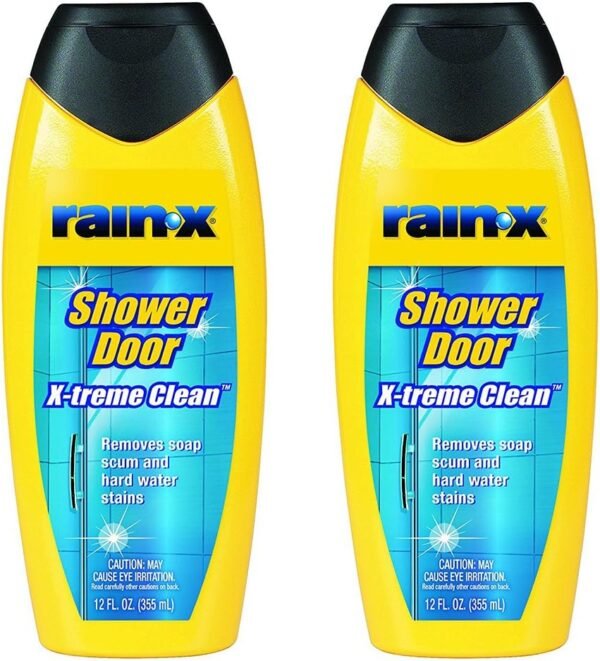
Rain-X Shower Door Cleaner arrives as two twelve fluid ounce bottles and is formulated for one job only. The listing states it plainly in a feature bullet: for glass surfaces only. That single line is the most important thing on the page, and it is the reason this product needs reading carefully before it is sprayed anywhere in a bathroom that contains metal, stone or painted trim.
The problem this bottle is built around
Shower glass collects two different deposits at once. Soap scum is an organic film left where soap reacts with minerals in the water, and hard water scale is a mineral deposit of calcium and lime that bonds to the glass surface. A general purpose spray usually shifts the first and leaves the second, which is why glass that looks clean after wiping still reads as cloudy when it dries. Rain-X names both, along with dirt and rust stains, and positions the product as the cleaner that goes on before its water repellent treatment.
That two step framing tells you the household this fits. It is aimed at someone maintaining a glass shower enclosure, most likely someone who intends to apply a repellent afterward so the glass stays clear for longer. If your shower is acrylic, tiled, or a curtain rather than a door, this is not your product, and the listing does not pretend otherwise.
What the formula is, and what the listing does not disclose
There is no ingredient statement on this page. No acid is named, no surfactant, no concentration and no pH. The specification block contains package dimensions, a combined weight of a little under two pounds, a first availability date of April 2017, the manufacturer name, and ranking data placing it 584th among all purpose household cleaners. Everything else is marketing text.
What the description does reveal indirectly is worth noting. A cleaner that claims to remove calcium, lime and rust stains is doing work that normally requires an acidic chemistry, because those deposits are dissolved rather than wiped away. Rain-X does not confirm that here, and this review will not name an acid the manufacturer has not named. The practical consequence stands either way: assume the bottle is more aggressive than a general spray, and read the label on the bottle before it touches anything other than glass.
A corrupted line in the manufacturer’s own copy
The first feature bullet on the listing reads that the product provides an extreme, dH22:L23eep clean on shower doors. That fragment in the middle of the word deep is a spreadsheet cell reference that has leaked into the published product copy and was never caught. It changes nothing about the product, but it is a fair indicator of how much editorial attention the listing received, and it is a reminder that the specification block on a page like this should be treated as a starting point rather than a source of truth.
Surfaces, and the ones to keep it away from
Glass only is not a suggestion in this case, it is the entire compatibility statement the manufacturer provides. Inside a shower enclosure that means the glass panels and nothing else. Keep the spray off natural stone such as marble, travertine and limestone, which are calcium based and are damaged by acidic cleaners in a way that cannot be reversed. Keep it off grout, off brushed or plated metal frames and hinges, off anodized surfaces, and off painted walls and trim.
Even on glass there is a caveat the listing does not mention. Some shower panels carry a factory applied protective coating, and any cleaner strong enough to strip mineral scale can also degrade that coating. If your enclosure was sold with a treated glass finish, check the enclosure manufacturer’s guidance before using this, because a stripped coating is a permanent change to how the glass behaves. Test any first application on a low corner and look at it dry, in daylight.
Correct use, ventilation and storage
The instruction Rain-X gives is short: apply, then rinse and wipe dry with a clean paper towel or a cotton cloth. No dwell time is published, no dilution is required since the product is ready to use, and no maximum contact time is stated. That last omission matters most, because a cleaner working on mineral scale is generally more effective with a little dwell and more likely to mark adjacent materials the longer it sits. Without a published figure, the sensible approach is to work in small sections and rinse promptly rather than letting the product dry on the glass.
Treat it as a bathroom chemical, not as a glass spray. Ventilate the room by opening a window or running the extractor, wear gloves if your skin is sensitive, and keep it out of your eyes, since a cleaner aimed at a vertical surface at head height ends up in the air. Rinsing is not optional here either. The listing includes a rinse step, and residue left on glass attracts fresh soil and can mark the frame below as it runs down.
Two rules apply to storage and mixing. Store the bottles upright, closed, at room temperature and out of reach of children, and never combine this product with a bleach based bathroom cleaner or with any other cleaner in the same bucket, on the same cloth, or on the same wet surface. Mixing an unidentified acidic cleaner with chlorine bleach releases toxic gas. Rinse the glass and the surrounding area fully before any second product is used.
Running cost, and the alternatives worth weighing
Twenty four fluid ounces across two bottles is a maintenance quantity rather than a deep cleaning quantity, and the cost structure is that of a ready to use spray: you pay to ship water, and there is no concentrate option to dilute. Against that, a glass specific product used on a small area lasts a long time, and the two bottle pack means one can live in the bathroom and one in the cupboard. The genuine cost saver is the repellent step, since glass that sheds water accumulates far less scale and needs the cleaner less often.
If soap scum rather than mineral scale is your main problem, a dedicated product is a better match, and our review of the Rejuvenate soap scum remover covers that route. For a cleaner intended to cover the tub and tile as well as the glass, the Zep foaming shower, tub and tile cleaner is the broader tool, and the soap scum removers category collects the specialists.
For glass that has gone permanently cloudy rather than merely dirty, a polish rather than a cleaner is the right class of product. Our write up of the EnduroShield shower door glass polish covers that step, and the glass cleaners category covers everyday glass alongside the heavier products. A general spray such as the Stardrops Pink Stuff multi purpose spray is worth keeping for the surfaces this bottle must not touch.
Who should buy it, who should not
Buy it if you have a glass shower enclosure with visible hard water cloudiness and you are willing to keep the product strictly on the glass. Skip it if your bathroom has natural stone, if the enclosure glass carries a factory coating you cannot verify, or if you wanted one bottle to clean the whole shower. This is a single surface product sold in an all purpose category, and treating it as a general cleaner is how bathrooms get damaged.