

Description
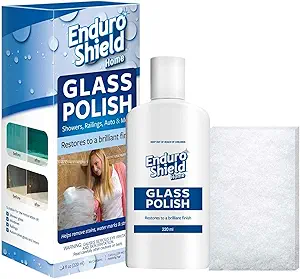
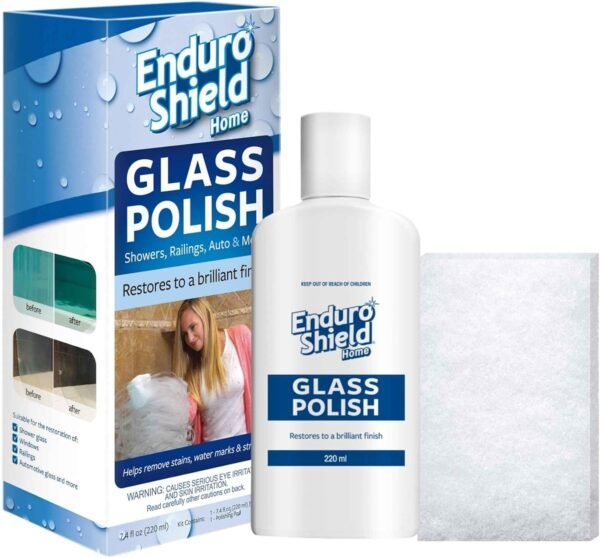
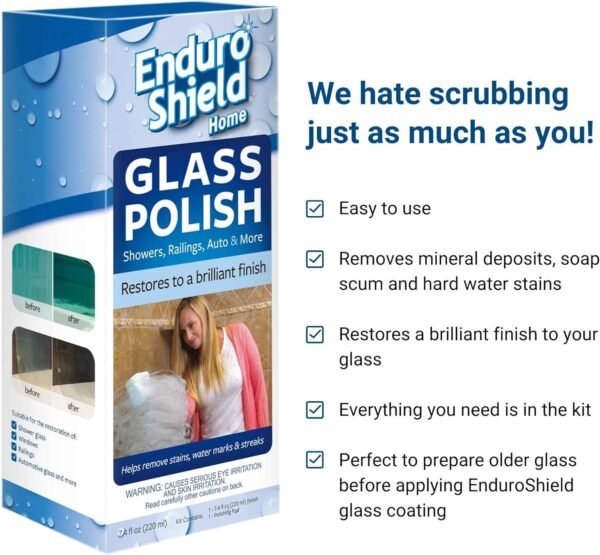
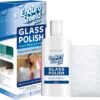
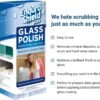
The EnduroShield shower door glass polish is a 7.4 fluid ounce bottle sold with an applicator pad, aimed at glass that has gone cloudy rather than glass that is merely dirty. That distinction is the whole point of the product. A cleaner lifts a film off the surface. A polish works on the surface itself, and the two are not interchangeable, which is why a bathroom that has been cleaned weekly for years can still have a shower door nobody would call clear.
The kind of damage a polish addresses
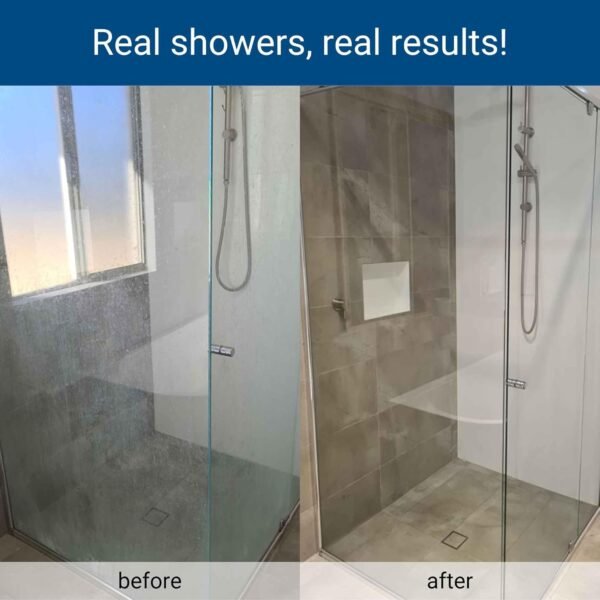
Hard water leaves calcium and other mineral deposits on glass. In the early stage those sit on top and wipe off. Left long enough, and helped along by heat and by the mild alkalinity of soap, the deposits bond to the glass surface and begin to etch it, which is when the panel takes on a permanent haze that survives every spray you throw at it. EnduroShield positions this product for exactly that stage, naming hard water stains, soap scum, limescale and water spots, and describing the result as a restored streak free clarity.
The household this suits has a glass enclosure that has passed the point where cleaning helps, and an owner willing to work a panel by hand rather than spray and wipe. It is not a weekly product. Applying a polish every week would be both unnecessary and, on any surface treatment the glass carries, unwise. Think of it as a restoration step that you follow with a maintenance routine.
What is in the bottle, and what the listing withholds
The listing publishes no ingredient statement, no active component, no abrasive grade and no pH. The specification block contains package dimensions, a weight of 14.4 ounces for the shipped package, a first availability date of June 2025, the manufacturer name, and ranking data placing it 143rd among glass cleaners. Everything else on the page is marketing copy, including the description of the product as professional grade and the statement that it is trusted by homeowners and glass professionals worldwide. Those are EnduroShield’s claims about its own product, not measurements.
The application method is the clue to what the product is. You pour it onto a pad and work it in circular motions, which is how a polish is applied rather than how a cleaner is used, and it points to a formulation that works partly by mechanical action on the glass surface. That has a consequence the listing does not spell out: anything that polishes glass is removing a very thin layer of material, and that process cannot be undone. It is worth understanding that before starting on a panel you care about.
The two step system, and the order it runs in
EnduroShield recommends pairing the polish with its own glass treatment, describing a two step approach where you restore first and then protect. The logic is sound regardless of brand: a protective treatment applied over mineral deposits seals the deposits in, so any coating step has to come after the surface is genuinely clear. The important practical detail is the reverse case. If your enclosure already carries a coating, whether factory applied or added later, a polish will act on that coating first. Check what is on your glass before you polish it, because stripping a coating you paid for is an expensive way to remove a water spot.
Surfaces this is for, and the ones to avoid
The manufacturer names bathroom glass, windows, glass railings, pool fencing and automotive glass, which is a wide range covering both indoor and outdoor surfaces exposed to water. All of those are glass. Nothing on the listing extends the product to any other material, and that limit should be treated as firm rather than cautious.
Keep it off plastic and acrylic shower panels, which scratch far more readily than glass and will haze under a polish. Keep it away from the frame, the hinges and any plated or brushed metal hardware, off grout and off natural stone, and off painted surfaces. On automotive glass, be aware that many vehicles carry coatings, tints and heating elements applied to the inside face, and a polish belongs on the outside only. Anti reflective or low emissivity coatings on household windows are a similar case, and neither is mentioned anywhere on this page.
Working with it safely
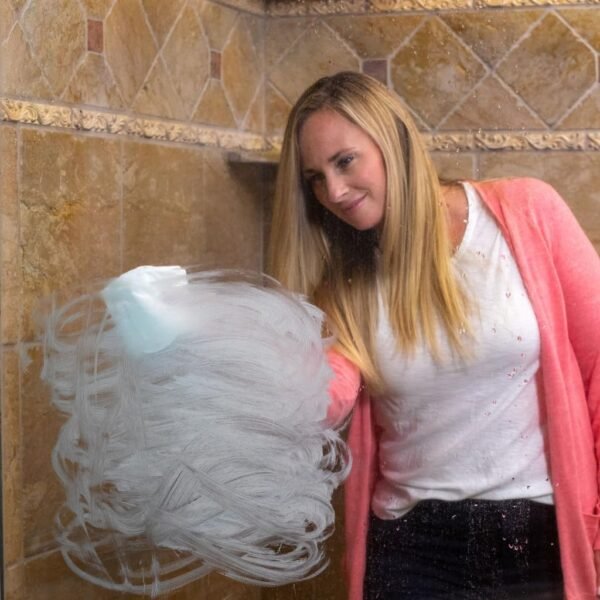
The method EnduroShield gives is to pour the product onto the included pad and apply in circular motions. No dwell time, no working duration, no rinse instruction and no cure time is published on the listing, which is a meaningful gap for a product that is worked into a surface. Read the printed instructions on the bottle. Where they are silent, the sensible pattern with any polish is small sections, moderate pressure, and frequent inspection rather than one long pass over a whole panel.
Ventilate the bathroom while working, since a small enclosed room concentrates whatever the product gives off, and an extractor fan or an open window costs nothing. Wear gloves, keep the product out of your eyes, and be careful with a wet pad on a wet floor, because the practical hazard in a shower enclosure is usually slipping rather than chemistry. Rinse the glass thoroughly afterward and dry it, so no residue remains to attract the next round of deposits.
Store the bottle closed, upright, at room temperature and out of reach of children, and keep it away from other bathroom chemicals. Because no ingredients are published, never use it on a surface that still holds a bleach based cleaner, an acidic descaler or any other product, and never mix it into a bucket with something else. Rinse the glass first, then polish, then rinse again. One product on the surface at a time.
Cost over time, and the alternatives
The cost structure of a polish is different from a spray because you should be buying it rarely. A 7.4 ounce bottle worked by hand covers a shower enclosure, and if the follow up maintenance is done properly you should not need it again for a long time. The expensive version of this purchase is buying a polish repeatedly because the glass is allowed to return to the same state, so the real saving comes from what you do after the polish rather than from the bottle itself. Squeegeeing the glass after every shower is free and does more than any product.
For glass that is dirty rather than etched, a cleaner is the cheaper and less invasive answer. Our review of the Rain-X shower door cleaner covers a glass only product aimed at build up before it bonds, and the Rejuvenate soap scum remover targets the organic half of the problem. The soap scum removers category collects those together.
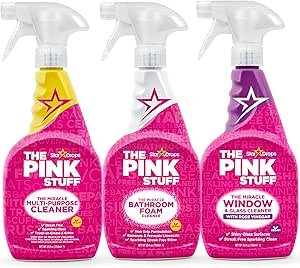
For everyday glass elsewhere in the house, a routine spray is all that is required, and our write ups of the Stardrops Pink Stuff multi purpose spray and the window and glass cleaner refill cover that ground, with more options in the glass cleaners category.
Who should buy it, who should not
Buy it if your shower glass is permanently cloudy, you have confirmed it carries no coating you want to keep, and you are prepared to work it by hand. Skip it if the panels are acrylic, if the glass is simply dirty and would respond to a cleaner, or if you cannot establish what treatment the enclosure already has. The listing is clear about the surfaces it wants and silent about everything chemical, so the bottle label is where the real instructions are.