Description
Twenty wipes for finished leather, and one thing to check first
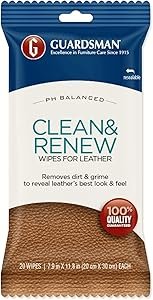
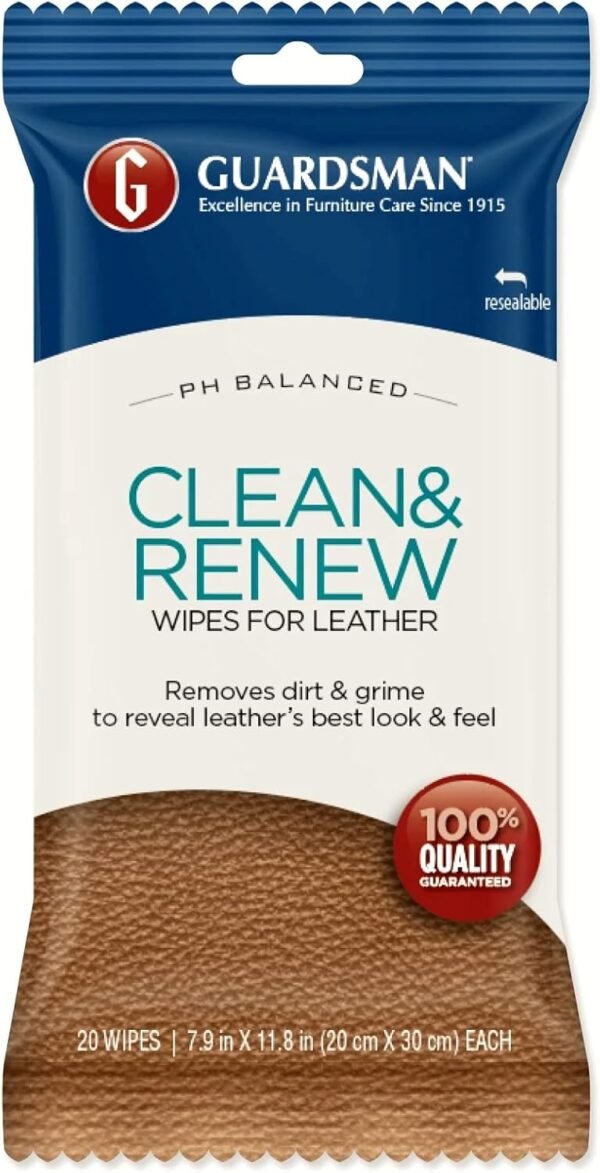
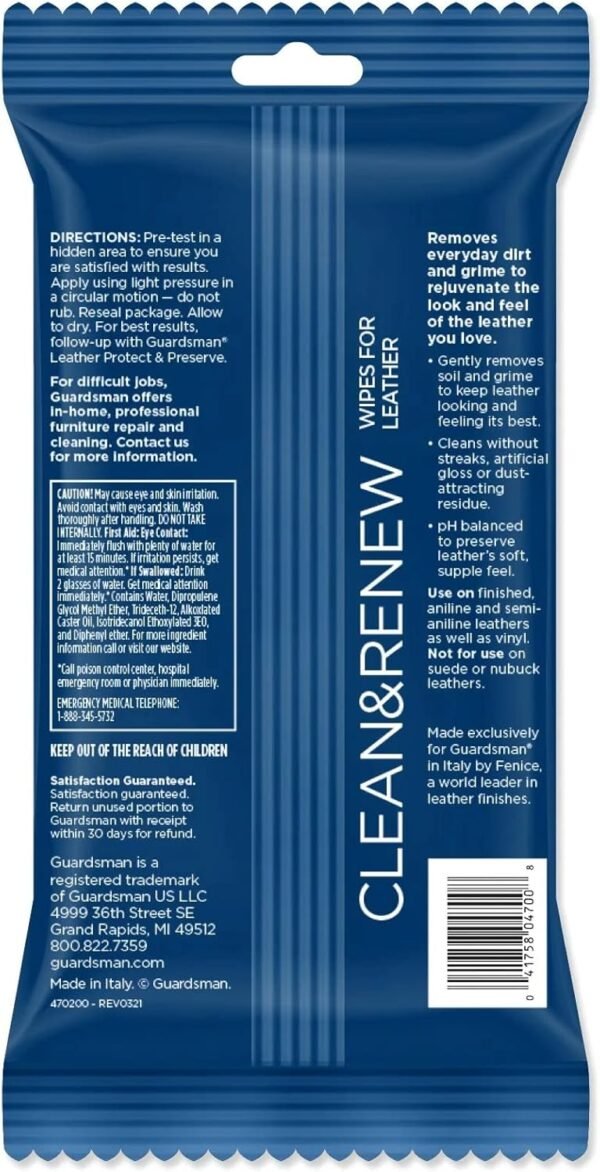
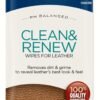
Guardsman Clean and Renew for Leather is sold here as a twenty count tub of wipes, part number 470200. Guardsman has been a furniture care brand since 1915, and the listing states the formula is made exclusively for Guardsman in Italy by Fenice, described as a leather finishing company.
The single most useful line on the listing is the restriction, and it should decide whether you buy at all: use only on finished, aniline and semi aniline leathers, and vinyl. Not for use on suede or nubuck. That is a clear and correct exclusion. Suede and nubuck are napped leathers with an open, brushed surface, and a wet cleaning wipe mats the nap and leaves shiny patches that cannot be reversed at home. Those materials need a dry brush and a specialist product.
Within its intended range the product is straightforward. Guardsman describes it as gently removing soil and surface grime from leather and vinyl, pH balanced to keep leather soft and supple, with no artificial gloss and no dust attracting residue, and specifically without the dulling waxes, oils or additives found in combined cleaner and conditioner products.
Cleaner or protector, which the listing cannot decide
There is a real contradiction on this page and it needs naming rather than smoothing over.
The product name and the first half of the description describe a cleaner: Clean and Renew, which removes soil and grime and leaves no residue. The second half of the description, under a heading from the manufacturer, describes something else entirely: Guardsman Leather Protector Wipes, which are said to create an invisible shield to protect leather against damaging stains. The Amazon product title itself calls the item a Leather Protector.
Guardsman sells both a cleaner and a protector as separate products, and the two do opposite halves of the job: one removes soil, the other leaves a barrier behind. Copy for both has been merged onto one listing. Since the part number, the style field and the product name all say Clean and Renew, treat this as the cleaner, and do not expect a protective barrier from it. If you want protection, that is a second purchase.
The specification block adds to the confusion. The included components field reads “Painting Supplies;Patch, Fill and Repair;wall-surface-repair-products”, which belongs to an entirely different product category, and the pH balanced bullet is duplicated word for word. Amazon ranked the tub sixth in Household Leather Upholstery Cleaners when the data was captured.
What is in it, and what is not published
No ingredient list appears. The listing tells you what the formula does not contain, which is dulling waxes, oils and additives, and that it is pH balanced, without giving a pH value. That is more than many listings offer and still less than a shopper needs if someone in the household has a sensitivity.
The pH point is worth understanding rather than skipping. Finished leather has a mildly acidic surface, and an alkaline cleaner strips the natural oils and stiffens the hide over time, which is why household all purpose cleaners are a poor idea on a leather sofa even though they visibly remove dirt. A leather specific cleaner is formulated around that, and it is the main reason to buy one rather than reaching for a general spray from the all purpose cleaner listings.
Where to use them, and how
The listing names leather car interiors, sofas and couches, purses, small leather goods, motorcycle leathers, boots, gloves, jackets and saddles. Vinyl is included, which makes the wipes useful on car door cards and dashboards as well, and vinyl specific alternatives such as the Verilon vinyl cleaner cover that ground too.
Test first. Always, and particularly on an antique piece, a light colored hide, or anything aniline, which is leather with little or no protective coating and which is the most absorbent and most easily marked type in the approved list. Wipe an inconspicuous area, let it dry completely, and look at it in daylight before doing a whole cushion.
Work a panel at a time and keep the coverage even. The commonest mistake with leather is spot cleaning one dirty patch on a large panel, which leaves a clean circle in a dirty field and looks worse than before. Clean the whole cushion or the whole door card.
Wipes dry out. Keep the lid closed between wipes, and take one out rather than leaving the tub open on the seat.
Storage, safety and the mixing rule
Store the tub closed, out of reach of children and pets, and away from heat, since a warm car parked in summer dries a tub of wipes out quickly.
Used wipes go in the trash. They are non woven and must never be flushed, since they do not disperse in a drain and are a well documented cause of sewer blockages.
Wash hands after use, avoid eye contact, and do not use these wipes on skin, which is not what they are for. Do not decant the wipes into another container or add liquid to a drying tub, because a wipe pack is a preserved wet system and topping it up with water dilutes the preservative.
Never combine leather cleaner with another product on the same surface. Do not follow it with a household spray, a bleach based cleaner or an ammonia based glass cleaner, and never mix chlorine bleach with an acid or with ammonia anywhere in the house, since both combinations produce toxic gases. On leather specifically, avoid alcohol wipes, saddle soap and furniture polish in the same session, since each leaves something different behind and the combination is what produces a blotchy finish.
Furniture polish belongs on wood, not leather, and products such as the Howard Products wood polish should be kept to the frame rather than the upholstery. For fabric upholstery next to a leather chair, a fabric spot product such as the Blue Magic spot lifter is the right tool.
Cost and the alternatives
Twenty wipes is enough for a full clean of a two or three seat sofa, or several car interiors, depending on how dirty they are. Wipes cost more per clean than a bottle and a cloth, and what you buy is the controlled amount of liquid: leather is easy to over wet, and a wipe delivers a small, even dose, which is a genuine advantage on a material where too much liquid causes marks.
If you want a bottle and a cloth instead, or a conditioner to follow the clean, those are separate products in the leather cleaner and conditioner listings. A protective product such as the Revive protect cleaner takes the barrier approach that this listing’s merged copy describes but this product does not deliver.
Who should buy this and who should not
Buy them if you have finished, aniline, semi aniline leather or vinyl to clean, you want a controlled dose rather than a bottle, and you accept this as a cleaner rather than a protector. The exclusion list and the pH balanced positioning are both genuinely useful.
Do not buy them for suede or nubuck, which the manufacturer explicitly excludes. Do not expect a protective shield despite what half of the description says. And test on a hidden area before cleaning a whole piece, particularly on aniline leather.