
Description
What wool balls do in a dryer
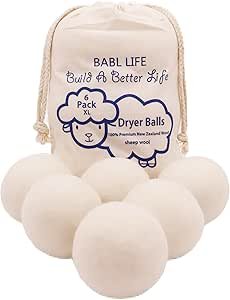
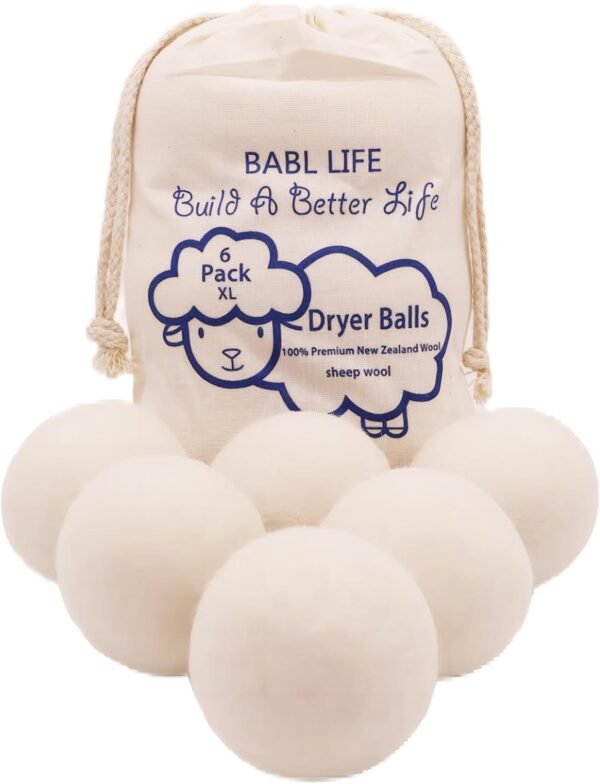
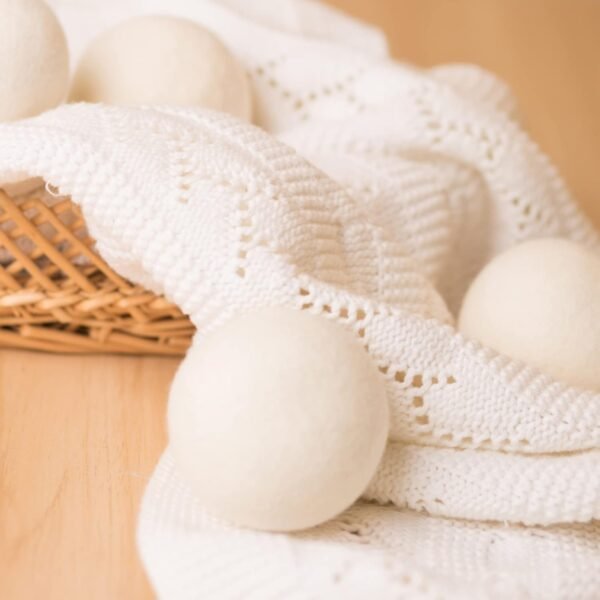
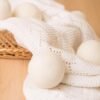
BABL Life sells these as a pack of six handmade wool dryer balls, described as New Zealand wool at 2.6 inches across. The listing dates to July 2024 and places the pack 6,746th in Health and Household and 5th among dryer balls. The pack weight is given as 8.82 ounces, which works out to about an ounce and a half per ball.
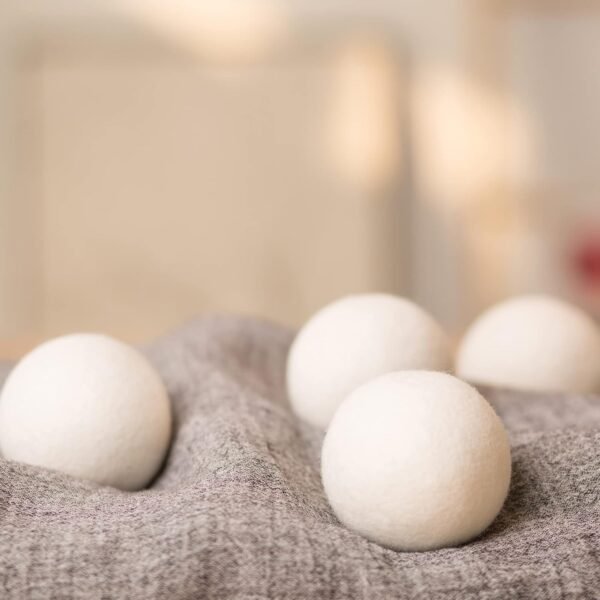
The mechanism is mechanical rather than chemical. Wet laundry in a tumbling drum tends to clump into a rolling mass, and the middle of that mass stays wet while the outside dries. Balls bouncing through the load break up the clumps, keep air moving between garments, and absorb a little moisture themselves. The result is shorter drying and less creasing, and it happens without applying anything to the fabric.
That last point is the real argument for the format. A dryer sheet works by melting a thin softening film onto fibers, which is why sheets reduce towel absorbency and interfere with moisture wicking sportswear. Wool balls leave nothing behind. For a household washing a lot of towels, microfiber or technical fabrics, that is a genuine functional advantage rather than a preference.
The claims, and what sits behind them
BABL Life claims drying times 15 to 30 percent faster, reduced wrinkles, reduced static, quiet operation and a satisfaction guarantee. It also says the balls replace fabric softener entirely and that you no longer need chemicals on laundry that touches your skin.
The 15 to 30 percent figure carries no test behind it on this page: no load size, no fabric type, no dryer model, no comparison state. It is a category wide marketing number rather than a measured result for this product. Whether it holds in your dryer depends heavily on how full the drum is, since balls help most in a moderately loaded machine and do almost nothing in one packed tight.
The claim about not needing chemicals on laundry is the manufacturer’s framing, not a health statement this site makes. What can be said factually is narrower and more useful: wool balls apply no softening agent and no fragrance, so they leave no residue. That is a different thing from a product being safer, and nothing here supports a claim about skin.
Where the specification does not add up
The title gives the ball size as 2.6 inches. The product dimensions field gives the package as 4.9 by 7.5 by 2.5 inches. A carton 2.5 inches deep cannot hold a 2.6 inch sphere, so one of those two numbers is wrong. There is no description field on this listing at all, and no wool grade, felting density or country of manufacture is given beyond the New Zealand wool reference in the title.
What they do well, and where they fall short
Wool balls are good at three things: shortening drying time in a moderately loaded machine, reducing creasing, and doing both without coating the fabric. They suit towels, bedding, jeans and general cottons.
They are weaker on static than a dryer sheet, and it is worth being straightforward about why. Static in a dryer comes from synthetic fibers rubbing together as they dry past the point of having any moisture left. A dryer sheet fights it by depositing a conductive softening film. A wool ball has no such agent, so on a load of polyester or fleece dried fully, static control is noticeably weaker. Pulling synthetics out slightly damp is the practical fix, and it also saves energy.
Two other limits are worth knowing. New wool balls shed a small amount of fiber for the first several loads, and that fuzz shows on dark garments, so run them on towels first. And the claim that these are engineered to be quiet is a hard one to take at face value: an ounce and a half of dense felted wool hitting a metal drum makes noise, and a household sensitive to a thumping dryer should expect some.
They also do nothing for scent. If fragrance is part of what you want from laundry, a ball will not deliver it, and an in wash booster such as the Downy in wash scent booster is the way to add it without a dryer film.
Use, care and safety
Use three to six balls depending on load size. Six in a small load is wasted, and two in a king size duvet does nothing. Put them in with the wet laundry at the start, not partway through. Do not overload the drum, since the whole mechanism depends on the balls having room to move.
Wool balls are long lived but not permanent. They compress and pill over hundreds of cycles and eventually stop bouncing, at which point they are doing nothing. If they pick up an odor, they can be run through a hot wash and dried, which refelts them slightly.
On safety, there is no chemistry here, which removes most of the usual concerns. Two remain. Keep them away from dogs, because a felted wool ball is exactly the size and texture a dog will chew and swallow, and wool is an ingestion hazard. And note that a wool product is unsuitable for a household with a wool allergy, since fiber does transfer to fabric during the first loads.
Cost against the alternatives
The cost structure is the strongest part of the case. A dryer sheet is a per load consumable forever. A liquid softener is a per load consumable forever. Six wool balls are a single purchase that lasts for a large number of loads, and the energy saved on shorter cycles is a second, smaller saving on top. Even at a conservative reading of the drying time claim, the arithmetic favors the reusable product for anyone doing several loads a week.
The direct comparisons are the consumables they replace. The Suavitel Complete dryer sheets and the Snuggle dryer sheets deliver scent and stronger static control at a recurring cost and with a film on the fabric. The Downy Ultra liquid softener applies its conditioner during the rinse instead, which suits line drying. Browse the consumable formats under dryer sheets and liquid fabric softener to weigh them against a one time purchase.
Who should buy it and who should not
Buy them if you dry a lot of towels, bedding and cottons, you want shorter cycles, and you would rather not put a softening film on fabric. A six pack is the right quantity for a full size dryer and the format has no recurring cost.
Do not buy them if scent is the reason you use a laundry additive, because they add none. Do not expect them to match a dryer sheet on static with a load of synthetics. And skip them if a noisy dryer is a problem in your home, since the quiet claim is not one this listing supports with anything.