

Description
A big box of dryer sheets, and the job they do
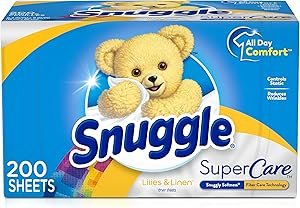
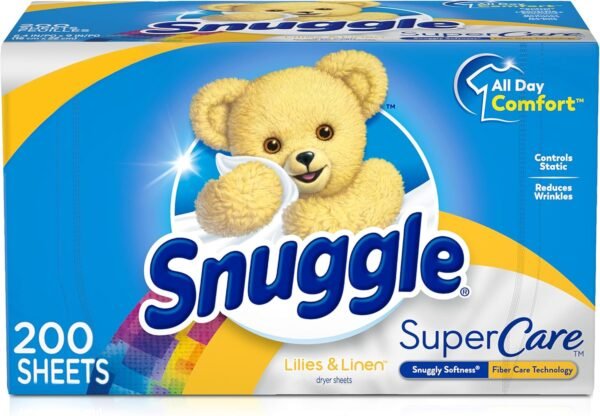
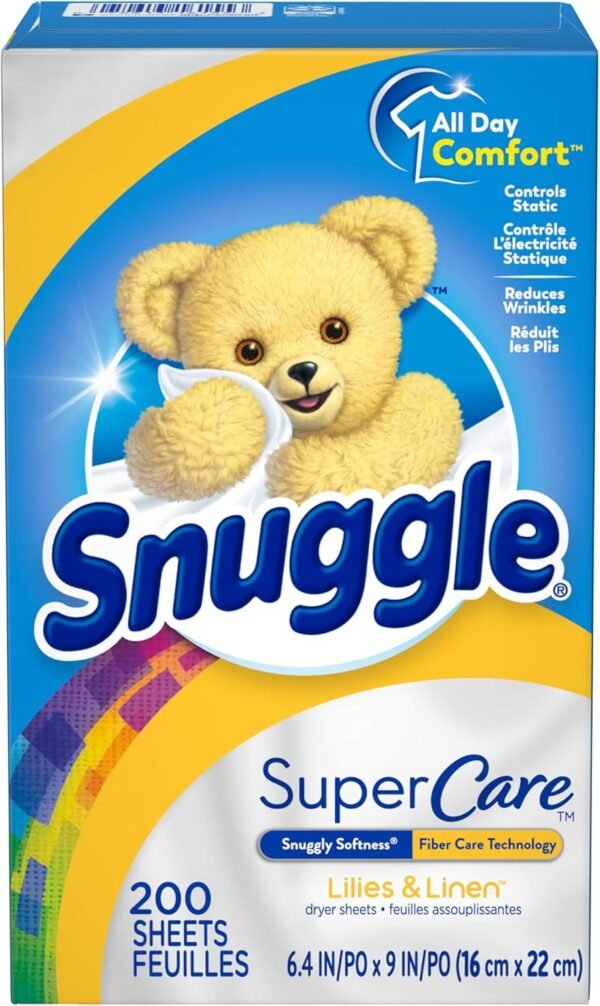
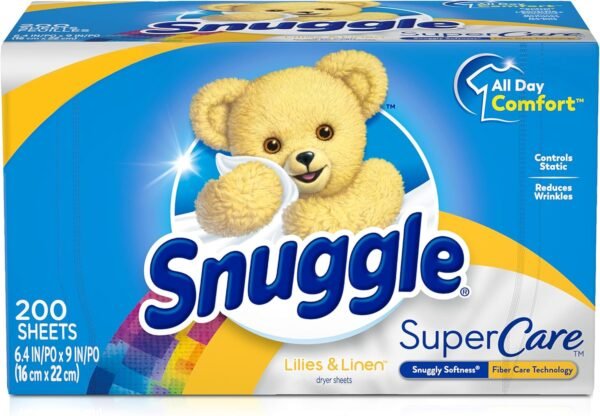
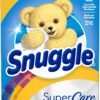
Snuggle SuperCare Fabric Softener Dryer Sheets are sold here in a two hundred count box in the Lilies and Linen scent. The manufacturer states that is enough for two hundred loads, one sheet per load, which is the standard dosing for the format and the number to use when comparing cost against a bottle of liquid softener.
A dryer sheet works by transferring a thin coating of softening agents onto fabric as the load tumbles in heat. That coating does three things the manufacturer names: it reduces static cling, it reduces wrinkling, and it leaves fragrance. Snuggle describes the formulation as fiber care technology, which is a brand name rather than an explanation, and the listing gives no ingredient information at all.
Static is the problem dryer sheets solve best. Tumbling dry fabrics, particularly synthetics, generate a charge that makes clothes cling and crackle, and a light coating of softener dissipates it. Wrinkle reduction is real but modest, and no dryer sheet substitutes for taking a load out promptly. Fragrance is the reason many people buy them and the reason others avoid them entirely.
The manufacturer’s own safety warning, which belongs at the top of any review
This listing carries a warning that most dryer sheet listings bury or omit, and it is important enough to reproduce carefully. Snuggle states, in its own directions: do not use this product on fluffier fabrics such as fleece or terry cloth, as it may increase the flammability of these fabrics; and do not use it on children’s sleepwear or other garments labeled as flame resistant, as it may reduce flame resistance.
Read that twice. The coating a dryer sheet leaves behind can affect how a fabric burns, and it can degrade the flame resistant treatment on children’s sleepwear, which is a regulated safety property of those garments in the United States. This is not a general caution about fabric feel. It is a flammability warning from the manufacturer.
In practice that rules out a lot of a normal wash: fleece jackets and blankets, terry towels and robes, and any children’s sleepwear labeled flame resistant. If you use dryer sheets, sort those items out and dry them without one. Nothing else in this review matters as much as that paragraph.
Lint screens and dryer maintenance
Whatever you put in a dryer, clean the lint screen after every load. A restricted screen reduces airflow, which makes the dryer run hotter and longer, and lint accumulation in a dryer is a recognized household fire risk. Vent ducting needs periodic clearing too, which is what tools such as the Holikme dryer vent cleaning kit are made for. That is worth doing regardless of which laundry products you use.
Fabrics to keep sheets away from, beyond the warning
Two further categories deserve care for performance reasons rather than safety ones. Towels lose absorbency as softener coating builds up, which is a slow effect that people usually notice a year later, and terry cloth is already excluded by the flammability warning above. Moisture wicking athletic fabrics work by moving water along fiber surfaces, and a softener coating interferes with exactly that mechanism, so sportswear is generally better dried without a sheet.
Microfiber cleaning cloths should never see a dryer sheet either, since the coating fills the fiber structure that makes them work. If you use microfiber for cleaning, wash and dry it separately from anything softened.
Using them, storing them, and one thing to watch
The method is exactly as the manufacturer states: place one sheet on top of the wet clothes and start the cycle as usual, then discard the sheet after use. Do not use two sheets in the hope of more fragrance, since excess coating is what causes greasy looking marks on dark fabrics. If a mark does appear, it usually rubs out with a damp cloth and a little detergent.
Check the drum after every load for a stray sheet. A sheet left stuck to the drum wall or drawn against the lint screen restricts airflow, and a sheet that finds its way into a garment pocket goes through the next wash.
Store the box closed, dry and away from heat. Keep sheets out of reach of children and pets, since they are soft, scented and easy for a small child to chew and for a dog to swallow. A swallowed dryer sheet is a genuine veterinary problem.
Never combine a dryer sheet with anything else in the drum, and never put a sheet in a washing machine. Do not attempt to use dryer sheets as a general cleaning cloth on household surfaces, which is a widely shared internet suggestion and a bad one, because you are wiping a softening coating onto a surface. And in the laundry room more generally, never mix chlorine bleach with an ammonia based cleaner or an acidic product, in a machine or a bucket.
Cost per load, and a specification note
Two hundred sheets at one sheet per load is two hundred loads, and that is the honest basis for comparison. Sheets and liquid softener do the same job by different routes: a liquid is dosed into the wash and a sheet is added to the dry cycle. Liquid tends to be cheaper per load in bulk, and it also avoids the flammability issue on fleece and terry entirely, since a rinse added softener is a different application. If you want the liquid version of this same brand and formulation, the catalog carries the Snuggle liquid fabric softener, and the listing itself suggests using both together, which is a marketing suggestion rather than a technical requirement.
One data point on this listing is worth flagging. The manufacturer field reads AmazonUs/SUNFQ, which is a marketplace seller code rather than a company, and the model number field reads simply “Wlife”. Neither identifies the maker of a Snuggle branded product in the place a shopper would look for it. Amazon ranked this box fifty ninth in Dryer Sheets when the data was captured.
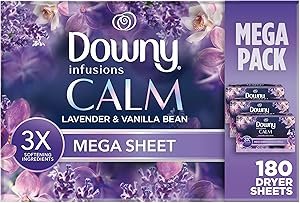
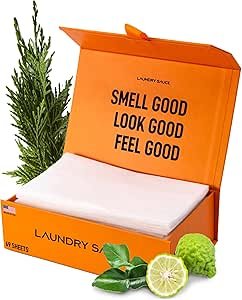
For alternatives in the same format, the catalog carries the Downy Infusions mega sheets, the Laundry Sauce dryer sheets at the premium end, and the full dryer sheet listings alongside the liquid fabric softener listings for a format comparison.
Who should buy these and who should not
Buy them if static is your main laundry annoyance, you like a strong fragrance, and you are willing to sort fleece, towels and flame resistant sleepwear out of the loads you soften. Two hundred sheets is a genuinely long supply at a low cost per load.
Do not buy them if your laundry is mostly towels, fleece and activewear, since between the flammability warning and the absorbency effect there is very little left to use them on. Do not use them on children’s flame resistant sleepwear under any circumstances. And do not buy them if anyone in the household reacts to fragrance, because scent is a large part of what you are paying for and no ingredients are disclosed.