
Description
A powder that becomes foam, and the job it is sold for
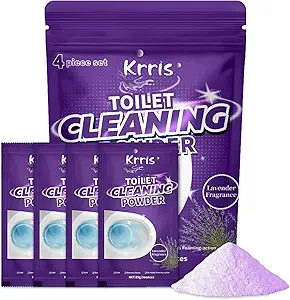
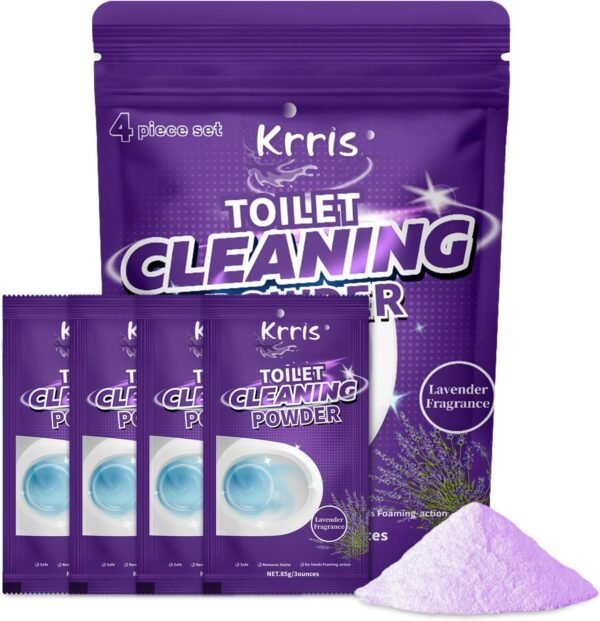
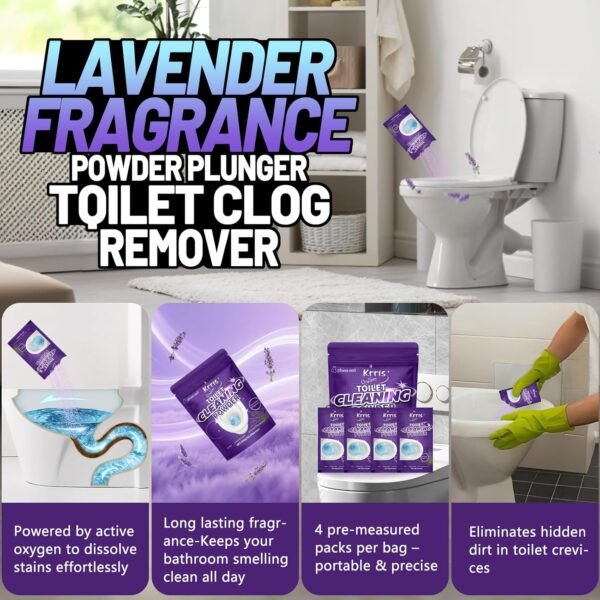
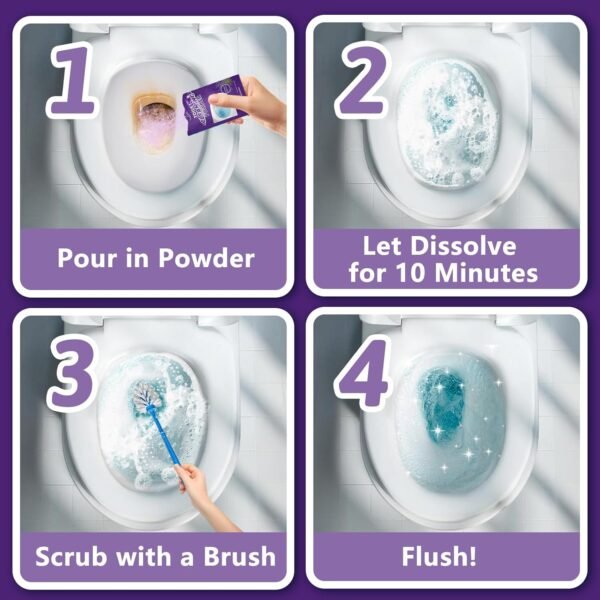
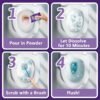
The Krris toilet bowl cleaner ships as four sachets of powder, three ounces each, rather than as a liquid in a bottle. You sprinkle the powder into the bowl, it reacts with the water and foams up, the foam spreads across the inside of the bowl, and you scrub lightly if needed and flush. Krris positions it against stubborn stains, limescale and grime on the inner surface of the bowl, with a lavender fragrance that the company says neutralizes odor as it works.
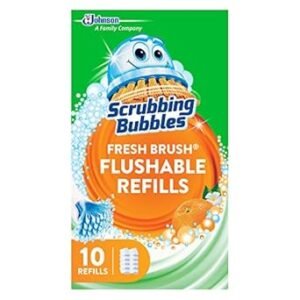
The format is the interesting part. A liquid bowl cleaner is poured under the rim and runs down the porcelain, which means gravity decides where it goes and the waterline ring often gets the least contact. An effervescent powder generates foam that expands to fill the bowl, so coverage is more even below the waterline, which is exactly where mineral scale and staining accumulate. Powder also ships lighter and stores flatter than a bottle of liquid. Against that, a powder gives you less control over dosing and no under rim applicator, which is why liquid products with an angled neck, such as the Scrubbing Bubbles toilet bowl cleaner, remain the better tool for the rim jets themselves.
What the chemistry is, and why the listing will not say
No ingredient list, no active, no concentration and no pH appear anywhere in this listing. For an effervescent bowl powder that is a significant omission, because the effervescence itself tells you something is reacting, and the buyer has no way to know what. Krris says only that the product is “formulated with a special recipe” and that the powder transforms into foam on contact with water. That is marketing language standing in for a specification.
Why not knowing changes how you should handle it
The practical consequence is that you must treat this as an unknown reactive chemical. Do not add it to a bowl that still contains another cleaner. Do not use it after a bleach based product without flushing the bowl clear first and letting fresh water refill. Acidic descalers and chlorine bleach together release chlorine gas, and since this listing does not disclose whether an acid is present, the only defensible assumption is that it might be. The same rule applies in reverse: do not follow this with a bleach tablet or an in tank product until the bowl has been flushed. That is not a theoretical risk. Bathroom mixing accidents are the most common route to a chlorine gas exposure in a home.
Where it goes, and where it does not
This is a product for the inside of a vitreous china toilet bowl and nothing else. The listing does not offer it for the seat, the tank, the cistern, the floor, tile, grout or any other surface, and it should not be used on them. Toilet seats are plastic and can be dulled or crazed by descaling chemistry; use a general bathroom cleaner from our multipurpose bathroom cleaners shelf for the seat, the lid and the outside of the pan.
Two warnings the listing does not give but a buyer needs. First, do not put this in the cistern or tank. Tank dosing products are formulated to sit against rubber flappers and seals for weeks, and a bowl cleaner is not. Second, if your bowl has a colored or matte glaze, or a metallic trim, test it once on a small area low in the bowl before treating the whole thing, because a scale removing chemistry can dull a finish it was not designed for. Krris states the product is safe for all plumbing, and it also states it is safe for what the listing calls “safe systems”, which appears to be a typographical error for septic systems. Because the intended word is not certain, and because the ingredients are not published, anyone on a septic system should confirm with the label rather than relying on the listing.
How to use it, and the safety habits that go with it
The method Krris gives is: sprinkle the powder into the bowl, let the foam do the work, scrub gently if needed, and flush. What is missing is the number that decides whether it works, which is the dwell time. The listing gives no contact time at all, so there is no published figure for how long the foam should sit. Read the sachet. As a general principle with any scale removing bowl treatment, the foam has to remain in contact with the stain, so treating a bowl overnight or at the start of a period when nobody will flush is how you give it the best chance.
Handle the powder with the respect an undisclosed chemical deserves. Keep it out of the eyes and off the skin, do not inhale the dust as you pour, and ventilate the bathroom by opening a window or running the fan. Wear gloves. Store the sachets sealed, dry and out of reach of children and pets, and keep them away from any other cleaning chemical in the cupboard, since a torn sachet leaking powder onto a bleach bottle is a hazard that costs nothing to avoid. Do not decant the powder into an unlabeled container. Because this is a powder, it should never be dry mixed with anything.
Cost per clean, and what else does this job
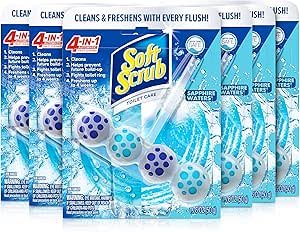
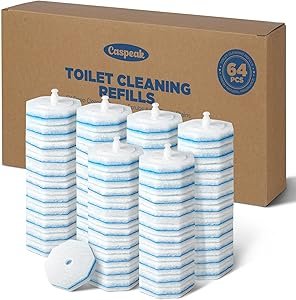
Four sachets of three ounces is twelve ounces of product in total, and unless you use partial doses that is four treatments. That makes this a periodic descaling treatment rather than a weekly maintenance cleaner, and it should be budgeted as such. A liquid gel bottle covers many more cleans per purchase, which is why most households end up owning both: a gel for the weekly pass and something stronger for the ring that will not shift. On the maintenance side, a wand system such as the Caspeak toilet wand refills handles the routine, and thicker clinging gels like the Vacplus toilet bowl cleaner or the Soft Scrub toilet bowl cleaner hold contact under the rim for longer than a foam will. The whole shelf is in toilet cleaners.
Several things in the record do not add up and are worth naming. The listing says the product is “guaranteed to be safe for all plumbing”, a broad promise with no supporting test, standard or plumbing type behind it. The garbled phrase “safe systems” leaves the septic question genuinely unclear. The package weight is given as 11.68 ounces while the product is sold as four sachets of three ounces, which is twelve ounces before any packaging is counted, so at least one of those two figures is wrong. And there is no antimicrobial claim anywhere, which means this cleans the bowl but should not be described, by anyone, as disinfecting it. The item currently ranks 141st in the retailer’s household toilet cleaners chart.
Who should buy it
Buy it if you have a stained waterline or scale below the water in a standard white bowl, you want a treatment that covers evenly without an applicator neck, and you are comfortable following the sachet’s own directions. Skip it if you need a weekly maintenance cleaner, if you need a disinfecting claim, if you are on a septic system and cannot confirm compatibility from the label, or if you want to know what you are pouring into your own bathroom before you pour it.