Description
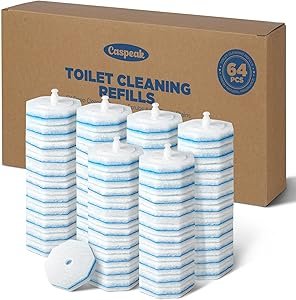
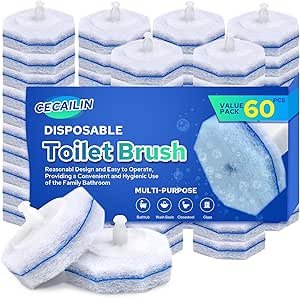
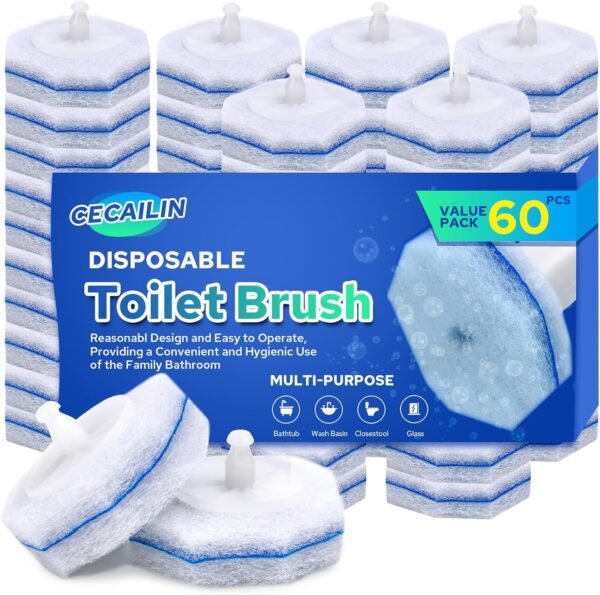
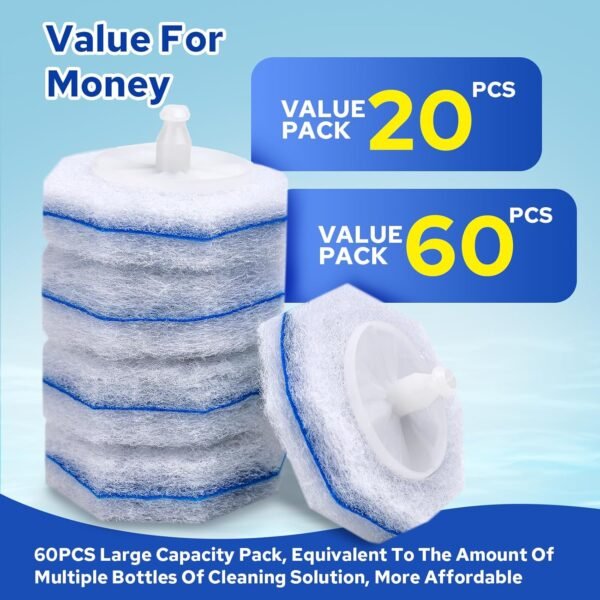
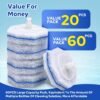
The Cecailin disposable toilet brush set is sixty single use cleaning heads that attach to a handle and are thrown away after one bowl. The manufacturer describes the pack as a two month supply and states that the heads fit most toilet brush handles. It is a hygiene format rather than a chemical one, and whether it belongs in your bathroom depends less on cleaning power than on how you feel about storing a wet brush between uses.
The problem this format is trying to solve
A conventional toilet brush works well and costs almost nothing to run, but it has one genuine drawback. After cleaning a bowl it sits in a holder, damp, holding whatever it collected, until the next use. That holder becomes the least pleasant object in the bathroom and needs cleaning itself. Disposable heads remove the problem by removing the storage step entirely: you clean the bowl, release the head into the trash, and the handle stays dry.
What is on the head, and what the listing refuses to say
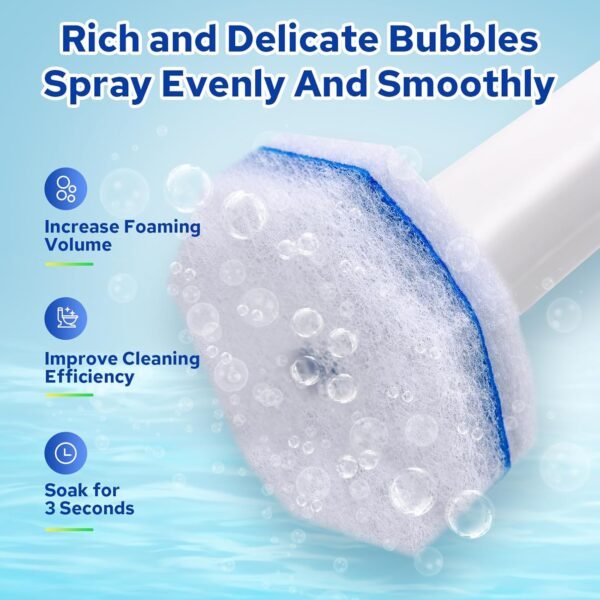
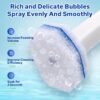
This is where the listing becomes genuinely confusing. The marketing text describes the heads as cleaners containing cleanser and instructs the user to soak the head in water for three seconds before use so the cleanser is fully utilized. That description implies a detergent is impregnated in the pad. Yet no cleaning agent is named anywhere on the page. There is no ingredient list, no active ingredient, no concentration and no safety information. A product that tells you to activate a cleanser but never says what the cleanser is has left the most important field blank.
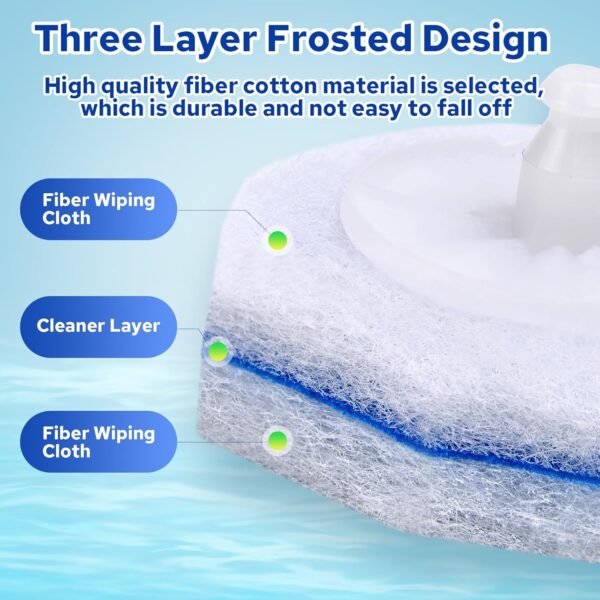
The material fields contradict each other as well. The main material is given as sponge. The fabric type field repeats the word fibres five times in a row, which is a data error rather than a specification. There is a tick repellent material field, reading fibre, on a toilet cleaning product, and a perfume field reading lemon that no other part of the listing mentions. The specific use field contains untranslated Chinese characters meaning furniture decoration, which has nothing to do with a toilet at all. None of these fields can be relied on, and this review will not select the plausible ones and present them as fact.
The hard water claim, unattributed and unquantified
The listing states that the pad powers through the toughest build ups and stains, and specifically names hard water. Cecailin makes that claim; it is not one this review can verify, and the page provides no detail on what removes mineral deposits. Limescale in a toilet bowl is a calcium carbonate deposit, and dissolving it normally requires an acid. A pad carrying an unnamed cleanser and a fixed three second soak may or may not deliver enough of one, and there is no way to tell from the listing. Do not expect a disposable head to replace a dedicated descaling product on a bowl with a heavy ring.
Fit, compatibility and the count contradiction
The heads are described as compatible with most toilet brushes, which is a broad claim about a product category that has no standard fitting. The listing gives an included components field reading attachment, and product dimensions of roughly fifteen inches long, which appears to describe the packaged set rather than a single head. Before assuming an existing handle will take these, look closely at the connector, because a disposable head system generally depends on a specific clip or thread, and most is not a specification.
The count fields also disagree. The number of items field says one while the unit count field says sixty, and the title says sixty pieces. The reasonable reading is sixty heads in one package, but the listing states both and never reconciles them. Anyone buying multiples for a large property should confirm what a single order actually delivers rather than relying on the specification block.
Using it correctly, and the safety points that matter
The instruction the manufacturer gives is short: soak the head in water for three seconds, clean, then dispose. It follows that the cleanser only works while the head is wet, so the sequence is soak, clean, discard, rather than soaking once and working through several bathrooms. The listing gives no dwell time for the cleanser on the porcelain, no guidance on whether the bowl should be left to stand before flushing, and nothing about the water line, so this review will not supply figures the manufacturer has not published.
Disposal is the part people get wrong. These heads belong in the trash, not the toilet. The listing describes them as disposable, never as flushable, and a sponge pad in a drain line is a plumbing call nobody wants to make. On a septic system that matters more still, because anything that does not break down simply accumulates in the tank.
Two chemical safety points apply despite the thin information. First, because the cleanser is not identified, never use one of these heads in a bowl that still holds bleach or any other toilet chemical. Mixing an unknown cleaner with chlorine bleach or with an acidic bowl cleaner can produce toxic gas, and the safe rule in a bathroom is one product in the bowl at a time, with a flush between them. Second, keep the pack out of reach of children, wear a glove if your skin is sensitive, and ventilate the room, because the page carries no hazard information at all and the absence of a warning is not evidence of safety.
What sixty heads cost you over time, and the alternatives
The cost structure here is straightforward, and it is the strongest argument against the format. A traditional brush is bought once and lasts for years. A disposable system charges you for every clean, indefinitely. Sixty heads at the manufacturer’s own estimate of a two month supply implies roughly one head per day, which is a heavy assumption for a domestic bathroom and suggests the pack lasts considerably longer in a normal household. Model it on your own cleaning frequency rather than on the packaging estimate, and remember that the running cost never stops.
The direct competitor is the refill wand system, where a disposable head carries a measured dose of cleaner. Our review of the Caspeak toilet wand refills covers that approach, and it is worth comparing on exactly the point Cecailin leaves blank, which is what the cleaner contains. For households that would rather keep a brush and buy a bowl chemical separately, the Scrubbing Bubbles toilet cleaner and the Soft Scrub toilet cleaner both publish considerably more about their formulations than this listing does. The toilet cleaners category collects the bowl products together.
If the bathroom needs more than the bowl, a single product covering tile, tub and sink is usually the more sensible purchase, and the multipurpose bathroom cleaners category covers that ground. A disposable head system is a specialist tool and works best alongside a general cleaner rather than instead of one.
Who should buy it, who should not
Buy it if the stored wet brush is the thing you want out of your bathroom and you accept an ongoing consumable cost. Skip it if you need to know what chemical you are putting in your bowl, if you are dealing with heavy limescale, if single use waste is a concern, or if you cannot confirm that the heads fit the handle you already own. The format solves a real problem, but this particular listing is unusually short on the facts a chemical purchase should include.