
Description
What these refills are, and what they replace
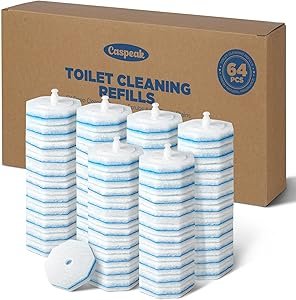
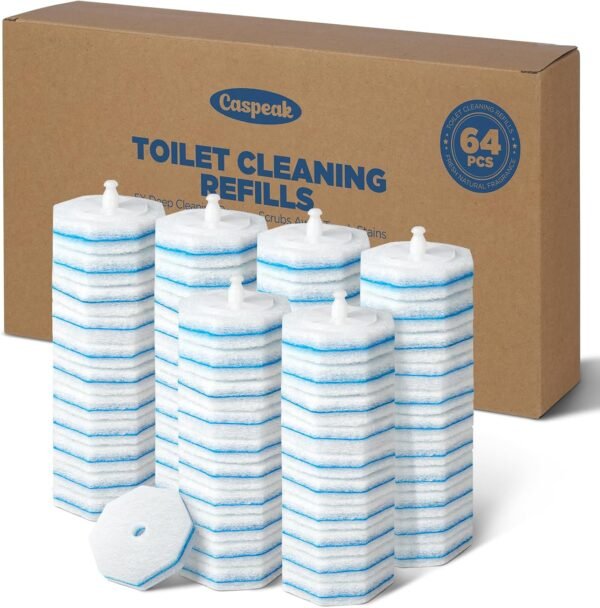
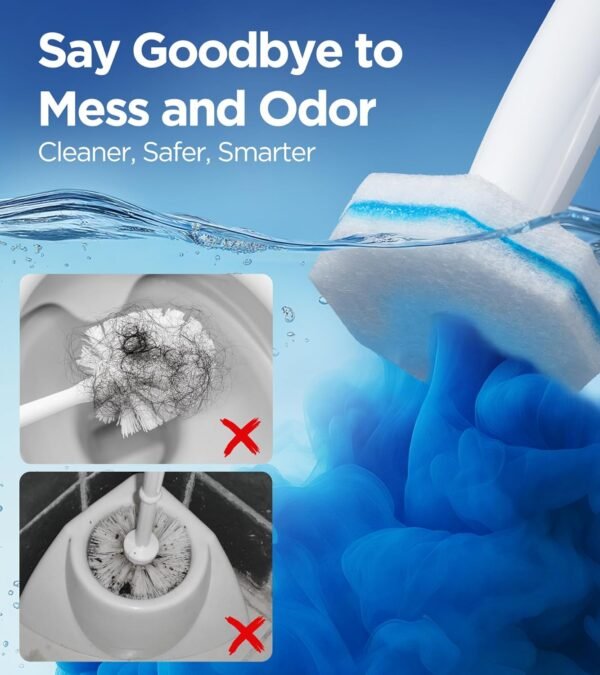
These are disposable scrubbing heads that clip onto a toilet wand handle, and Caspeak states they are compatible with Clorox toilet wands. The proposition of the whole format is that you never touch a wet brush: the pad goes on, you clean, you press a button and the pad drops into the trash. The alternative is a conventional toilet brush that sits in a holder collecting water between uses, which is the thing this category exists to avoid.
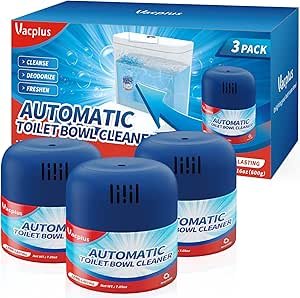
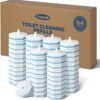
Caspeak sells this as a 64 count pack, listed at 1.1 pounds, model Caspeak-015, first available in May 2025, with 205 ratings averaging 4.9 stars and a position of 32nd in Household Toilet Cleaners. Sixty four pads is a lot of toilet cleaning. At one pad per weekly clean that is more than a year for a single toilet, so the pack size suits a household with several bathrooms or someone who cleans more often than weekly. If you clean the bowl monthly, a liquid such as the Vacplus 366 toilet cleaner is less to store.
The formula, and the fact that it is not published
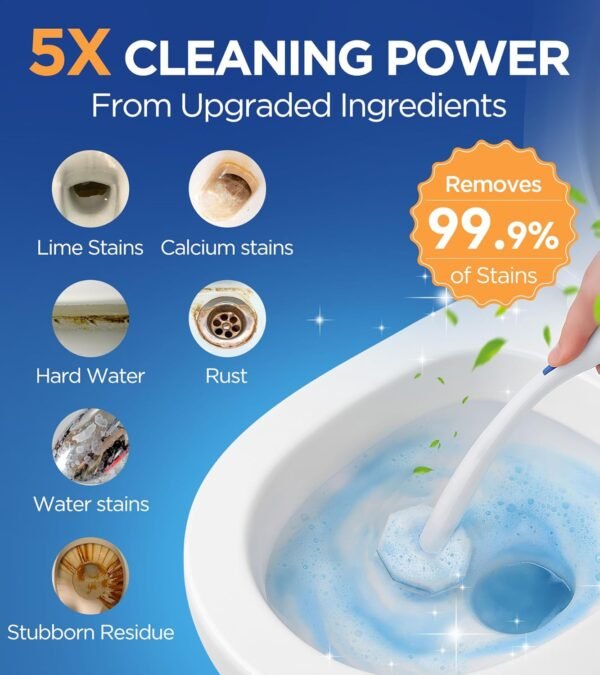
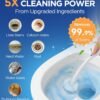
Caspeak describes the pads as carrying an exclusive formula and claims that it delivers five times the cleaning power of an ordinary toilet cleaner brush, removing 99.9 percent of stains including rust, limescale, hard water buildup and calcium stains. Read those numbers carefully. They are the manufacturer’s own claims, the five times figure has no stated basis and no named comparison product, and the 99.9 percent figure refers to stains rather than to germs.
Stain removal is not disinfection
That distinction matters enough to spell out. A claim about removing stains is a cleaning claim. A claim about killing germs or viruses is a disinfection claim, which in the United States is regulated by the Environmental Protection Agency and requires product registration. Caspeak makes no disinfection claim anywhere in this listing, and nothing here supports treating these pads as a sanitizing product. If disinfecting the bowl is your goal, that is a different product with a registered label and a stated contact time.
The formula itself is undisclosed. There is no ingredient list, no acid or surfactant named, no concentration and no pH. For a product designed to attack limescale and rust, the chemistry is exactly what a buyer would want to know, since descaling normally involves an acid and acids interact badly with certain finishes. Read the printed packaging before use. The listing also states that each pad is infused with a fragrance which it describes as eliminating bad odors, and no fragrance information is published either.
Where the pads go, and where they should not
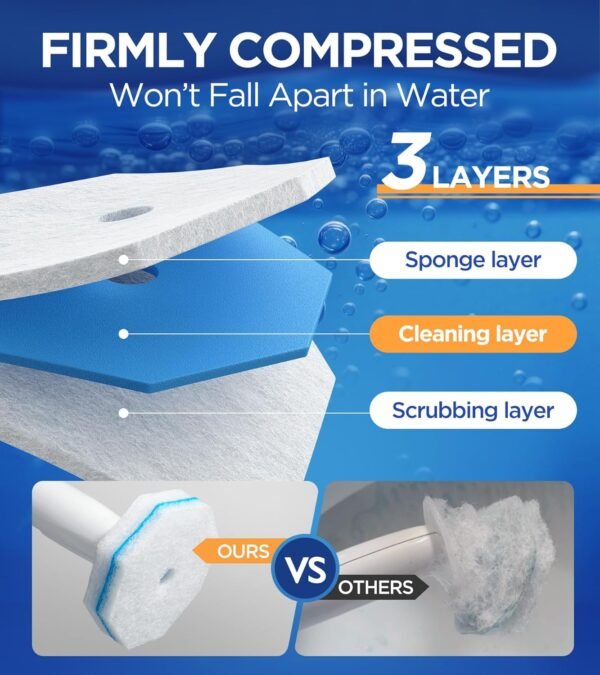
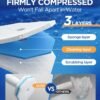
Caspeak lists the material as plastic and sponge, describes a triple layer construction that is professionally compressed to stay intact when scrubbing or soaking, and gives a Surface Recommendation of Toilet. The company then contradicts that recommendation in its own last bullet, saying the pads also work on bathtubs, sinks, mop basins, wash basins, shower doors, mirrors, glass and floor drains.
Using a toilet pad on a bathroom sink or a mirror is worth thinking about before you do it. A pad that has been inside a toilet bowl carries whatever was in that bowl, and moving it to a surface where hands, toothbrushes and faces go is a straightforward cross contamination route. If you want to use these pads more widely, use a fresh one for the sink and a different one for the toilet, and do those jobs in that order rather than the reverse. On glass and mirrors there is a second problem: an undisclosed formula with a stain and scale claim is not what you want on a mirror backing or a shower door coating. For that job the Scrubbing Bubbles toilet cleaner and the general products in the multipurpose bathroom cleaners category are labeled for the surfaces they name.
Caspeak states the sponge boosts scrubbing power without scratching the toilet’s glaze. That claim covers vitreous china. It does not extend to a plastic toilet seat, a painted surface, a brushed metal fitting or an acrylic bath, so keep the pad in the bowl.
Using them, and disposal
The mechanics are straightforward: clip the pad on, clean the bowl, then press the release button so the used pad drops without being handled. The one instruction the listing does not give is the one people most need. It does not say whether these pads are flushable, and nothing in the material description suggests they are. Treat them as not flushable and put them in the trash. Sponge and plastic pads in a drain line cause blockages, and a blocked toilet is a much larger problem than the one you set out to solve.
Two further handling notes. Wear gloves. The pads carry an undisclosed cleaning formula and you will be working in a toilet bowl, and gloves address both. Second, never combine these pads with another toilet product in the bowl at the same time. Bowl cleaners commonly contain either bleach or an acid, and if the pad formula is the other one of those two, mixing them in a confined bowl can produce a toxic gas. Clean with one product, flush, and only then consider a second. Ventilate the bathroom while you work, and store the pack closed and out of reach of children, since these are chemically treated pads rather than plain sponges.
What they cost to run, and the alternatives
The cost structure of a disposable wand system is a low entry cost and a permanent consumable. Sixty four pads is a large enough pack that the per clean cost is low, and Caspeak leans on that, claiming 55 percent more refills than other refill packs, which again is an unsourced comparison. Against a reusable brush the honest comparison is that the brush costs nothing to run and the pads cost something every single clean, while the brush lives wet in a holder and the pads do not. That is a hygiene preference, not an economic one.
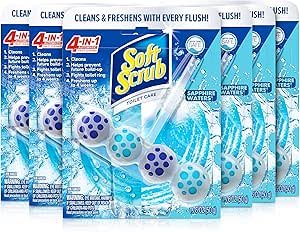
Also weigh the compatibility risk. These are third party refills for a Clorox handle, and fit on a system you already own is the whole basis of the purchase. If your handle is a different brand or an older model, check the connector before ordering 64 of anything. For an all in one liquid approach, the Soft Scrub toilet cleaner and the Cecailin toilet cleaner take a different route to the same bowl, and the full toilet cleaners category lays out gels, tablets and wand systems together.
Who should buy these, and who should not
Buy them if you already own a compatible wand handle, you prefer disposable heads to a brush that lives in water, and you have the storage space for a 64 count box. The rating history of 205 reviews at 4.9 stars is strong, though it is a small and recent sample for a product first listed in May 2025. Skip them if you need to know what chemical you are putting in the bowl, if you were expecting a disinfectant rather than a cleaner, or if you would rather not add a permanent consumable to the bathroom cupboard. Note also that this record lists Number of Items as 1 alongside a Unit Count of 64, and gives a Handle Material of a single slash character, so parts of the product data are unreliable.