
Description
The job a chainmail scrubber does
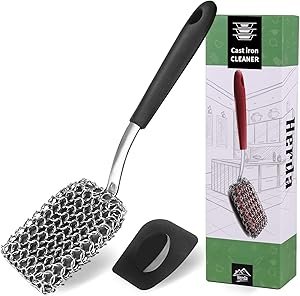
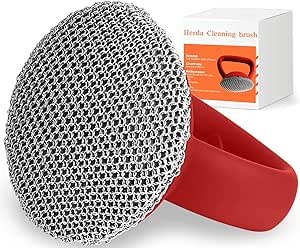
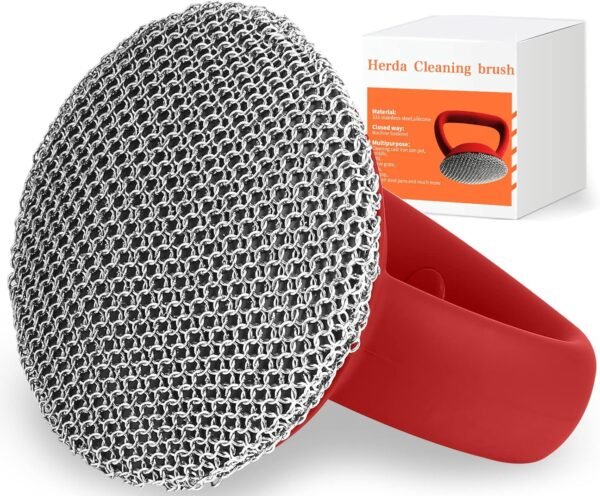
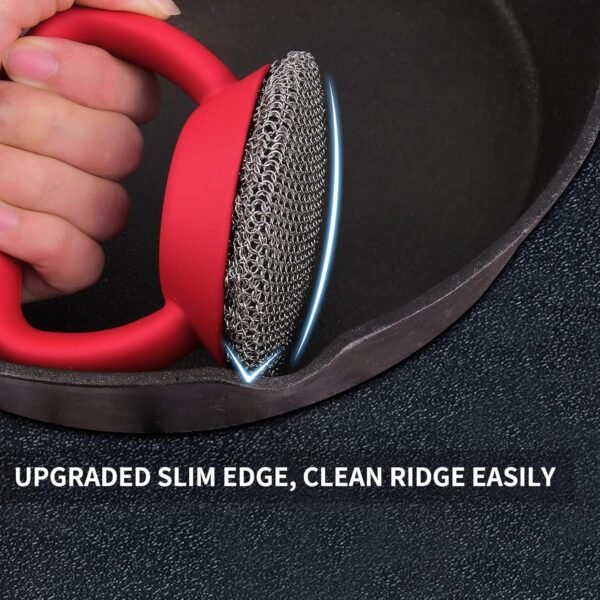
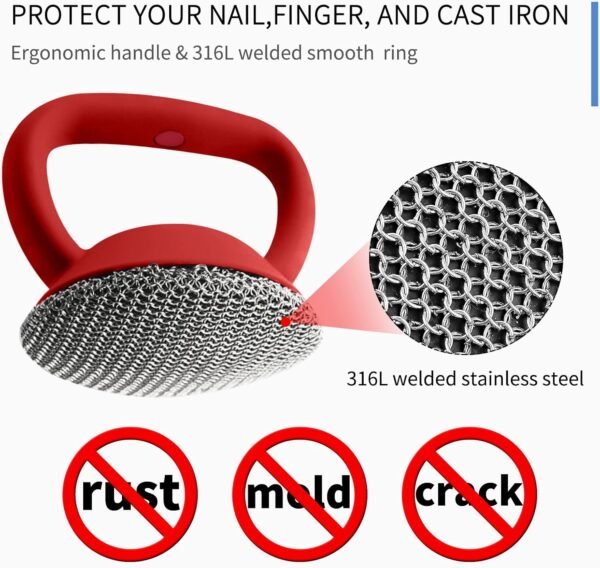
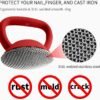
A chainmail scrubber is a mat of interlocking metal rings used to abrade stuck food off cast iron and carbon steel without soap and without a scouring pad that shreds. The Herda version adds a molded silicone handle so your hand stays out of the water and the food. Herda gives the ring material as 316 stainless steel in a 3 millimeter fine chainmail, machine soldered rather than simply linked, with an arcuate silicone pad behind the mail and a slim edge intended to reach the corner where the wall of a skillet meets the base.
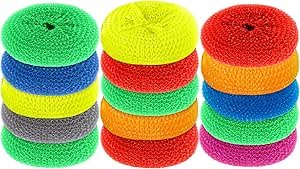
The household this suits is one that cooks in cast iron or carbon steel regularly. Those pans carry a polymerized oil layer, the seasoning, that gives them their release properties, and the whole point of a metal chainmail is that it lifts food residue while being gentler on that layer than a wire pad would be. If your pans are enameled, coated or non-stick, this tool is not for you, and a softer option from the dish scouring pads category is the safer purchase.
What the specification says about the build
The materials are documented better here than on most listings in this catalog. Herda names 316 stainless steel, which is the molybdenum bearing grade with better corrosion resistance than the more common 304, and states that the rings are soldered rather than open. Ring size is given as 3 millimeters, described as fine chainmail, and the practical effect of a smaller ring is a finer scrubbing action that reaches into pan texture rather than skating across it. The handle is described as food grade silicone. Overall dimensions are given as 3.74 by 3.74 by 2.75 inches, the color is red, the shape is round, and the firmness is described as hard.
One specification does not hold up
The listed item weight is 0.32 ounces, which is about nine grams. A hand sized mat of hundreds of soldered stainless rings plus a molded silicone handle does not weigh nine grams, and the figure is not consistent with the materials and dimensions on the same page. Treat the weight field as unreliable rather than as a lightness feature. A second field, Theme, contains a string of unrelated search keywords about gifts, which is not a specification at all. Neither error affects the product, but both are a reminder that these listings are assembled from feeds rather than written by hand.
The record is otherwise consistent: manufacturer Herda, model CHAINSCRUBBER, ASIN B09MK1PW2M, first available December 2021, 851 ratings averaging 4.6 stars, and a position of 26th in Dish Scouring Pads.
Pans it suits, and the ones to keep it away from
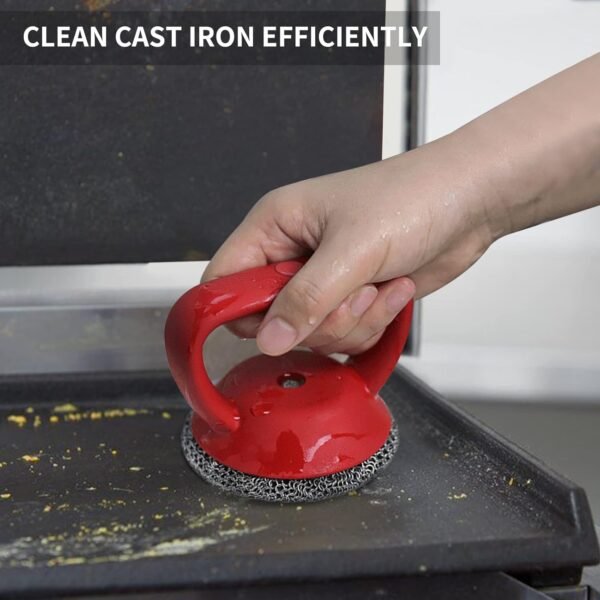
Herda names cast iron pans, pots, griddles, skillets, carbon steel woks and carbon steel pans, and adds baking sheets, Dutch ovens, pie pans, frying pans, tortilla presses, stainless steel sinks and pizza stones. The company also states that the scrubber will not rust or warp and will not hurt the seasoning.
That last claim is worth qualifying honestly. A chainmail is gentler on seasoning than steel wool, and that is the reason it exists, but any metal abrasive used with force will take seasoning off a pan. It has to, because that is how it removes carbon. Used lightly on warm water, a chainmail lifts residue and leaves the base layer. Scrubbed hard on a stubborn burnt patch, it will go through to bare metal, and you re-season that spot. That is normal cast iron maintenance rather than damage, but it is not the same as the pan being untouched.
Keep it away from enameled cast iron, non-stick and ceramic coated pans, anodized aluminum, glass, and any polished or brushed finish you care about. Herda’s inclusion of pizza stones deserves a caution as well: unglazed stone is porous and abrading it releases grit, and most stone manufacturers advise scraping rather than scrubbing. The stainless steel sink suggestion is reasonable on a satin finish sink and a poor idea on a mirror polished one. For the pans this tool should not touch, a bamboo brush such as the Full Circle bamboo dish brush is the right tool.
Using it properly, and looking after it
Herda’s method is to scrub the pan under a small amount of warm water and rinse, and the company states that no cast iron soap is needed. Work while the pan is still warm rather than after it has cooled and the residue has set. Do not use it on a pan that is still hot enough to burn you, and never put a hot pan under cold water, because thermal shock cracks cast iron.
Drying is the step that decides whether your pan survives the process. Cast iron and carbon steel rust quickly once bare metal is exposed, so dry the pan immediately after washing, ideally by returning it to a low heat until the surface is dry, then wipe a thin film of oil over it. The scrubber itself needs the same discipline: Herda says it can go in the dishwasher, or be scrubbed with detergent in the sink and rinsed, and recommends hanging it to dry after each use. A chainmail left wet in a sink caddy will hold food particles in the rings.
The safety notes here are mechanical rather than chemical. There is nothing to inhale and nothing to mix, which is a real advantage of this route over chemical oven and grill cleaners. Do keep it away from young children, because soldered metal rings and small hands are a poor combination, and inspect the mail occasionally for a ring that has come loose, since a stray stainless ring in a pan is a hazard you do not want to find in dinner.
Cost over time, and what else to consider
The cost structure is a single purchase with no consumable at all, which is the strongest argument for chainmail over sponges and steel wool pads. A stainless mat does not wear out on any normal domestic timescale, does not shed fibers, and does not need replacing when it gets dirty. Set against a pad from the Brillo steel wool range, which is used and discarded, the arithmetic favors the metal mat quickly.
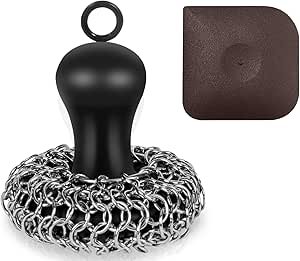
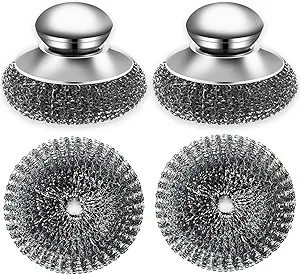
Within chainmail specifically, this site carries the Herda mushroom style chainmail scrubber and the Herda cast iron pan brush, which are close variations from the same brand and differ mainly in handle shape rather than in the mail itself. If you would rather have a loose mat with no handle, or a stainless wool alternative, the YZRIZX stainless steel wool scrubber covers that. The dish soap category is worth a look too, since modern dish soap does not strip a well seasoned pan the way older formulations did, despite what the no soap advice implies.
Who should buy it
Buy it if you cook in cast iron or carbon steel, you want the seasoning preserved as far as a metal abrasive allows, and you would rather hold a handle than a bare mat. The material specification is unusually good for this catalog and the ratings history is solid. Do not buy it for enameled, coated or non-stick cookware, for polished stainless, or as a general kitchen scourer. And treat the listed weight of 0.32 ounces as a data error rather than a product description.