Description
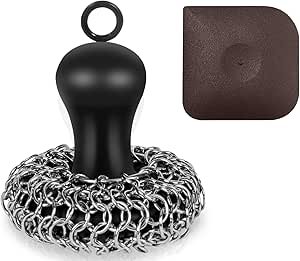
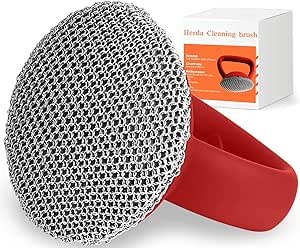
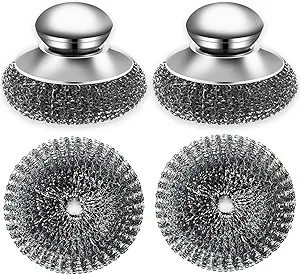
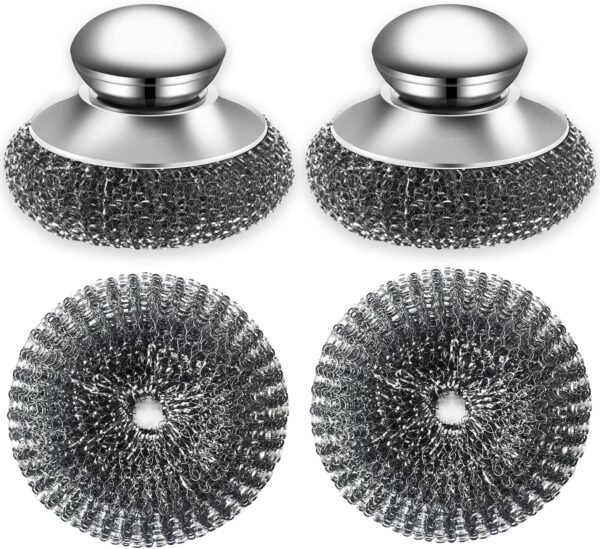
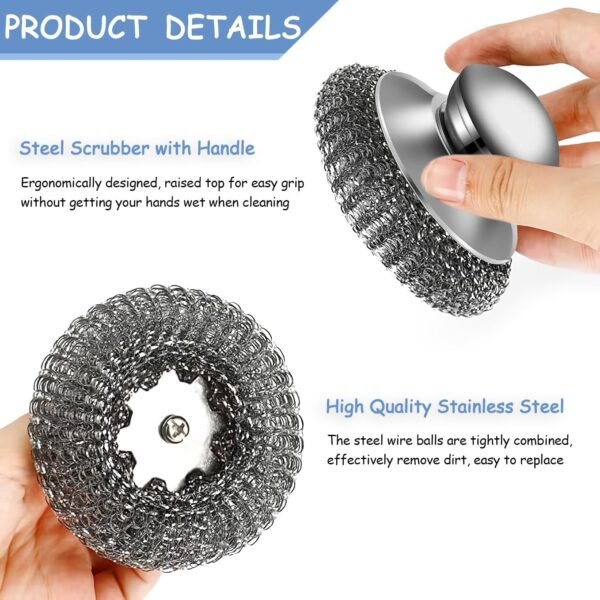
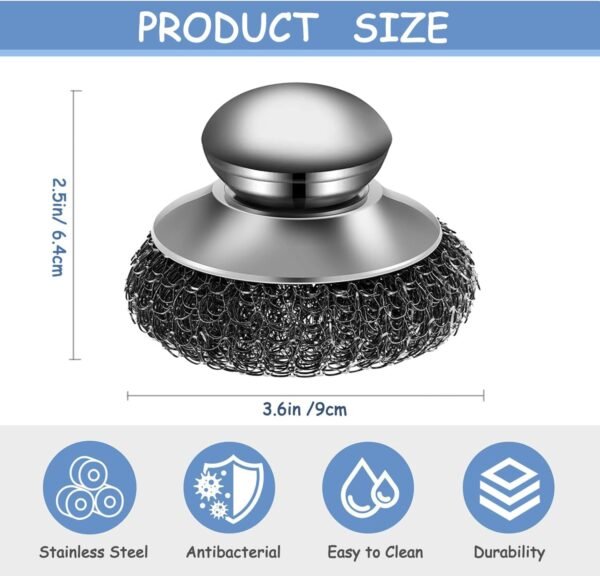
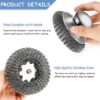
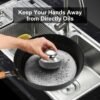
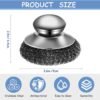
This YZRIZX set contains two stainless steel wool scrubbers mounted on handles, plus two replacement steel wool pads, making four pieces in total. The head is held on with screws rather than glue, the handle is stainless steel, and the whole set weighs 4.6 ounces. It is a heavy duty scrubbing tool, and the important part of that phrase is heavy duty rather than scrubbing.
What steel wool does that a sponge cannot
Steel wool cuts. It is a mass of fine metal filaments, and it removes baked carbon, burnt sugar and welded on residue by abrading the surface underneath along with the mess. That is the correct tool for a scorched stainless pan, a grill grate, a sink that has stained, or the underside of a pot that has been through several dinners. Nothing softer gets there in reasonable time.
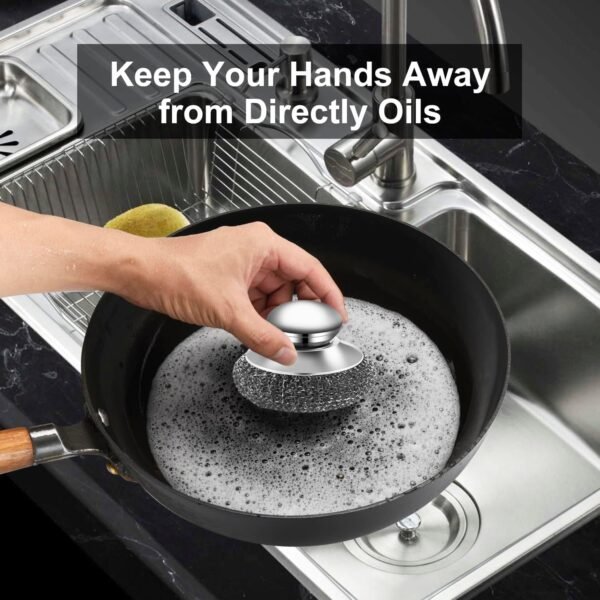
The handle is the feature that distinguishes this from a bare pad. A hand held steel wool pad puts your fingers into hot water, grease and metal filaments at the same time, and filaments break off and lodge in skin. Putting the pad on a handle removes all three problems and gives leverage, which is the real reason to buy this format rather than a bag of loose pads. The household this fits cooks on stainless or cast metal, and scrubs by hand.
What the listing says, and what to disregard
YZRIZX describes the pads as premium stainless steel with good toughness that does not deform easily, and states that the pad is fixed with screws so it does not fall off. Stainless matters here for one practical reason: ordinary carbon steel wool rusts within days of getting wet, and a rusting pad stains a sink and marks whatever it touches next. A stainless pad survives the dish rack.
Two fields on the page cannot both be right. The number of items reads two while the unit count reads four, and the description resolves it: two scrubbers plus two spare pads. More significant is the surface recommendation field, which lists ceramic, metal and vinyl. Steel wool has no business on vinyl, which is a soft plastic flooring or upholstery material that will be permanently scratched by it, and this review will not repeat that recommendation. The marketing text is similarly loose, describing the set as usable in the kitchen, the bathroom or outdoors on outdoor furniture, without naming a single surface it should be kept away from.
The cast iron recommendation to ignore
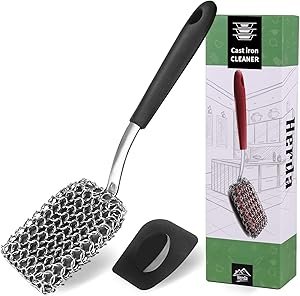
The description lists cast iron among the things this set will clean. Take that one carefully. Steel wool strips the seasoning off a cast iron pan, which is the polymerized oil layer that makes it release food and resist rust, and rebuilding that layer takes several rounds of oiling and heating. For cast iron the correct tool is chainmail, which knocks off residue without the fine abrasion, and our review of the Herda cast iron scrubber brush covers that alternative. Use steel wool on cast iron only when you have decided to strip the pan back and re season it deliberately.
Surfaces this belongs on, and the ones it will ruin
Bare stainless steel pans and sinks, enameled steel where the enamel is intact and thick, grill grates, oven racks, and unglazed outdoor metalwork are the sensible range. Those are hard enough to take the abrasion, and in most cases already carry a brushed finish where fine scratching does not show.
The exclusion list is longer and matters more. Keep steel wool off nonstick pans, ceramic coated cookware, anodized aluminum, glass cooktops, acrylic sinks and tubs, plated or polished faucets, mirror finished stainless, painted surfaces, laminate, and any printed or patterned item. On every one of those the damage is permanent and shows as a cloudy patch or a web of fine scratches under direct light. Vinyl and any soft plastic belong on the same list despite what the listing says. If you are unsure, test on a hidden area and look at it dry, in daylight.
Working with it and keeping it sanitary
Let heat and detergent do the softening before the metal touches the pan. A pot left to soak in hot soapy water for ten minutes gives up more residue than ten minutes of scrubbing, and the less force you need the less damage you do. Then work with the flat of the pad, moving in one consistent direction rather than circles, because a directional pattern blends into a brushed finish while circles stand out.
Rinse the pad thoroughly after every use and stand it to dry rather than leaving it in the sink. Steel wool traps food between the filaments, and a wet pad full of residue is the least pleasant object in a kitchen even when it is stainless and will not rust. The spare pads exist because the working pad flattens and clogs over time, so change it when it stops biting rather than pressing harder. Check periodically that the screws holding the head are tight.
Two safety points. Fine steel filaments break off and are sharp enough to lodge in skin, so rinse hands and the sink after use, and keep the set out of reach of children. And a general rule for any sink: never mix cleaning products in the basin. If you have used a bleach based cleaner, rinse the sink completely before washing dishes in it, and never combine bleach with an acidic or ammonia based cleaner in the same water.
Cost, and the alternatives worth weighing
The cost structure is a one time purchase with two refills included, so the second pad set is already paid for and the tool itself should last as long as you keep the screws tight and the pad rinsed. That is a good deal compared with disposable soap filled pads, which are consumed quickly and rust as they go, though the disposable format has the advantage of never becoming a thing you have to clean.
For that disposable approach, our review of the Brillo steel wool scrub pads covers soap filled pads for occasional heavy jobs. For everyday dishes where steel is far too aggressive, the SCRUBIT scouring pads and the Blulu plastic dish scouring pads are the safer grades, and the dish scouring pads category lays the options out by abrasiveness.
Whatever pad you use, the detergent is doing half the work, and a good dish soap reduces how hard you have to press, which is what protects your cookware. The dish soap category covers that side of the sink.
Who should buy it, who should not
Buy the set if you regularly face burnt on residue on stainless pans, grill grates or oven racks and want your hands out of the pad. Skip it if most of your cookware is nonstick, coated or enameled, and disregard the listing’s suggestions about vinyl and cast iron, because steel wool damages both. This is a specialist tool that works well inside a narrow range and does permanent harm outside it.