
Description
What the Bubble Up actually is
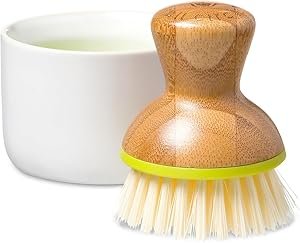
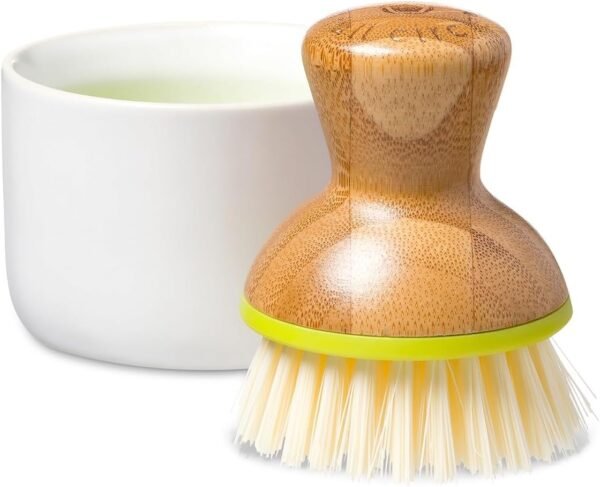
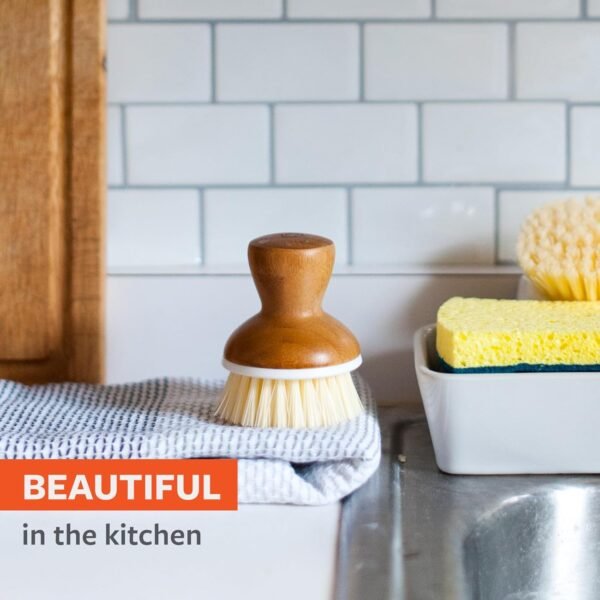
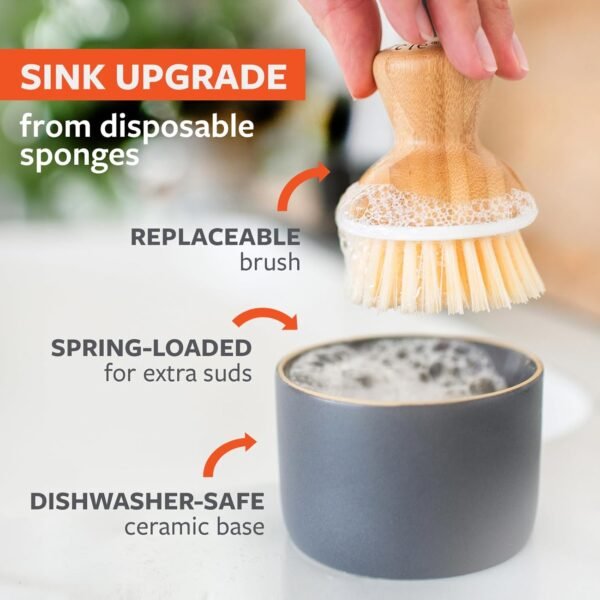
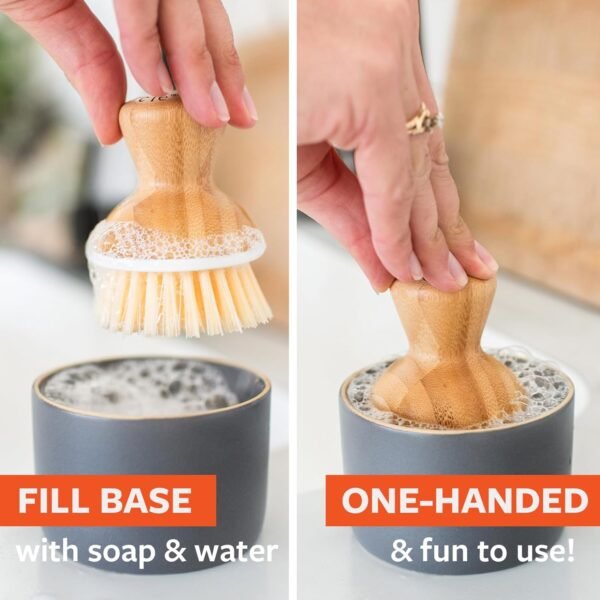
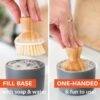
This is a two part washing up set: a ceramic base that holds dish soap, with a spring loaded platform on top, and a bamboo handled brush that stands in it. Press the brush down onto the platform and soap is released into the bristles. The idea is one handed dishwashing, where you never have to put the brush down to reach for the bottle, and the brush is always loaded with the amount of soap you actually need rather than the amount that comes out of a squeezed bottle.
That is a genuinely useful design for a specific way of working: rinsing and scrubbing items one at a time under a running tap rather than filling a sink. It is less relevant if you wash in a full basin, where the soap is already in the water.
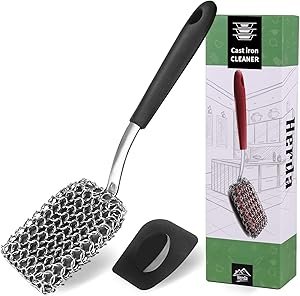
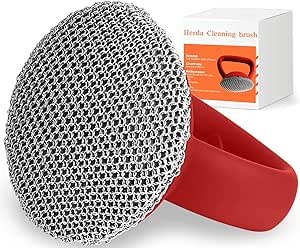
The listing names nonstick cookware and cast iron as intended targets, which tells you something about the bristle stiffness. A brush soft enough for nonstick is not going to shift baked on carbon, and for that a metal option such as the Herda cast iron pan brush is the right tool. This is an everyday washing up brush, not a scourer.
Materials, and the one specification that is missing
Full Circle names the materials clearly: a bamboo handle, a ceramic base and recycled plastic, with an overall size of 3.27 by 3.27 by 4.49 inches and a weight of 13.6 ounces. The company describes itself as a certified B Corporation and describes the brush head as replaceable, which is the detail that decides the long term economics of the set.
What is not published is the bristle material, and on a dish brush that is the central specification. Bristles are commonly nylon, plant fiber such as agave or tampico, or recycled polyester, and they differ in stiffness, in how they hold up to hot water, and in whether they are safe on a coated pan. The listing says the overall material is recycled plastic without saying whether that refers to the bristles, the platform mechanism or both. Read the packaging if this matters to you, particularly if the pans you are protecting are nonstick.
The record contradicts itself in several places
The Number of Items field reads 1 while the Number of pieces field reads 2, for a set that is plainly two parts. The Care instructions field reads Hand wash while a feature bullet states the ceramic base is dishwasher safe, which are both true of different components but read as a contradiction when compressed into one field. The Mildewresistant field reads BPA Free, the Department field reads Unisex-Adult, the Surface Recommendation field reads Ceramic, which describes the base rather than a surface to clean, and the Theme field contains two sustainability adjectives rather than a theme. None of those describe the product usefully. One bullet also describes the set as offering safe and organic cleaning, and organic has no meaning applied to a brush and a ceramic dish.
Set against that, one figure on this record is worth more than all of them: 26,105 ratings at an average of 4.7 stars. That is by a very wide margin the largest review sample of any product in this group, and it is the strongest evidence on the page.
What it suits, and what to keep it away from
Use it on everyday crockery, glassware, cutlery, and on nonstick and cast iron pans where a plastic bristle will not scratch a coating or strip seasoning. It also handles the sink itself, which the Specific Uses field names.
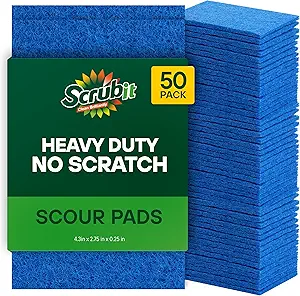
The limits are the ones any soft brush has. It will not shift burnt on carbon, baked sugar or a scorched roasting tin, and pushing harder to try produces a splayed brush head rather than a clean pan. For those jobs a powder such as the ScrubIt scouring pad or an abrasive is the correct escalation, and both belong in the same kitchen as this rather than instead of it.
The ceramic base is the fragile component. A ceramic dish sitting at the edge of a sink is a ceramic dish waiting to be knocked onto a tiled floor, so give it a stable position away from the drainer. It also needs to be somewhere it can drain, because a base that sits in a puddle of dilute soap grows a film.
Using it, and looking after the bamboo
Pre load the base with your usual dish soap, and use a soap you would normally dilute rather than a thick concentrate, since the platform mechanism works best with something that flows. Any of the liquids in the dish soap category will do, and a mainstream option such as Dawn Ultra or the Mrs Meyers liquid dish soap is what most people will pour in.
The bamboo needs care that plastic does not, and Full Circle says so: hand wash the brush and treat the handle occasionally with oil to preserve it. The reason is that bamboo is a grass, it absorbs water, and repeated soaking followed by slow drying is how a wooden handle splits, darkens and eventually grows mold at the joint. Shake the brush out after use, stand it so water runs off rather than pooling in the head, and do not leave it submerged in a sink overnight. Do not put the bamboo handle in a dishwasher regardless of what happens to the ceramic base, since dishwasher heat and prolonged wetting will destroy it quickly.
There is no chemistry to manage here beyond whatever soap you put in the base, which makes this one of the few products in this catalog with no ventilation, dilution or storage requirements of its own. The only rule that carries over is the general one: do not fill the base with anything other than dish soap. It is not a dispenser for bleach, for a disinfectant or for a mixture of products, and a ceramic well of unlabeled chemistry next to the sink is exactly the kind of thing that gets used by mistake.
Cost, and replacing the head
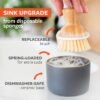
The replaceable head is what makes the arithmetic work. You buy the ceramic base and the mechanism once, and thereafter you are buying brush heads, which cost far less than a whole new brush and produce less waste. That only holds if replacement heads remain available for the model you own, so it is worth checking that before committing to the system rather than after the first head wears out.
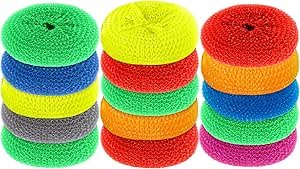
Against a plain brush or a sponge, the set costs more up front and less over time, and it takes up counter space that a brush in a drawer does not. Against the alternatives on this site, the Blulu plastic scouring pads are the disposable comparison, and the wider dish scouring pads category covers the range from soft brushes to metal. The useful way to shop it is by how much abrasion you need, and this set sits firmly at the gentle end.
Who should buy it
Buy it if you wash up under a running tap rather than in a filled sink, you want soap dispensed into the brush rather than squeezed from a bottle, and you like the idea of replacing a head rather than a whole tool. The review history is the strongest of any product in this group and the material disclosure is better than most. Skip it if you wash in a basin, if you need a stiff or abrasive brush for burnt on residue, if counter space is tight, or if the bristle material matters to you, since this listing never states it.