
Description
The job, and the chemistry that does it
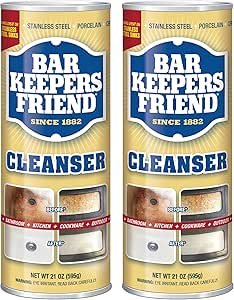
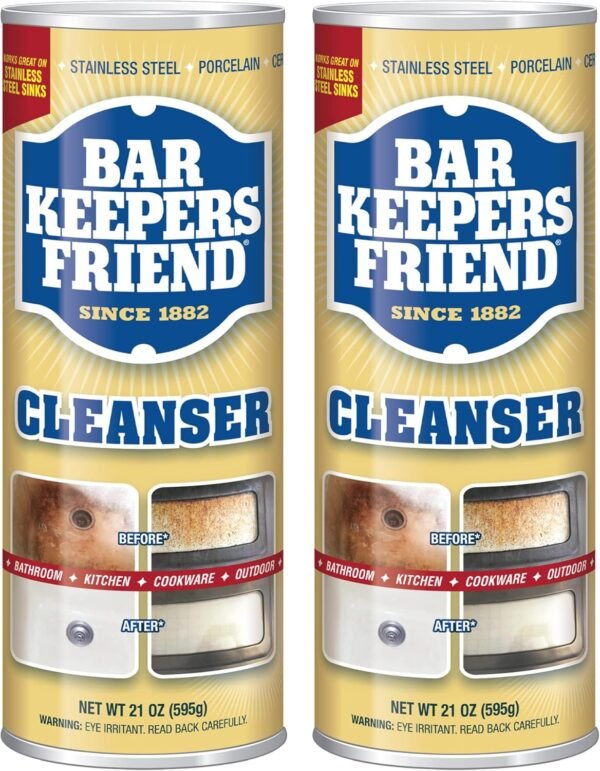
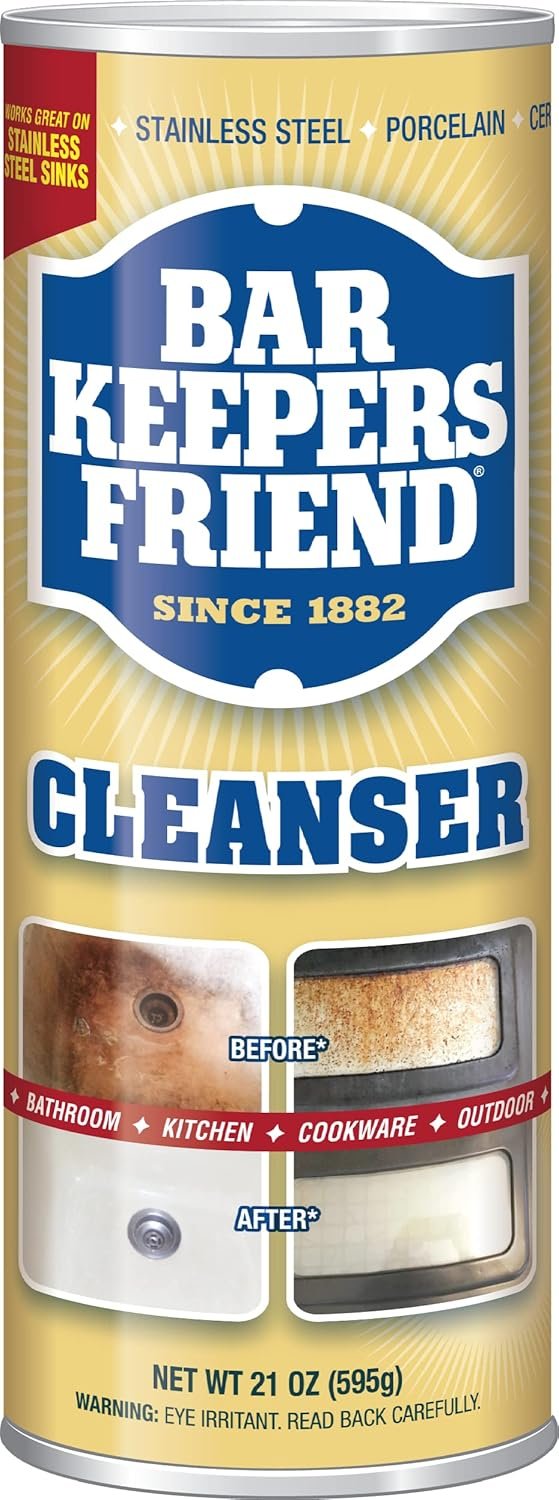
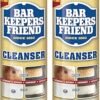
Bar Keepers Friend powder cleanser is a scouring powder sold here as 21 ounce cans in a two pack. It is one of the very few products in this catalog that names its active ingredient on the listing, and the ingredient explains everything the product does: oxalic acid.
Oxalic acid is a reducing agent as well as an acid, and that combination is what makes this powder unusual. Ordinary abrasive cleansers grind marks off. This one chemically attacks rust, tarnish, hard water scale and mineral deposits while a mild abrasive does the mechanical part. That is why it works on things a plain scourer cannot touch: rust stains in a sink, tea and coffee staining in a mug, tarnish on brass, limescale on a shower door, and the rainbow discoloration on stainless pans.
The household this fits is one with stainless steel, porcelain, ceramic or brass that has stopped looking clean despite being washed. It is not the everyday washing up product, and it is not a substitute for a general spray around a kitchen.
Directions, including a dwell time the listing actually gives
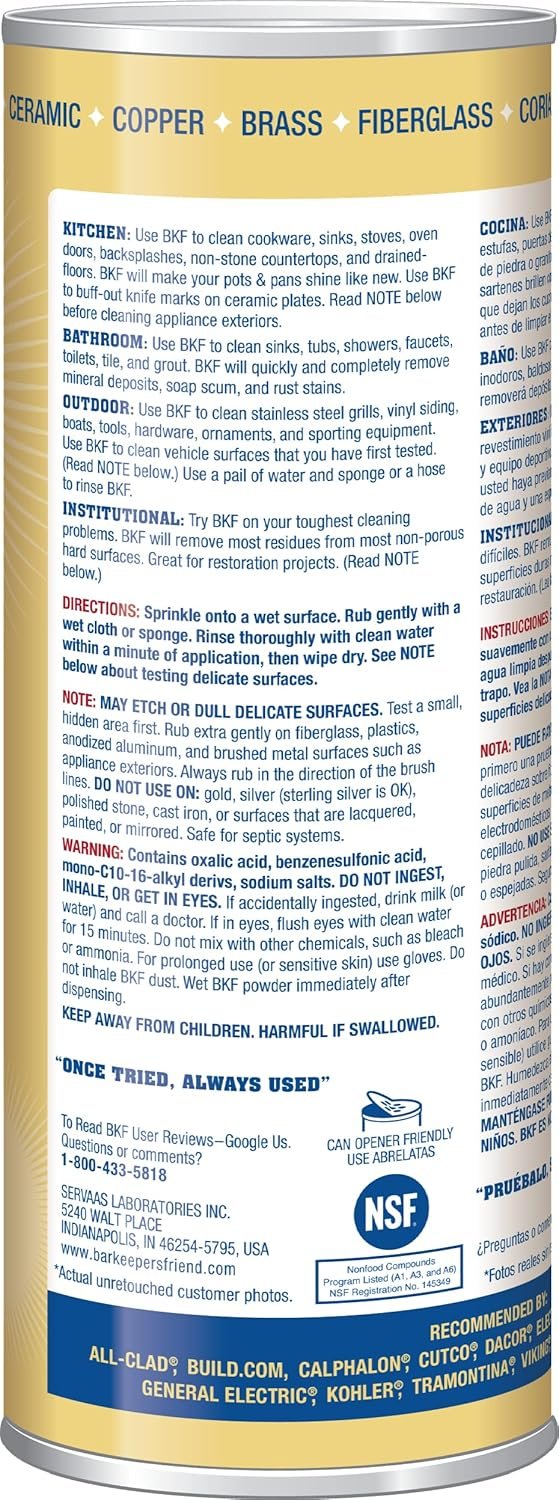
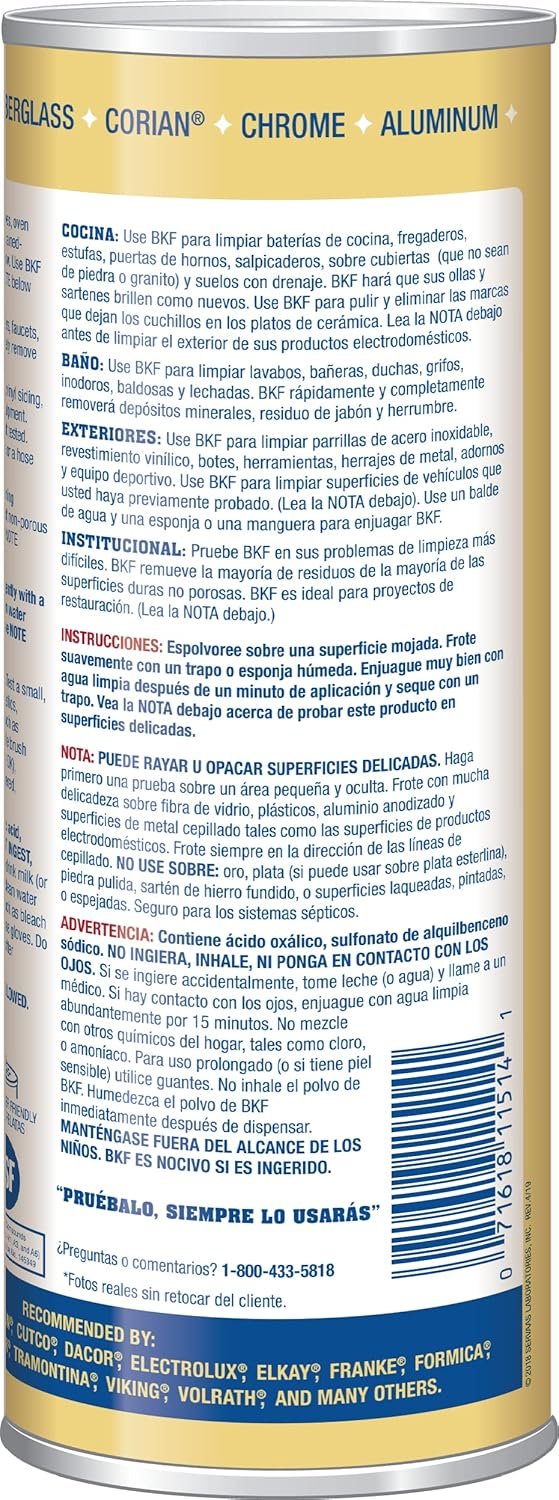
The instructions on this listing are specific and unusually complete. Apply the powder to a damp surface, add a little water to make a paste, spread it with a damp sponge while rubbing lightly, and rinse the cleanser away after one minute. Repeat if necessary.
That one minute is the number to work to and the one most people ignore in both directions. Rinsed immediately, the acid has had no time to work on rust or scale and you are left with a mild abrasive. Left on for ten minutes on a whim, an acidic paste sitting on a metal or glazed surface can dull it. Set a timer if you are cleaning a large area, and rinse thoroughly with clean water rather than wiping. Repeating a one minute application twice is safer and works better than one long one.
Rub lightly is part of the instruction
The word lightly in the manufacturer’s own directions is doing real work. The abrasive is mild, and the product is designed to let the chemistry do the removal. Scrubbing hard turns a mild abrasive into a scratching one on softer surfaces, and fine scratching on a stainless sink or a porcelain tub is permanent and shows in raking light long before it looks worn.
Surfaces, and the list this listing does not give
Bar Keepers Friend names a long list of suitable surfaces: stainless steel sinks and cookware, aluminum, brass, bronze, ceramic, porcelain tubs and tile, cast iron sinks, copper, Corian countertops, glass shower doors, oven doors, stove tops, oven racks, drip pans, grills and sporting equipment.
What it does not publish anywhere on this page is a list of surfaces to avoid, and an oxalic acid product has several. Acids etch calcite based natural stone, so keep it off marble, limestone, travertine and onyx, where the damage is permanent and no further cleaning reverses it. Keep it off gold and silver, off lacquered, painted and anodized finishes, and off anything with a coating. Keep it off non-stick cookware and off the seasoning on cast iron cookware, which is a different thing from a cast iron sink. Keep it off wood and off fabric. If the surface is polished, colored or coated and you are unsure, test in a hidden area first and check after drying.
For stone specifically, the same brand makes a separate product, the Bar Keepers Friend stone cleaner, and the existence of that separate product is itself the clearest signal that the powder cleanser is not for stone.
Safety, and one claim on this listing that should not stand
The listing states that the powder contains oxalic acid, a natural acid found in plants, and that it therefore is safe to use on most hard surfaces. It also says elsewhere that the cleanser contains no harsh chemicals. Both statements deserve pushing back on.
Oxalic acid does occur naturally in plants including rhubarb leaves and sorrel. It is also genuinely hazardous: it is toxic if swallowed, it is an irritant to skin and eyes, and inhaling the dry powder irritates the airways. Occurring in nature says nothing about how a concentrated form behaves, and using natural as a safety argument is exactly the kind of reasoning the Federal Trade Commission’s guidance on environmental marketing exists to discourage. The manufacturer’s own closing line is the more useful one: store the cleanser in a dry spot away from children and pets.
Handle it accordingly. Wear gloves, because an acidic paste on bare skin for repeated cleaning sessions is drying and irritating. Avoid raising dust when you sprinkle the powder, and do not lean over the can and inhale. Keep it out of eyes. Ventilate the room. Rinse the treated surface and your hands thoroughly afterward.
The mixing rule is not negotiable here, because this is an acid. Never combine it with bleach or with any chlorine containing cleaner, in a sink, in a bowl or on a surface. Acid plus bleach releases chlorine gas, and a bathroom or a kitchen sink is exactly where two products get used within a few minutes of each other. Use one product, rinse thoroughly with clean water, and only then reach for another.
Cost structure and what else does the same job
A dry powder is the most economical way to buy this kind of cleaning, because you are not paying to ship water and a can lasts a very long time in normal use. Two 21 ounce cans is a stock up quantity for most households, and the powder keeps indefinitely if it stays dry, which is the only storage requirement worth noting. Do not leave the can open under a sink where it will absorb moisture and cake.
Comparisons worth making are on abrasiveness and on chemistry. A cream cleanser such as the Campester soft cleanser is gentler and easier to control on delicate finishes. For appliance exteriors, a polish such as the Zep stainless steel cleaner and polish cleans and leaves a film rather than abrading, which is what a brushed appliance front actually wants. For shower glass specifically, a dedicated soap scum remover works without a powder. And when the job needs mechanical force rather than chemistry, a steel wool pad is the tool, though it comes with its own surface restrictions. See the all-purpose cleaners category and the metal polishes category for the range.
Who should buy it, and who should not
Buy it if you have rust staining, hard water marks, tarnish or baked on residue on stainless, porcelain, ceramic or brass, and you will follow the one minute application and rinse properly. Naming the active ingredient and publishing a dwell time puts this listing well ahead of most in this catalog. Skip it if your surfaces are marble or other calcite based stone, if they are lacquered, coated or non-stick, or if the job needs a general purpose cleaner rather than a targeted acid. And do not read natural as a safety statement: oxalic acid is effective because it is an acid, and it should be handled as one. Note also that the listing sells a two pack while the recorded package weight matches a single can.