
Description
A produce wash, filed among household cleaners
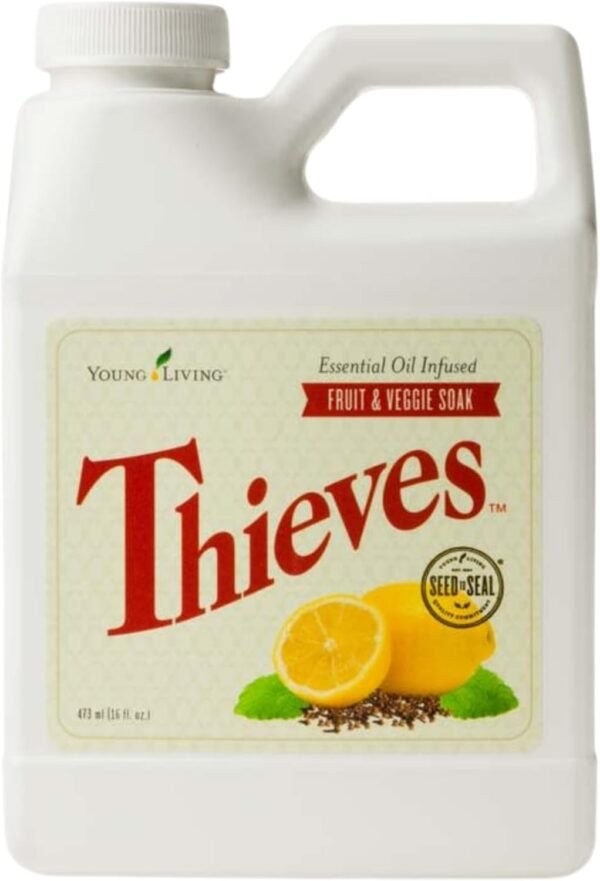
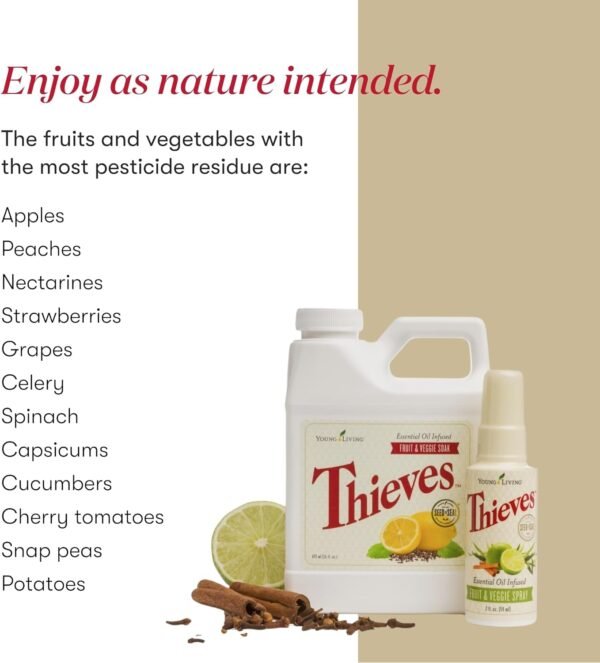
Young Living sells this as a 16 fluid ounce Thieves Fruit and Veggie Soak. The listing dates to April 2019, the bottle weighs a pound, and Amazon places it 26,964th in Health and Household and 362nd among all purpose household cleaners.
That category is wrong in a way worth correcting immediately. This is not a surface cleaner. It is a soak for fruit and vegetables, used in a bowl of water and then rinsed off food that is about to be eaten. Using it as a countertop spray would be an expensive way to clean a counter, and reaching for a household cleaner to wash produce would be considerably worse. The nearest correct neighbors on this site are the other produce products, such as the Fit Organic fruit and vegetable wash, which sits under dish soap along with the rest of the kitchen consumables.
The ingredient list, which is real and worth reading
Something unusual happens on this listing: the product title names the ingredients. Water, decyl glucoside, citric acid and sodium citrate. Four components, disclosed on the page, in a catalog where almost nothing publishes a formula.
Those four also explain themselves, which makes this one of the few products here where the chemistry can actually be described rather than guessed at.
Decyl glucoside is a mild nonionic surfactant made from a sugar and a fatty alcohol. Its job is to lower surface tension so that water can lift the waxy coating, field dust and handling residue that plain water runs straight off. It is the reason the product does anything at all.
Citric acid and sodium citrate together form a buffer: the acid and its salt hold the solution at a mildly acidic pH rather than letting it drift. Citrate is also a chelator, meaning it binds calcium and magnesium from hard water so those minerals do not tie up the surfactant or leave a film on the produce.
Two contradictions on the same page
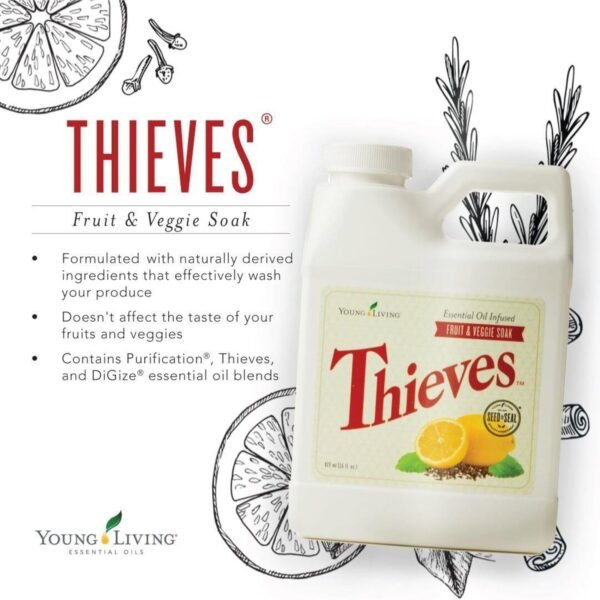
The second feature bullet says the soak features Young Living’s Thieves blend of clove, lemon and cinnamon essential oils. The ingredient list in the title contains no essential oils at all. Those two statements cannot both be complete, and a buyer choosing this specifically for the Thieves blend, or specifically avoiding essential oils, has no way to resolve it from the page.
The fifth bullet is headed chemical free assurance and says the product is made without harsh chemicals or synthetic additives. Decyl glucoside is a manufactured surfactant. Citric acid and sodium citrate are chemicals, whatever their origin. Nothing on earth is chemical free, water least of all, and the phrase means nothing. Read it as marketing and read the ingredient list instead, which is the far more useful thing the same listing already gave you.
Dosing, soaking and what the listing leaves out
The listing calls the formula highly concentrated and says a small amount provides multiple uses. It then gives no dose, no dilution ratio, no soak time and no rinse instruction beyond the phrase soak, rinse and enjoy. For a concentrate used on food, those are the four numbers that matter most and none of them is here. Read the bottle.
The general method for a produce soak is a bowl of cool water, the stated dose of product, a short soak, agitation, then a thorough rinse under running water. The rinse is not optional: whatever the label says about the ingredients, you do not want surfactant residue on food.
Do not soak porous or delicate produce for long. Berries, mushrooms and leafy greens absorb water and degrade quickly afterward, and mushrooms in particular should be wiped rather than soaked. Wash produce shortly before eating rather than before storage, since wet produce spoils faster in a refrigerator.
What a produce wash can and cannot claim
To this listing’s credit, it makes no claim to kill anything. There is no antimicrobial claim, no registration and no contact time, and none should be expected, because a product sold to reduce pathogens on food is a different regulated category entirely.
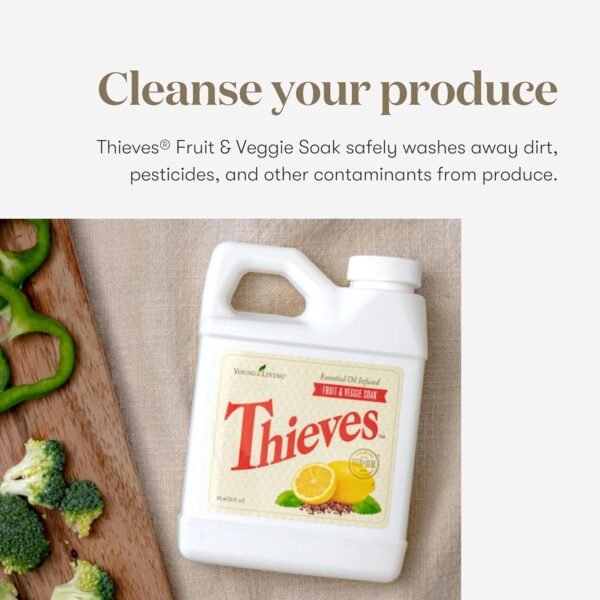
What it claims is removal of dirt, wax and residues, and that is a fair description of what a surfactant does. The phrase ensuring they are ready to eat is looser than the rest and should not be read as a food safety statement.
It is also worth knowing what the published guidance says. The Food and Drug Administration advises washing fresh produce under running water and rubbing firm produce with a brush, and states that produce washes have not been shown to be more effective than water alone. That is not an argument against buying this product, which removes wax and handling residue well enough. It is an argument against believing that skipping it leaves food unwashed.
Handling, storage and cost
Keep the bottle out of reach of children and pets, and do not decant it into an unlabeled container, which matters more for a product that lives in a kitchen among food. Keep it off skin for prolonged periods and out of eyes, rinse with water on contact, and never mix it with another cleaning product, in a bowl or anywhere else.
Store it capped and upright at room temperature, away from direct sun. Wash the soaking bowl afterward rather than reusing the water for a second batch.
On cost, a 16 ounce concentrate used a small amount at a time should last a long while, and the true measure is cost per bowl rather than cost per bottle. Without a stated dose that figure cannot be calculated, which is the same complaint as everything else on this page.
If the goal is simply to wash produce, running water and a brush cost nothing. If a surfactant is wanted, the alternatives include the produce specific products above and, for a very different job in the same kitchen, the CareFree Enzymes egg washing cleanser shows how narrow these food adjacent products can be. For dishes rather than food, an ordinary liquid such as the Seventh Generation dish soap or the Dawn Ultra dish soap is the correct product, and dish liquid should never be used to soak food. Browse the wider range under all purpose cleaners.
Who should buy it and who should not
Buy it if you want a produce soak with a published ingredient list, which is genuinely rare, and you are comfortable working out the dose from the bottle. The four named components are mild, sensible choices for the job.
Do not buy it as a household surface cleaner despite the category. Do not buy it expecting the Thieves essential oil blend, because the ingredient list on the same page does not include it. And do not read the chemical free bullet as meaning anything, since the listing itself names the chemicals two lines above it.