

Description
What liquid starch is for, and who still buys it
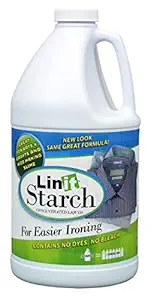
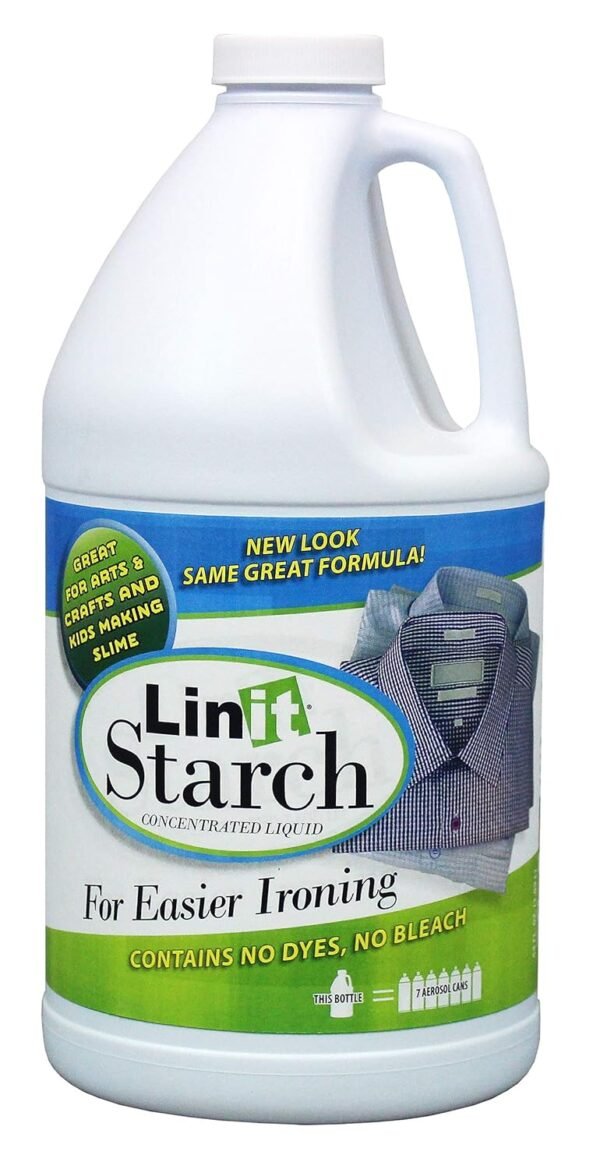
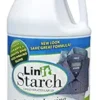
Linit Starch Crisp Classic Finish is a sixty four ounce bottle of liquid laundry starch, listed under model number LN-408440. Starch is one of the oldest laundry products still in ordinary use, and its job has not changed: it stiffens cotton and cotton blends so that a shirt collar stands up, a placket lies flat and a pair of slacks holds a crease. Linit names button up shirts, pants and slacks as the intended garments. Starch is for woven cotton, not for knitwear.
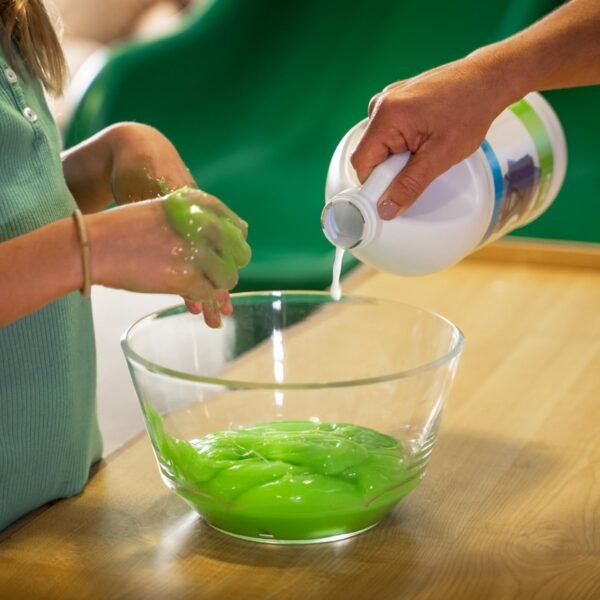
Two households buy this. The first irons regularly and wants the crisp hand that a dry cleaner produces, without paying for it every week. The second is buying starch for craft use, and the listing is unusually open about this, naming slime, paper mache and putty projects and pointing at classroom use with children aged four to eight. That second audience is a large part of why a bottle this size still sells, and it is worth knowing you are buying a laundry chemical for a craft purpose.
The bottle is a bulk format. Linit states that each sixty four ounce bottle contains the equivalent of seven aerosol cans, which is the clearest statement of the cost structure the listing offers: you are buying concentrate and water separately rather than paying to ship propellant and packaging.
How starch behaves on fabric, and what the listing does not disclose
Starch works by depositing a film of starch granules between and around fibers. When the iron applies heat and pressure, that film sets and the fabric becomes temporarily stiffer and smoother. It washes out completely in the next laundry cycle, which is both the advantage and the limitation: the effect is renewable but it is not permanent, and it must be reapplied at every pressing.
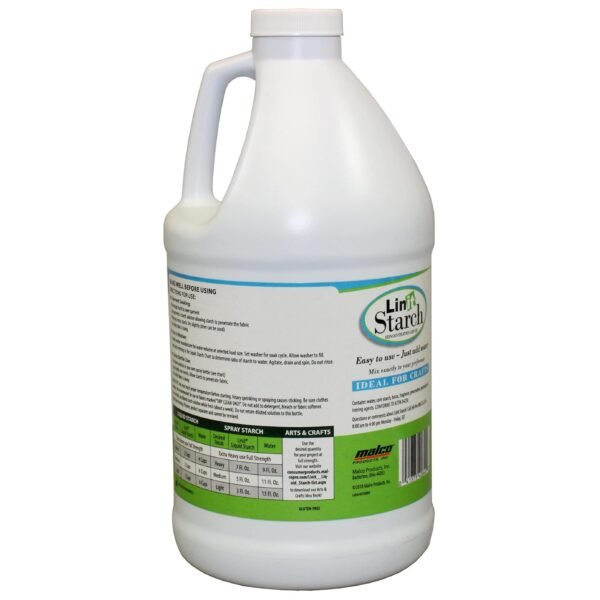
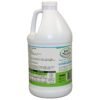
The listing publishes no ingredient list. There is no starch source named, no concentration given, no preservative declared and no fragrance information. That is a genuine gap on a product that people put on garments worn against skin and hand to children for craft work, and the only remedy is to read the printed label on the bottle before use. This review will not guess at what is in it.
Linit does make a functional claim worth separating from the marketing: it states the product is proven to release and remove wrinkles from clothes when mixed with water and applied before ironing. No study, protocol or comparison is cited for the word proven, so read it as a manufacturer statement about a well established product category rather than as a published test result.
The dilution question the listing leaves open
This matters and the listing handles it badly. Linit instructs the user to mix liquid starch with water and apply it to clothing before ironing, but gives no ratio anywhere on the page. Starch strength is entirely a function of that ratio, and the difference between a light finish and a board stiff collar is how much water you add. Do not guess from another brand’s instructions. The mixing guidance is printed on the bottle and that is the only ratio to follow. Mixing too strong is the cause of the two classic starch complaints, white flaking at the fold and a scorched brown mark under the iron.
Fabrics and surfaces, including what to keep it off
Starch suits woven cotton and cotton rich blends: dress shirts, table linen, napkins, pillowcases, uniform shirts and lightweight cotton trousers. It also works on linen, though linen holds a crease differently and usually wants a lighter mix.
Keep it away from several things. Wool and silk do not take starch well and the heat needed to set it risks the fiber. Synthetics such as polyester and nylon glaze at the iron temperature that sets starch properly, so keep the iron low and expect a weaker result. Dark fabrics show starch residue as white specks more readily than light ones, so mix weaker for navy and black, and stretch blends should be left alone.
Keep starch off the iron’s soleplate and steam vents, where overspray bakes into a brown film that transfers to the next garment. Spray the garment, not the iron, and never pour laundry starch into an iron’s water reservoir.
Correct use, storage and the parts that need care
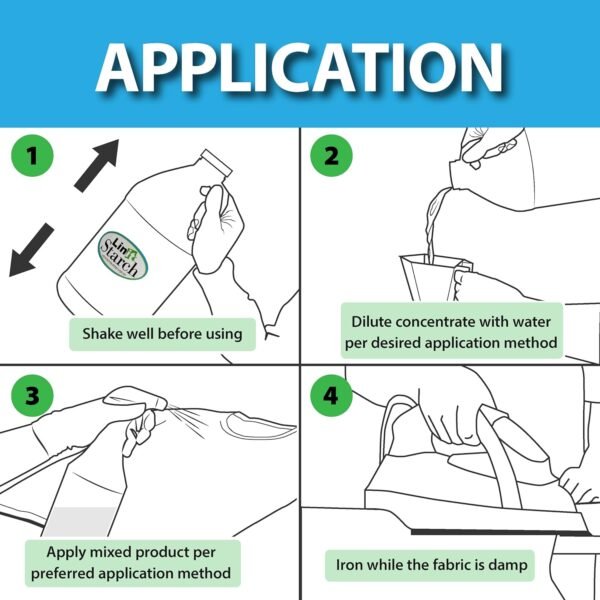
The sequence is straightforward. Dilute according to the bottle. Decant into a clean spray bottle if the pack does not include one, and label it clearly so nobody mistakes it for water or for another cleaning product. Lightly mist the garment, let it absorb for a moment rather than ironing it soaking wet, then press. Work collar, cuffs and plackets first while the iron is at its cleanest.
On storage, keep the bottle capped and at room temperature, and do not leave diluted mixtures standing in a spray bottle for weeks. Mix what you need. Garments should not be put away starched for long either, because starched cotton in a closet is known to attract insects such as silverfish, and damp starched fabric mildews.
For the craft use the listing promotes, apply the same caution you would to any household chemical handed to a child. It is not food. Supervise use, keep it out of eyes and mouths, wash hands afterward, and store the bottle out of reach between projects. Never combine it with any other cleaning product, and never add bleach to a starch mix. If it reaches the eyes, rinse thoroughly with water. The listing carries no first aid guidance at all, so the printed label is your only reference.
Running cost and the alternatives
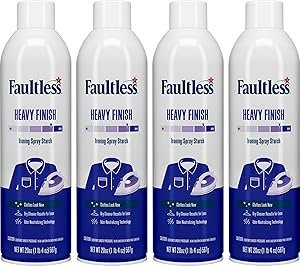
The economics of a concentrate are the reason this format exists. Sixty four ounces diluted goes a long way, and Linit’s own comparison of one bottle to seven aerosol cans is a fair way to frame it. The cost is convenience: aerosol starch is grab and spray, while liquid starch is mix, decant and label. Households that press two shirts a week will find aerosol easier to live with, and the catalog carries the Faultless spray starch and the Faultless laundry starch spray multipack for exactly that reader.
If crispness is not really the goal and the actual complaint is limp, static prone laundry, starch is the wrong lever. A dryer sheet such as the Laundry Sauce dryer sheet addresses static and hand feel without any ironing step. The broader starch and anti static spray listings and the general laundry listings cover both routes.
Amazon ranked this bottle ninth in Starch and Anti-static Sprays when the listing data was captured.
Two data problems worth knowing before you order
The specification block on this listing is unreliable. Product dimensions are given as 1 by 1 by 1 inches with a weight of 1 pound, which cannot describe a half gallon bottle and is clearly a placeholder. The manufacturer field reads Beauty Exchange LLC Dropship, which is a reseller rather than the maker of Linit. Two different UPC numbers are listed in the same field. None of that changes what arrives, but it means shipping weight, box size and manufacturer contact details from this page should not be relied on.
Who should buy it and who should not
Buy it if you iron cotton shirts regularly and want to control the strength of the finish yourself, or if you are buying starch in bulk for craft or classroom use and are comfortable supervising it as a chemical rather than a toy.
Do not buy it if you press occasionally and want the simplest possible route, because an aerosol is easier for that. Do not buy it for wool, silk, stretch fabrics or knitwear. And do not buy it expecting the listing to tell you what is in the bottle, because it does not.