

Description
What a dissolvable refill actually changes
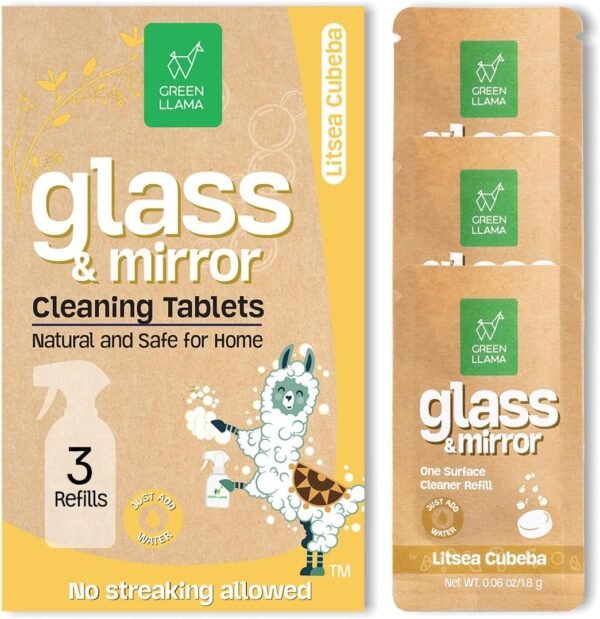
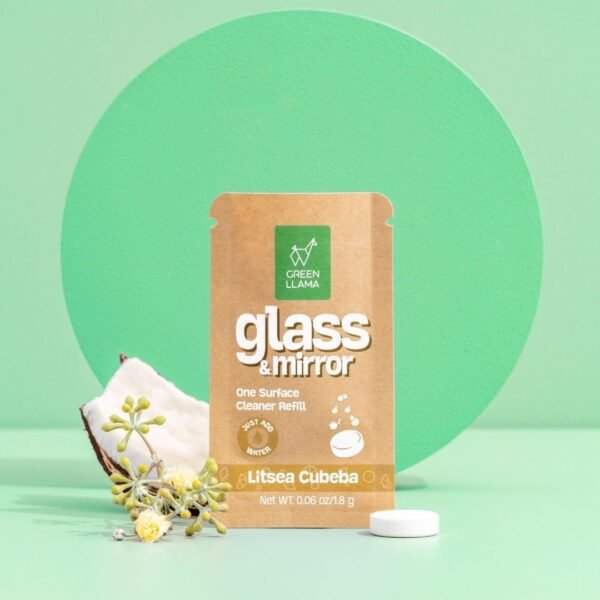
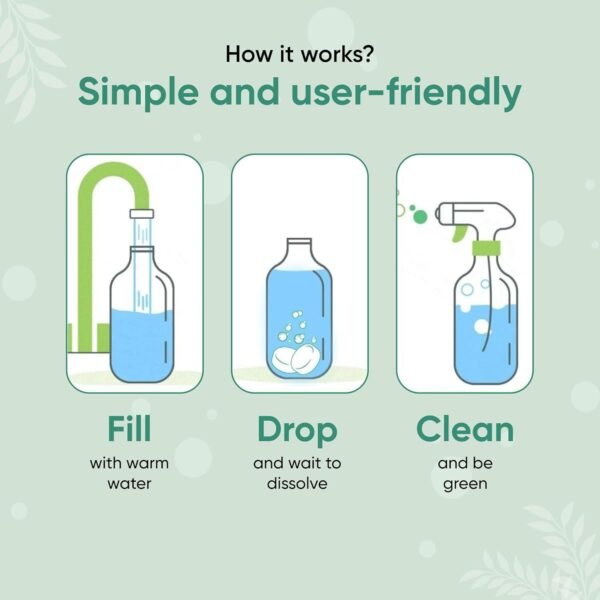
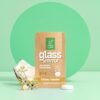
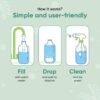
This is a three pack of window and glass cleaning refills, sold as concentrate that dissolves in water rather than as a bottle of ready to use spray. The listing gives one clear instruction and it is the most useful line on the page: dissolve one refill in sixteen ounces of water. That is a stated ratio, which is more than many concentrates on this catalog provide, and it means each refill produces one standard spray bottle of glass cleaner.
The argument for the format is about what you stop paying to move. A ready to use glass cleaner is mostly water in a plastic bottle, and water is heavy and cheap. A refill ships the active portion only and you add the water at the sink, which cuts shipping weight and removes a plastic bottle from every purchase. Against that, you need a spray bottle to begin with, you have to wait for the refill to dissolve, and you have to get the water measurement right rather than having it done for you.
The household this suits already owns a trigger bottle and cleans glass often enough to work through three refills. If glass gets cleaned twice a year, a single ready to use bottle is simpler and there is no shame in that.
The claims on this listing, and how much weight they carry
The listing carries an unusually dense stack of environmental and safety language, and each phrase needs separating from the next. It describes the product as eco friendly, non toxic and zero waste, with natural scents from essential oils, and states that the ingredients are EPA Safer Choice approved. It describes the packaging as TUV certified compostable. All of those are the seller’s own statements and this review repeats them as claims rather than endorsing them.
Two are worth unpacking. Safer Choice is a labeling program run by the Environmental Protection Agency that reviews the ingredients in a cleaning product against its own criteria. It is a real program with real requirements. It is not a statement that a product is harmless, it is not a toxicity rating, and the label applies to specific reviewed products, so a shopper who cares about it should confirm the certification on the product itself rather than relying on a sentence in a listing. Compostable packaging certified by TUV is likewise a claim about the wrapper, not about the cleaner inside, and most certified compostable films require industrial composting rather than a garden heap.
The words natural and non toxic carry no fixed regulatory meaning in consumer cleaning products, and using them without an ingredient list to back them up is exactly the pattern federal advertising guidance on environmental claims warns against. This listing publishes no ingredient list at all. No surfactant is named, no solvent is named, no essential oil is named, and no pH is given. Anyone with a fragrance sensitivity, or anyone who needs to know whether a product contains ammonia or alcohol before spraying it near a pet or a bird, has nothing to work from here and should read the sachet.
The listing has no specification block
Unlike most entries in this catalog, this page carries no specifications at all: no ASIN, no dimensions, no weight, no manufacturer field and no date. The four feature bullets are the entire technical content of the listing. That is worth knowing before ordering, because there is no published net weight per refill to compare against another concentrate.
Glass, and the surfaces around it
Glass cleaner is for glass and other smooth non porous surfaces: windows, mirrors, glazed doors, glass tabletops and shower screens. Streaking on glass is usually a technique problem rather than a product problem, and the two causes are too much liquid and a cloth that already carries residue. Use a light mist and a dry lint free cloth, and work top to bottom.
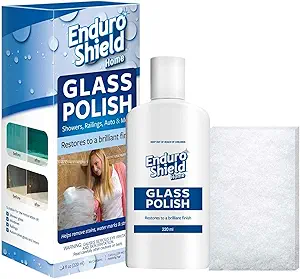
Several surfaces around a window need care. Do not let glass cleaner run onto unsealed wood sills or painted frames and sit there. Avoid spraying near tinted window film, since some glass cleaners lift the adhesive edge over time, and spray the cloth rather than the glass when working near film. Keep it off untreated natural stone sills, which want a stone specific product, and off screens and displays, which need a dedicated electronics wipe such as the Weiman electronic wipes rather than a household spray. In a shower, glass cleaner will not shift mineral scale, and that job belongs to a specialist product like the Rejuvenate soap scum remover or the coating approach taken by the EnduroShield shower door treatment.
Mixing, labeling and storing it safely
Follow the stated ratio of one refill to sixteen ounces of water and do not improvise a stronger mix. Concentrates are formulated around a dilution, and doubling the dose on glass produces streaks rather than a better clean. Let the refill dissolve fully before the first spray so that undissolved particles do not scratch glass or block the trigger.
Label the bottle. A diluted, unlabeled cleaner in an unmarked trigger bottle is a genuine household hazard, particularly in a home where several concentrates are in use, and a clear water resistant label with the product name is the fix. Use a clean bottle that has not held another cleaner. This matters more than it sounds: residue from a bleach based or acidic product left in a bottle can react with whatever you put in next, and mixing cleaning chemistry in a sealed sprayer is one of the ways people injure themselves at home. Never combine this or any cleaner with bleach, ammonia or an acidic descaler.
Store undissolved refills dry and sealed, out of reach of children, since a small dissolvable sachet is exactly the sort of object a toddler will investigate. Keep the diluted bottle out of reach too, and avoid eye contact when spraying at head height, which is most of the time with windows.
What the refill format costs over time
Three refills means three bottles of cleaner, and that is the number to compare against a ready to use spray. The real saving is not usually in the liquid, it is in the shipping and the bottle, so the format rewards buyers who keep and reuse one good trigger sprayer for years. If the sprayer gets thrown away after each set of refills, most of the argument disappears.
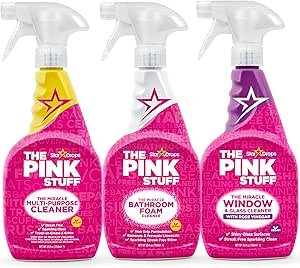
For comparison across formats, the catalog carries ready to use options in the glass cleaner listings, including the Stardrops Pink Stuff multi purpose spray, and a broader concentrate approach in the all purpose cleaner listings, where a single concentrate can cover glass and general cleaning from one bottle.
Who should buy this and who should not
Buy it if you already spray glass regularly, you own a trigger bottle you intend to keep, and reducing shipped water and plastic is something you actively want. The stated one refill to sixteen ounces ratio makes it easy to use correctly.
Do not buy it if you want to know what you are spraying before you buy it, because the listing names no ingredients. Do not buy it expecting it to remove limescale or hard water spotting on shower glass, which needs a different chemistry. And do not treat the non toxic and natural wording as a safety assurance, because nothing on the page supports that reading.