
Description
A wipe made for glass you cannot replace easily
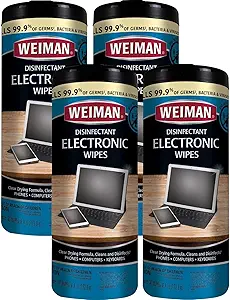
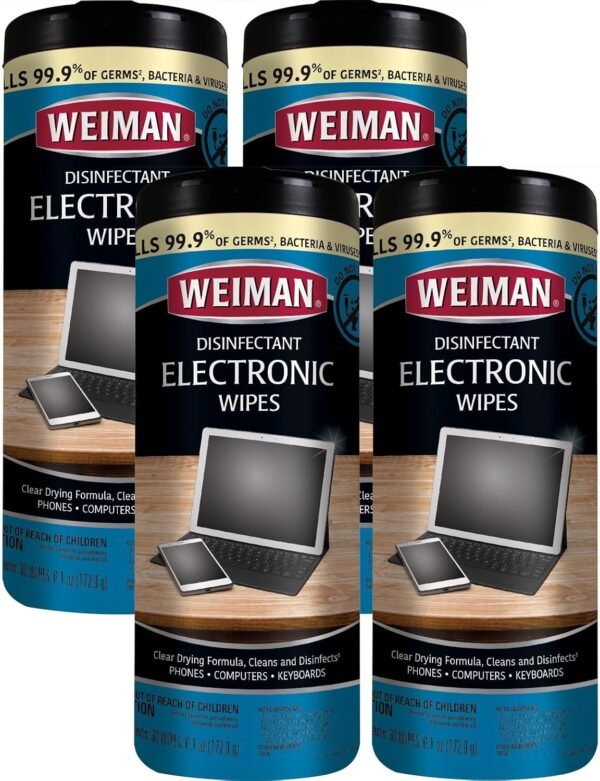
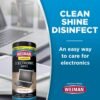
Weiman sells these as four packs of 30 electronic screen wipes, 120 sheets in total, for laptops, computers, televisions, tablets, phones, keyboards and touchpads. The reason a screen specific wipe exists at all is that modern displays are not bare glass. Most carry an anti reflective layer and an oleophobic coating that repels finger oil, and those coatings are the part that gets damaged when somebody reaches for a household glass cleaner. A product sold for screens is, in principle, formulated to lift oil without attacking the coating.
Weiman states the wipes leave a streak free finish and do not scratch or harm surfaces, and lists them for hard non porous surfaces. The use case is genuine and the format is convenient, one sheet per device, no bottle, no cloth to keep clean. The trade is cost per wipe and a pile of single use sheets, which is the same trade every wipe format makes against a spray and a microfiber cloth.
The formula, and the claim that needs a number behind it
No ingredient list appears anywhere in this listing, and the description field is empty. Weiman does not say whether the wipes contain alcohol, what kind, at what concentration, or whether ammonia is present. For a screen product that is exactly the wrong thing to leave out, because the compatibility question buyers ask is a chemistry question: device manufacturers commonly warn against ammonia and against high concentrations of alcohol on coated displays, and some specify isopropyl alcohol at a stated dilution as the only acceptable option. Without the ingredient list, this page cannot answer that, so check your own device maker’s cleaning guidance before wiping a screen you would be unhappy to replace.
The disinfection claim, and what is missing from it
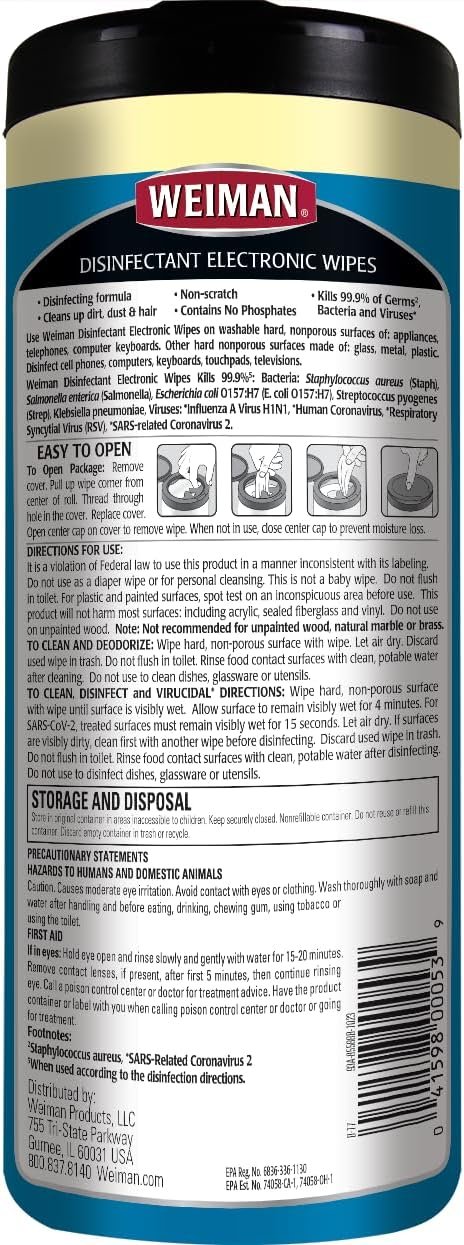
The first bullet reads as a new disinfecting formula that kills 99.9 percent of germs and bacteria, and a later bullet says the wipes keep devices clean and sanitary. That is a claim by Weiman. In the United States, a product making an antimicrobial claim is regulated and its label carries an EPA registration number and a stated contact time. Neither appears in this listing. No pathogen is named, and the instruction given is to wipe and let air dry, which is not a dwell time.
The practical point is the one that matters. A disinfection claim only holds if the surface stays visibly wet for the period the label specifies, and a small quantity of liquid on a warm screen dries in seconds. Treat these as cleaning wipes that remove fingerprints and oil, which is what they are plainly good at, and read the printed pack if you need the registration number and contact time to rely on the germ claim. We make no disinfection or health claim about this product.
What to wipe, and what to leave alone
Weiman names televisions, cell phones, computers, keyboards, tablets and touchpads, all described as hard non porous surfaces. Glass fronted phones and tablets, laptop screens and glossy monitor panels are the intended targets.
Several cautions do not appear on the page. Never apply liquid directly to a device; use the wipe on the surface and keep moisture away from ports, speaker grilles, hinges and the seam at the edge of a laptop screen, because capillary action pulls liquid under a bezel very effectively. Be careful with matte and anti glare panels, which are more easily marked than glossy ones, and with older laptop screens whose coating is already flaking. Keep any wipe away from bare, uncoated camera lenses and from e ink displays unless the device maker permits it. Turn the device off and let it cool first; wiping a hot screen leaves streaks and evaporates the liquid before it does anything.
Keyboards deserve a separate thought: a wipe is fine on key tops but liquid running between keys is not, so wring the sheet out on a paper towel before going near a laptop keyboard. For general household surfaces rather than screens, a cheaper general wipe such as the Juniper CLEAN surface wipes is the sensible choice, and where an alcohol wipe is genuinely required the Wipex isopropyl alcohol wipes state what they contain.
Using them well, and storing them
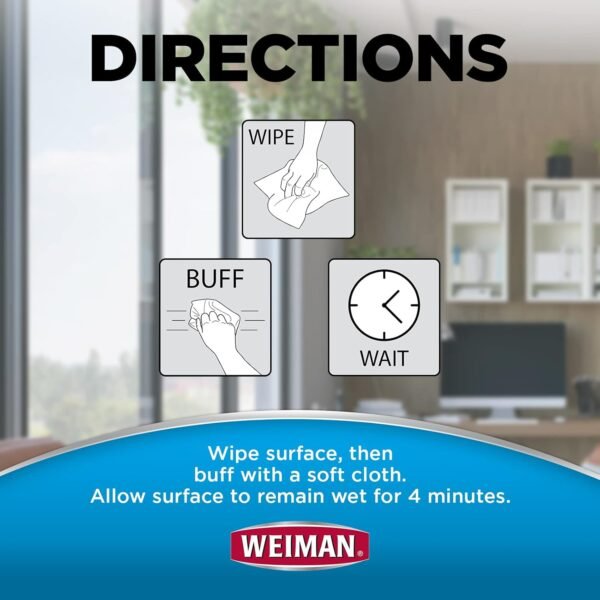
One sheet per device, and use a fresh face of the sheet as it loads with oil rather than dragging the dirty side across the rest of the screen. Work in straight overlapping passes rather than circles, since circles are what produce visible swirl marks on a coated panel. Let the surface air dry as Weiman directs rather than buffing it with a paper towel, which is abrasive enough to matter on a soft coating; if you want a final pass, use a clean dry microfiber cloth.
Keep the packs sealed. Screen wipes dry out faster than most because the sheets carry a small volume of a volatile liquid, and a pack left open becomes a pack of dry cloths. Open one pack at a time and leave the other three sealed.
On safety, treat this as a cleaning chemical even though it is aimed at gadgets. Keep it out of reach of children, keep it off skin and out of eyes, and do not use it on a surface that still holds another cleaner. Never combine a wipe with a spray from a different bottle, and if you have just used a bleach or ammonia based product nearby, ventilate before working in the same space. Used sheets go in the trash and are not flushable.
Cost, and the alternative that costs almost nothing
One hundred and twenty sheets is a bulk buy and the cost per wipe is low, which makes this reasonable value for an office, a classroom or a household with a lot of devices. The comparison worth being honest about is against a good microfiber cloth and, where the device maker permits it, a lightly dampened corner of that cloth. Reusable microfiber removes fingerprint oil extremely well, costs nothing per use, and eliminates the disposal question entirely. Wipes win on convenience and on not having to keep a cloth clean.
Within this catalog the neighbors are worth knowing. For gym and shared equipment the Wipex gym wipes are built for a different substrate, and where a registered disinfecting wipe with a printed label is what you actually need, a product such as the CaviWipes disinfectant wipes is the right category. Comparable general products sit under all purpose cleaners, and the registered products are in disinfectant wipes.
Two record oddities. The listing carries no description at all, so the five bullets are the entire published content. And a screen cleaning product is filed under all purpose household cleaners rather than under any electronics heading, where it currently ranks 367th, on 470 ratings averaging 4.3 stars. The pack weighs 2.71 pounds for 120 wipes across four packs.
Who should buy these
Buy them if you have a lot of screens and want a convenient single use wipe for fingerprints and oil, and you have checked that your device manufacturer does not restrict what may touch its coating. Skip them if you were buying for the germ claim, since no registration number or contact time is published, or if you would rather use a reusable microfiber cloth and spend nothing per wipe.