
Description
A stain focused pac, and the household it fits
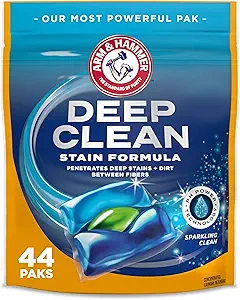
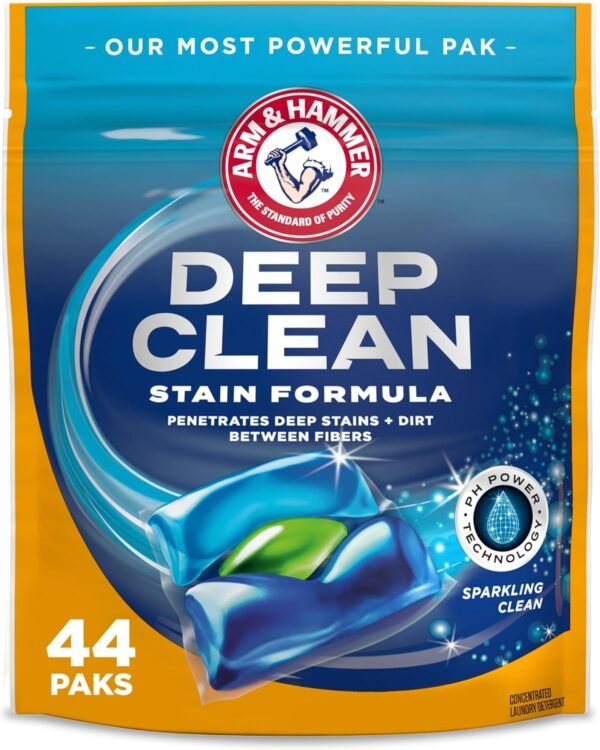
This is Church and Dwight’s Arm and Hammer Deep Clean Stain Formula in unit dose form, a forty four count pouch of Power Paks in the Sparkling Clean scent, model BNTN-12Mkk0223-1. The range sits above the standard Arm and Hammer pac and is positioned specifically at stains rather than at general freshening, which is the distinction to hold on to when deciding whether it is worth the step up.
Church and Dwight is explicit about dosing, and this is the most practically useful line on the whole listing: one Power Pak for lightly soiled loads, two for heavily soiled loads. That single instruction reframes the pack size. The title says forty four count and forty four loads, but the manufacturer’s own dosing guidance means a household that runs genuinely dirty laundry gets twenty two loads out of the pouch, not forty four. Work out which of those two numbers describes your laundry before comparing cost against a bottle.
The format suits households that want dosing taken out of their hands and that mostly run full loads. It suits people who currently overdose liquid detergent, which is extremely common and produces residue rather than cleaner clothes. It fits badly in a home that washes lots of small loads, where a fixed dose is simply wasted and a measured liquid from the liquid detergent listings is the more economical route.
What pH Power Technology is, and is not, on this page
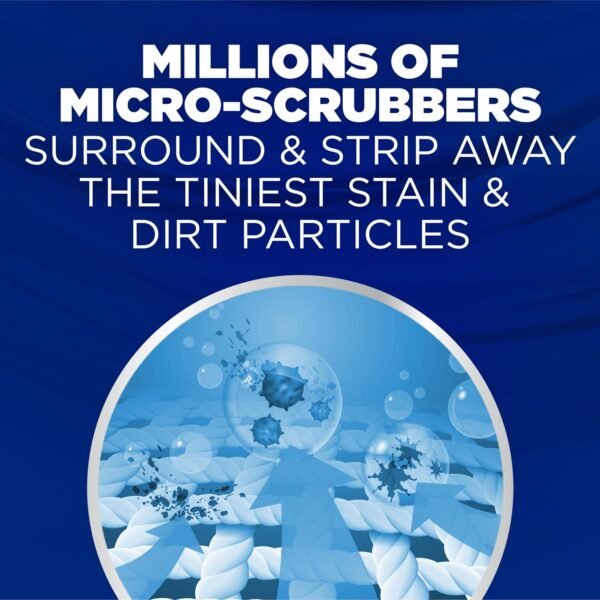
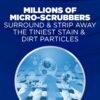
The listing leans on a named technology and then declines to explain it. Church and Dwight describes pH Power Technology with millions of ionic micro scrubbers that attack dirt deep between fibers. No ingredient is named, no pH value is given, no enzyme is identified and no surfactant appears anywhere on the page. Micro scrubbers is a metaphor, not a component. There is no ingredient panel on this listing at all, which matters to anyone managing a skin sensitivity or choosing detergents for a household member with eczema, and the printed pouch is the only place to look.
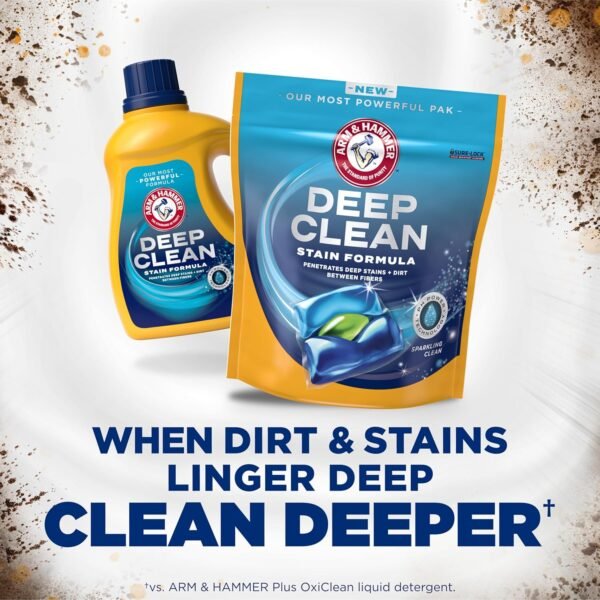
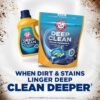
The comparative claim is also narrower than it first reads. The description says the formula helps you clean deeper, and then footnotes that claim: it is measured against Arm and Hammer Plus OxiClean Power Paks. In other words it is a comparison against another product from the same company, not against the category. The listing separately calls this the most powerful stain remover Power Pak by Arm and Hammer yet, which again is a claim about the brand’s own range. Neither statement is a comparison with a rival, and no test method is published for either.
An unfilled template in the product description
One line of the description reads that the paks come in a “X count pouch, enough for up to X medium loads of laundry when used as directed”. The X characters are placeholder tokens that were never replaced with numbers before the copy was published. It is a small thing, but it tells you how much editorial attention this listing received, and it is a reason to trust the pouch over the page for anything that matters.
Machines, fabrics and the things pacs do badly
Church and Dwight states the paks are high efficiency compatible and dissolve fully in all machines and at all temperatures. In practice the failure mode for every pac product is the same and it is worth knowing how to avoid it. Put the pak in the empty drum first, at the back, then load clothes on top. Never put it in the dispenser drawer, where the film can lodge and only partly dissolve. In a very full drum on a short cold cycle there is not always enough free water to dissolve the film, and undissolved residue shows on dark clothing as a white smear. The fix is a fuller water level, a longer cycle, or fewer items, not a second pak.
A fixed dose also cannot be concentrated. If a stain is already set, the pak cannot be applied to it directly, so pre treating remains a separate step. That is what a product like the Attitude laundry stain remover or an oxygen booster such as the sodium percarbonate stain remover is for, and no pac replaces it.
Wool, silk and other protein fibers should be washed with a detergent formulated for them rather than with a general enzyme bearing pac. The listing gives no fabric exclusions of its own, which is an omission rather than a permission.
The storage rule that outranks every other point in this review
Laundry detergent pacs are a documented child poisoning hazard in the United States. They are small, brightly colored, soft to squeeze and appealing to a toddler, and the concentrated detergent inside causes chemical burns to the mouth and throat and serious eye injury when the film ruptures. This applies to every pac product on the market, including this one, and it is the single most important thing to say about the format.
Store the pouch closed, high, out of sight and out of reach of children, ideally in a latched cupboard rather than on top of the machine. Do not decant paks into a jar, a bowl or any open container on a counter, however much tidier it looks. Do not leave one sitting out while you load the drum.
Handle paks with dry hands only. The film is engineered to dissolve in water, so wet fingers start breaking it down immediately and that is how the contents reach skin. If a pak ruptures against skin, rinse thoroughly. If contents reach an eye, rinse and get medical advice. Keep the pouch away from humidity, since a damp laundry room makes paks stick together and tear when separated.
Do not add other products to the drum alongside a pak. In particular, never put chlorine bleach in the same dispenser compartment as detergent, and never mix bleach with an acidic cleaner anywhere in the house, because that combination releases chlorine gas.
Cost per load and the alternatives
Compare on loads, not on count. Forty four paks is forty four light loads or twenty two heavy ones by the manufacturer’s own instruction, and that spread is wider than most shoppers assume. Pacs generally cost more per load than liquid or powder because you are paying for the film and the convenience, and the compensating saving is that you cannot overdose.
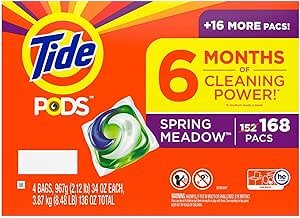
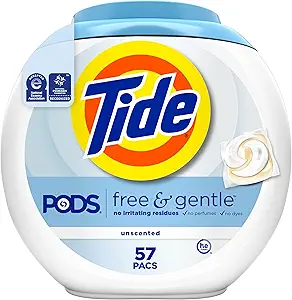
Within the same format, the Tide Bright and White pacs and the Gain laundry detergent pacs are direct comparisons, and the wider detergent pac and tablet listings put pack counts side by side. Amazon ranked this pouch forty sixth in Laundry Detergent Pacs and Tablets when the listing data was captured.
Who should buy it and who should not
Buy it if you want a pre measured detergent aimed at stains, you run mostly full loads, and you would rather not think about dosing. The two pak instruction for heavy soil is a sensible design and it is clearly stated, which is more than many pac listings manage.
Do not buy pacs at all if there is a young child or a person living with dementia in the home, or if the laundry area cannot be secured. Look elsewhere if your loads vary a lot in size, if you need a published ingredient list, or if you wash wool and silk regularly, because a general purpose stain pac is the wrong tool for those fibers.