Description
What this is, and what it is not
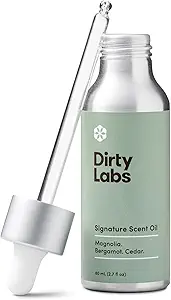
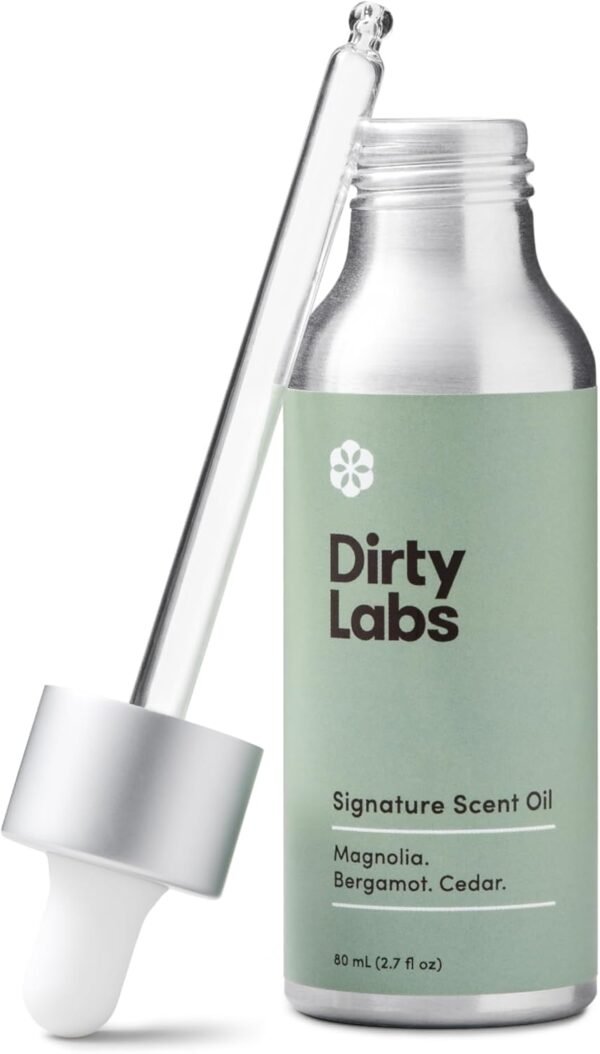
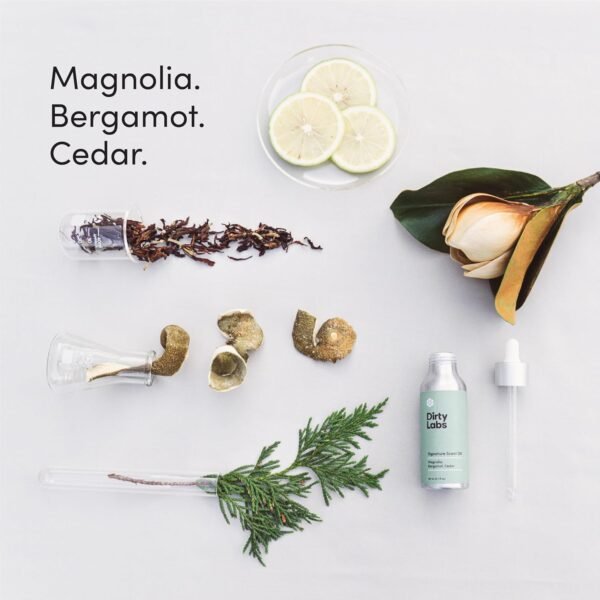
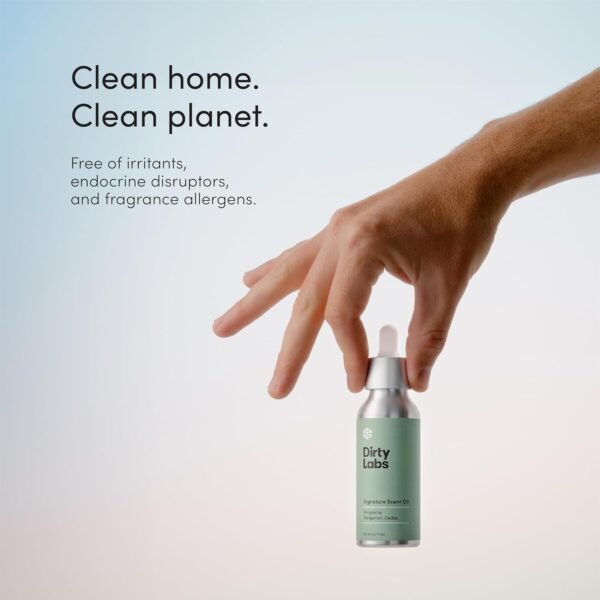
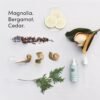
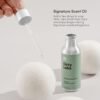
This is a fragrance oil for the dryer, not a detergent. It sits in the liquid detergent category on this site, and that placement is misleading enough to correct at the top: nothing here washes anything. Dirty Labs sells an 80 milliliter bottle, given as 2.7 fluid ounces, with a glass dropper, in a magnolia, bergamot and cedar blend the company calls its Signature Scent.
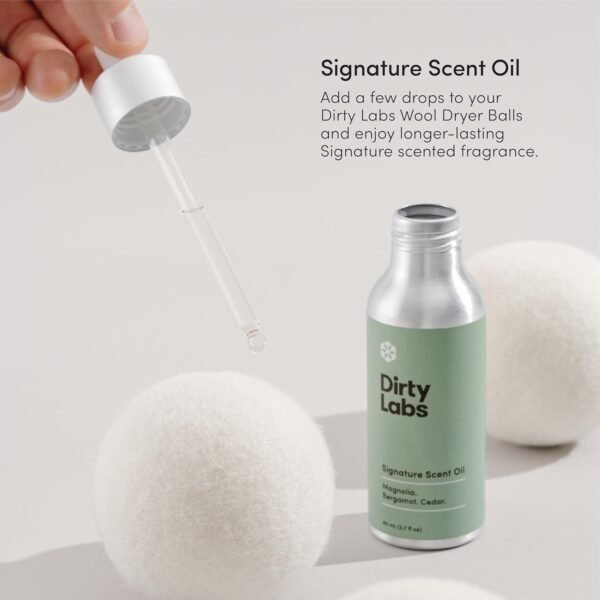
The method is specific and it matters. Dirty Labs instructs you to apply two to five drops onto wool dryer balls before drying, and to reapply for every load. The oil is not added to the wash, not poured into a dispenser, and not applied to fabric. It goes onto the balls, which tumble and release the scent as the load dries. That means the product requires wool dryer balls to work at all, and they are sold separately. If you do not own any, something like the wool dryer balls on this site is a prerequisite rather than an accessory.
The claims, and one that is hard to reconcile
Dirty Labs states that the oil is 100 percent natural and free from sulfates, ethoxylates, parabens and other harmful substances. The specification bullet goes further, saying all the company’s fragrances are made with premium ingredients and are free of known irritants, endocrine disruptors, California Proposition 65 chemicals and European Union listed fragrance allergens. The product title adds the word hypoallergenic.
All of that is the manufacturer’s own wording and none of it is ours. Hypoallergenic in particular is a marketing term rather than a defined standard, and it is not a claim we will make about any product. Terms like natural and eco friendly fall under the Federal Trade Commission’s environmental marketing guidance rather than being defined chemical descriptions.
Natural and allergen free are an awkward pair
Two of those claims sit uneasily together. The European Union’s list of declarable fragrance allergens includes a number of compounds that occur naturally in essential oils, limonene and linalool among them, and bergamot and citrus oils are typical sources of exactly those compounds. A fragrance described as 100 percent natural and simultaneously free of every European Union listed fragrance allergen is a strong combination to claim, and this listing publishes no ingredient list that would let anyone check it. If a specific fragrance sensitivity is the reason you are considering this, ask Dirty Labs for the full declaration rather than relying on the page.
The record gives a first availability date of July 2023, package dimensions of 5.47 by 1.65 by 1.61 inches at 4.16 ounces, and a rank of 303rd in Liquid Laundry Detergent. The Customer Reviews field contains a sales rank string rather than a star rating, so there is no rating figure to quote.
Fabrics, and the reason it goes on the balls
The instruction to apply the oil to the dryer balls rather than to clothing is not a stylistic preference and it should be followed exactly. Concentrated fragrance oil applied directly to fabric can leave an oily mark that is difficult to wash out, particularly on synthetics and on pale colors. More importantly, oil soaked fabric in a hot dryer is a recognized fire risk, which is why laundry guidance generally advises against machine drying cloths saturated with oils of any kind. Wool balls absorb and release a small quantity in a controlled way. A few drops poured onto a towel do not.
Apply the drops to the balls, let them absorb for a moment, then put the balls in with the load. Two to five drops is the manufacturer’s range, and starting at the low end is sensible because a fragrance described as prestige and long lasting is easy to overdo on bedding you then sleep in.
Two households should think twice. Anyone with a fragrance sensitivity is buying a concentrated fragrance product, whatever the allergen claims say. And anyone with cats should be aware that essential oils as a class are a known concern for cats, which metabolize certain compounds poorly, so keep the bottle stored away and keep cats out of a warm dryer and off freshly dried laundry until it has aired.
Using it, storing it and safety
Reapply for every load, which is the manufacturer’s own instruction and follows from the fact that the balls release rather than retain. Do not increase the dose to make a scent last longer between loads: excess oil accumulates on the balls and can transfer as a mark.
Store the bottle upright, capped, out of direct sunlight and out of reach of children. The glass dropper is a good delivery system and a poor toy, and a concentrated fragrance oil is not something to have loose in a laundry room where a child can reach it. Keep it off skin and out of eyes, and wash your hands after handling it. Never take it internally.
Never combine it with another laundry product in the same application. Do not add it to a detergent cap, do not put it in a fabric softener dispenser, and do not use it alongside dryer sheets, which coat fabric with their own conditioning layer and will simply compete with it. If you want a scent that survives the wash rather than the dry, an in wash booster such as the Downy in wash scent booster or the Dreft Blissfuls booster works at a different stage and is a different purchase, not a companion to this one.
Cost per load and the alternatives
Dirty Labs gives the yield as 200 to 600 loads from 2.7 fluid ounces, depending on how many drops you use. That is an unusually wide range and it is honestly presented: at two drops you are at the top of it, at five you are at the bottom. Either way the cost per load is very low, because you are buying a small quantity of a concentrated fragrance rather than a bulk product, and that is the strongest practical argument for this format over scented sheets or in wash boosters. There is nothing added to the wash water and nothing coating the fabric.
The alternatives divide by where the scent is applied. In the wash, boosters such as the Downy Unstopables dissolve into the cycle. In the dryer, scented sheets such as the Laundry Sauce dryer sheets deliver fragrance and a softening coating together, which is a different outcome from fragrance alone. See the fabric deodorizer category for the in wash route and the dryer balls category for the tool this product depends on. The honest comparison is that this format costs less per load than any of them and requires you to already own wool balls.
Who should buy it, and who should not
Buy it if you already use wool dryer balls, you want fragrance without a fabric coating or an additive in the wash water, and a magnolia, bergamot and cedar blend appeals. The dosing instructions and the stated yield range are clearer than most listings in this catalog manage. Skip it if you do not own dryer balls, if you expected a detergent, if you have a fragrance sensitivity, or if you keep cats and would rather not introduce a concentrated oil into the laundry routine. And read the natural and allergen free claims together rather than separately, since the listing gives no ingredient list to reconcile them.