
Description
A rinse cycle product that is not a fabric softener
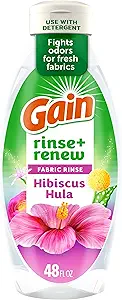
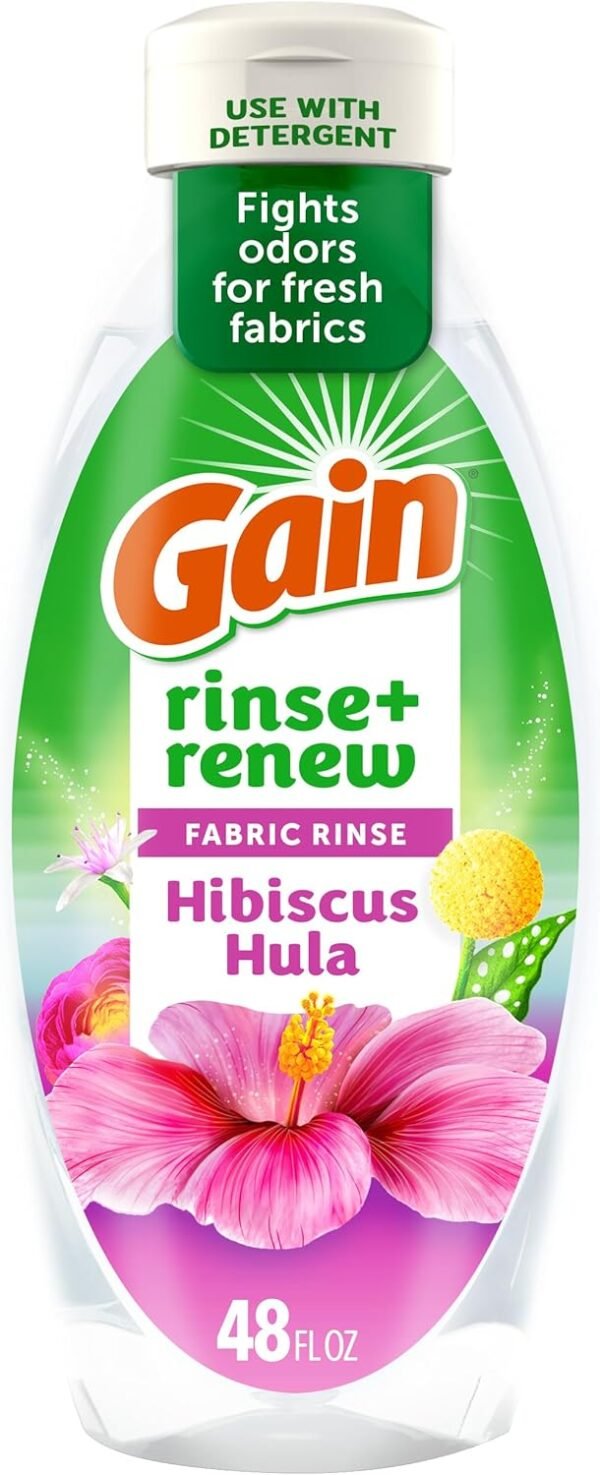
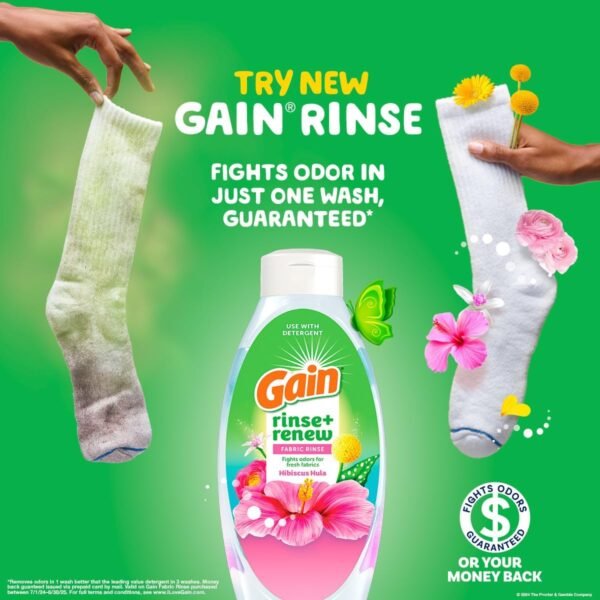
Gain Rinse and Renew is a 48 fluid ounce fabric rinse from Procter and Gamble in the Hibiscus Hula scent, and the first thing to establish is what shelf it belongs on. It goes into the rinse cycle, in the fabric softener compartment of the machine, but it is not a softener. Its stated job is odor, and Gain describes it as breaking down the residue that causes odors deep within fabrics and removing it at the source rather than covering it.
That distinction decides whether the bottle solves your problem. A softener deposits a coating that makes fabric feel smooth. A rinse of this type is doing something closer to a second wash step, aimed at what detergent left behind. The soils Gain names are the ones that produce persistent smells: workout clothing and dingy towels. Those are the two hardest cases in domestic laundry, because synthetic athletic fabric holds body oils that ordinary detergent does not fully remove, and towels accumulate detergent and softener residue that traps odor.
What Procter and Gamble publishes about it
Not much beyond the mechanism claim. There is no ingredient list, no active, no concentration and no pH. The formula is described as dye free and as light, and the scent is named. Every bullet on the listing is generic: two of the five say almost the same thing about eliminating odors, one says the product is dye free and gentle, one says it is safe on all fabrics, and the fifth is a placeholder reading “ADDITIONAL INFORMATION: Please refer to the product packaging for additional information”, which is not information at all.
Removing the source is a real distinction, if it holds
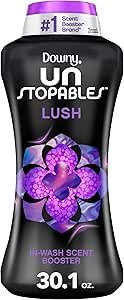
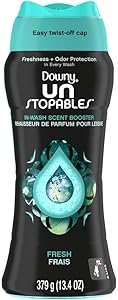
Odor in fabric usually comes from body oils and sebum bound into fiber, from bacteria feeding on that residue, and from mineral and detergent build up that holds both. A product that genuinely addresses that has to lift the residue rather than perfume over it, which means a surfactant, a chelating agent, an enzyme or an acid. Gain does not say which of those it uses, so the mechanism claim cannot be checked from the page. What can be said is that the claim is at least the right one for the problem, and that it is a different proposition from an in wash scent bead product such as the Downy Unstopables scent booster, which adds fragrance rather than removing anything.
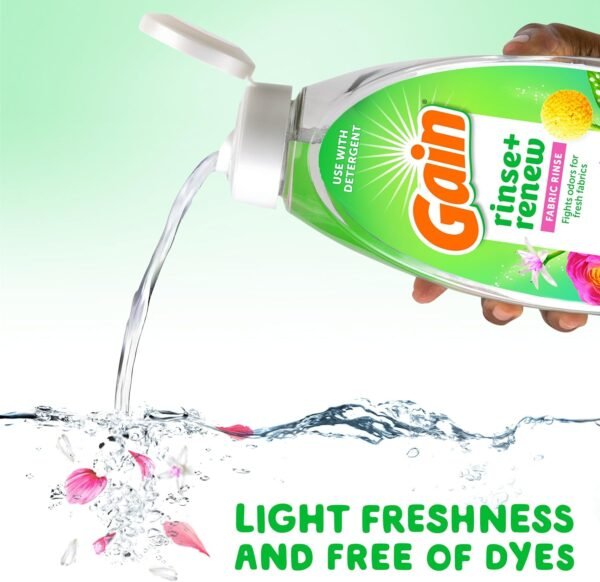
Note also that this is a fragranced product. Dye free is stated and fragrance free is not; the Hibiscus Hula scent is the selling point of the variant, so a household that reacts to fragrance should treat the “light” description as a marketing term rather than a specification.
Fabrics, and the compartment problem the listing ignores
Gain states the product is safe to use on all fabrics. That is an absolute claim with no ingredient list behind it, and it is worth reading with the usual caution. In practice a dye free rinse aimed at odor is a good match for the synthetics it is sold for, athletic tops, leggings, base layers, and for cotton towels and bed linen. Test anything dyed a deep saturated color, and treat wool, silk and anything labeled dry clean only as outside the intended range, since no fiber specific guidance appears at all.
The practical issue nobody mentions is the dispenser. A machine has one fabric softener compartment, and both this rinse and a conventional softener want it. The listing gives no guidance on whether the two can be used together, in what order, or whether one cancels the other. If you already use a softener such as Snuggle liquid fabric softener, you will have to choose per load rather than run both, and there is an argument for choosing this one on towels and activewear and the softener on everything else, since a softening coating is precisely what makes towels and workout gear hold odor in the first place.
Dosing, storage and the rules that go with any laundry additive
No dose, no load count and no fill line guidance appears in this listing, and 48 fluid ounces divided by an unknown dose gives an unknown cost per load. Use the cap markings on the bottle. As with every concentrated laundry additive, overdosing is the usual mistake and it produces the opposite of the intended result: excess product left in fabric becomes new residue for odor to attach to. If the towels already feel slick, the answer is a lower dose and an extra rinse, not more product.
Store the bottle capped, upright, at room temperature, out of reach of children and pets, and do not decant it into an unlabeled container. Laundry additives are eye and skin irritants regardless of how gentle the marketing sounds.
Never combine it with another product in the same compartment. Do not add chlorine bleach to the softener compartment alongside this or anything else, do not mix it with a softener in a jug, and do not pour it directly onto dry fabric at the start of a cycle, where a concentrated additive can leave a mark that looks like an oil stain. The machine’s dispenser exists to keep bleach, detergent and rinse additives apart at different points in the cycle, and using it as designed is the whole safety system.
Cost, and what else attacks the same problem
Forty eight ounces at an unpublished dose is impossible to price per load from this page, which is a fair criticism. What can be said is that a fabric rinse is an additional purchase on top of detergent, so it only makes sense if odor is a genuine recurring problem in your household rather than an occasional one. If it is occasional, a periodic hot wash with an oxygen booster does much of the same work for less.
The alternatives split by approach. For spraying rather than washing, a fabric spray such as the Zep air and fabric odor eliminator treats items you cannot launder. For pure fragrance rather than odor removal, the Clorox Fraganzia scent booster crystals or Gain’s own Gain Fireworks scent beads are the cheaper way to get a smell you like, and they do not claim to remove anything. The rest of the shelf is in fabric deodorizer, with the coating products in liquid fabric softener.
Oddities in the record: two of the five bullets make the same odor claim in slightly different words, and a third is a placeholder telling you to read the packaging. The description opens with the word fresh spelled with a run of extra letters, which is stylized marketing copy rather than an error but reads oddly in a specification context. No volume based dosing, no load count, no ingredient list and no fabric restrictions appear anywhere. The package weighs 4.1 pounds, consistent with 48 fluid ounces plus the bottle. The item is listed since April 2024 and currently ranks 66th in the retailer’s fabric deodorizer chart.
Who should buy this bottle
Buy it if workout clothing or towels hold a smell that detergent alone is not clearing, you want a rinse cycle product aimed at residue rather than fragrance alone, and you are happy with a scented product. Skip it if you need fragrance free, if you already run a fabric softener you are unwilling to give up the dispenser for, or if you want to know the dose and the ingredients before committing, because neither is published here.