

Description
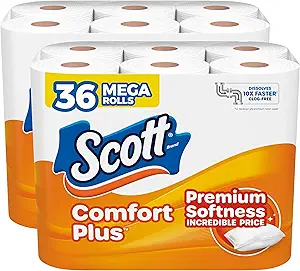
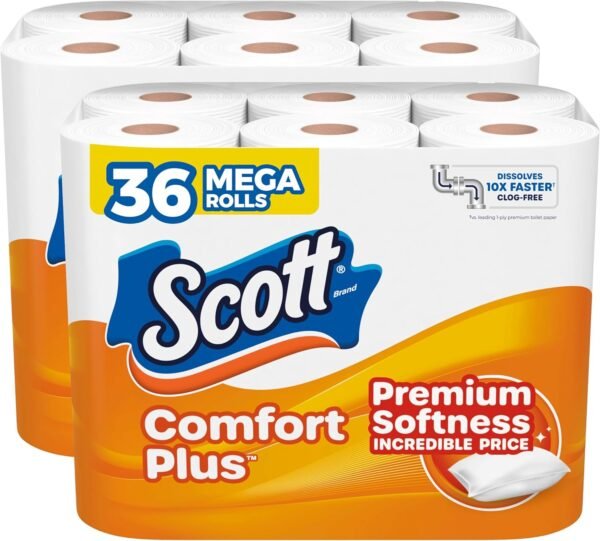
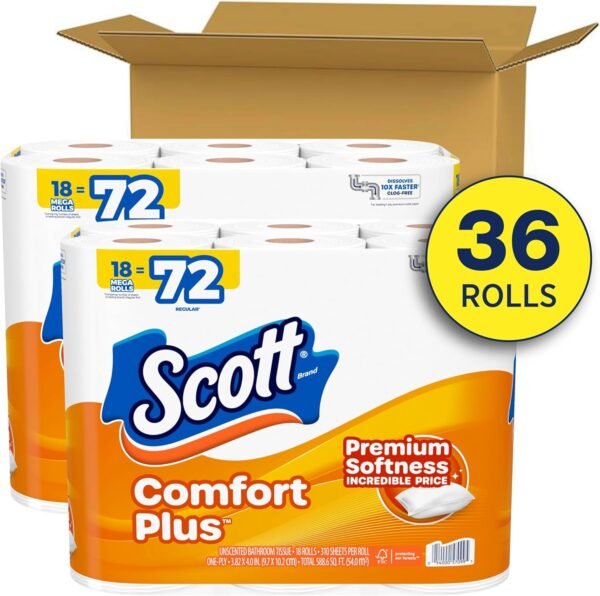
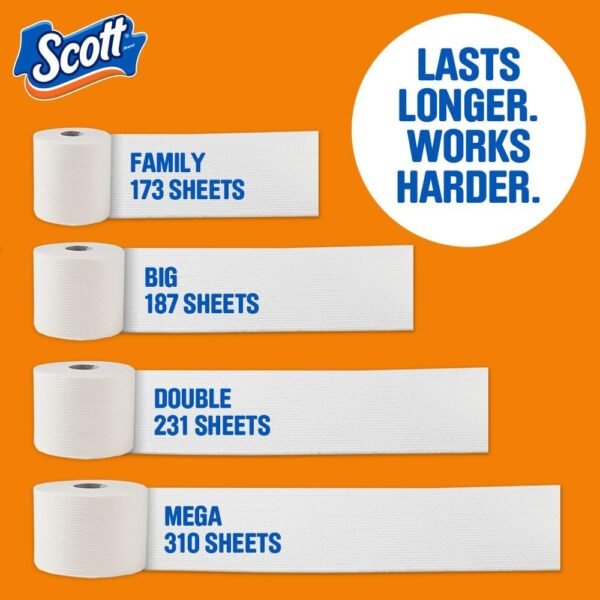
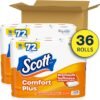
Scott ComfortPlus comes as 36 mega rolls of one ply toilet tissue, 310 sheets per roll, 1,177.20 square feet in total, made by Kimberly-Clark. The listing states that 36 mega rolls are the equivalent of 144 regular rolls, which is the number that makes the purchase comparable to anything else on the shelf.
Why one ply is the interesting fact here
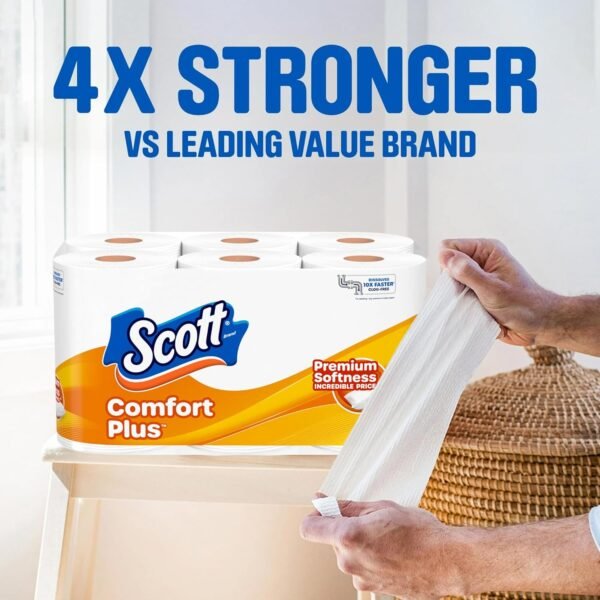
Most premium toilet paper is two ply, and most one ply is sold on price rather than comfort. Scott ComfortPlus is unusual because it is one ply and positioned on softness, and the way that works is thickness: a single thicker sheet rather than two thinner ones bonded together. Kimberly-Clark states the tissue is three times thicker and four times stronger than the leading value brand, and those comparisons are the manufacturer’s own, made against an unnamed competitor with no test method given.
The practical consequence of one ply is worth knowing regardless of the marketing. Single ply tissue generally breaks down faster in water than multi ply, because there is no bonded layer structure holding it together, and that is the basis of the flushability claims further down the listing. If your household has older plumbing, a septic system or a history of blockages, the ply count is a genuine consideration rather than a marketing detail.
The plumbing claims, and what they cover
Kimberly-Clark describes the tissue as septic safe, sewer safe, clog free and states it dissolves ten times faster, footnoted as being against the national brand ultra soft and strong. Those are the manufacturer’s claims. They are more specific than most in this category and they are exactly the properties a one ply tissue would be expected to have, so they are consistent with the product rather than surprising.
Two things worth adding. First, no toilet paper causes a blockage on its own in a healthy drain line: blockages are usually caused by what else went down, most often wipes, cotton products and grease, and no tissue claim protects against those. Second, septic safe means the tissue breaks down in the tank rather than accumulating, which reduces the solid load; it does not remove the need to pump the tank on schedule. If you run a septic system, the tissue choice helps and the maintenance schedule matters more.
The recycled claim covers the core, not the tissue
The listing states that Scott uses cores made from 100 percent recycled paper. Read that precisely, because it is a claim about the cardboard tube rather than about the tissue on it. Nothing on this page describes the fiber content of the tissue itself, and no recycled content, certification or fiber sourcing statement appears for the paper you actually use. Kimberly-Clark has published the claim accurately and narrowly, and the accurate reading is equally narrow.
What the numbers mean for a household
The figures on this listing are unusually complete for the category and they let you do the arithmetic properly. Thirty six mega rolls at 310 sheets is 11,160 sheets, described as equivalent to 144 regular rolls, which puts a regular roll at roughly 77 sheets for comparison purposes. Total area is 1,177.20 square feet.
Two practical points follow. Mega rolls are physically larger in diameter than standard rolls, and some older or recessed roll holders will not take them, so measure before committing to 36 of them. And a case of this size is bulky: the shipping carton is roughly 21 by 16 by 12 inches, which needs a cupboard rather than a shelf. For a household with the space, buying at this quantity is the cheapest way to buy tissue and reduces packaging per sheet. The listing sits at the very top of the Amazon toilet paper ranking, listed as ranked first in that category, which reflects sales volume rather than any assessment of quality.
Using and storing it sensibly
There is nothing chemical here and no safety data to read, so the practical advice is about storage. Keep unopened packs somewhere dry, because paper absorbs humidity and rolls stored in a damp basement or an unheated garage go limp and can pick up a musty smell. A cupboard at room temperature is all that is needed, and paper takes up odors from whatever it sits next to, so keep the case away from strong smelling cleaning chemicals, paint and anything solvent based.
On the one rule that matters for drains: toilet paper is the only paper product designed to be flushed. Facial tissue is engineered with wet strength and should go in the trash, and wipes of every kind, including those marketed as flushable, do not break down at the rate tissue does. If your household has a septic system, that distinction is not a preference, it is the difference between a tank that works and one that needs attention.
One more note for a chemicals catalog. Never put a cleaning product into a toilet bowl in an attempt to clear a paper blockage, and never combine two bowl products. Mixing a bleach based cleaner with an acidic descaler releases toxic gas, and a bathroom is a small enclosed room. A blockage is a plunger or a plumber problem, not a chemistry one.
Cost per sheet, and the alternatives
Cost per sheet is the only comparison worth making, and this listing gives every number needed to calculate it: rolls, sheets per roll, total sheets and total area. The trap when comparing brands is the roll naming, since mega, jumbo and double are marketing terms rather than standard units, and a pack of twelve of one brand may hold less paper than a pack of six of another. Work in sheets or in square feet.
For the related paper products a household buys at the same time, our reviews of the Kleenex Ultra Soft facial tissues and the Price Value facial tissues cover the box tissue side, where the specifications are typically thinner than they are here. The toilet paper category lists the bathroom paper options together.
If you use a wipe alongside tissue, format matters for exactly the reasons above, and our write up of the Dude flushable wipes covers that product class. For odor rather than cleaning, a bowl spray works differently from anything on the roll, and our review of the Poo Pourri toilet paper spray and the toilet paper sprays category cover that.
Who should buy it, who should not
Buy the 36 roll case if you have storage space, a holder that takes mega rolls, and you want a thicker one ply tissue that breaks down quickly, which is a sensible choice on a septic system or older plumbing. Skip it if your roll holder is too small for mega rolls, if you have nowhere to keep a case this size, or if you specifically want two ply, because this is a single ply product and that is the design rather than a compromise.