
Description
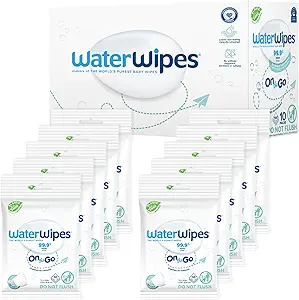
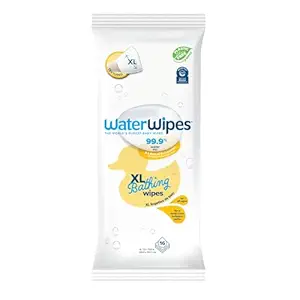
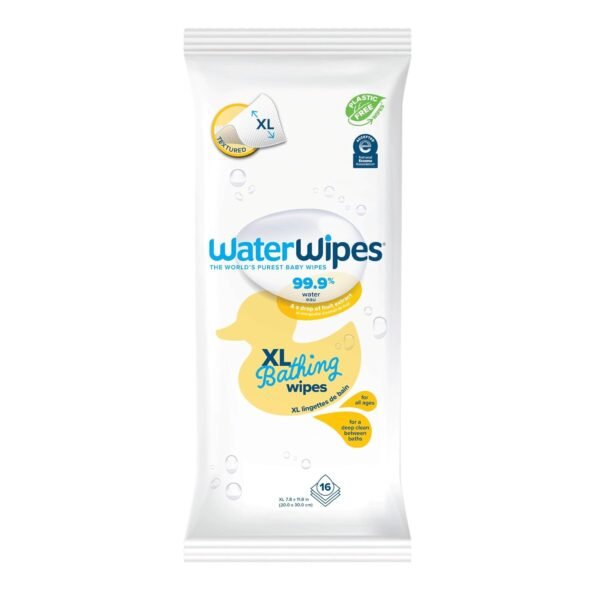
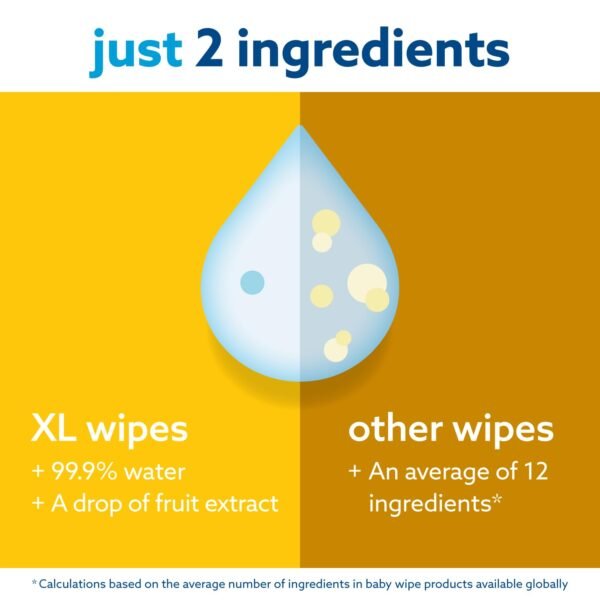
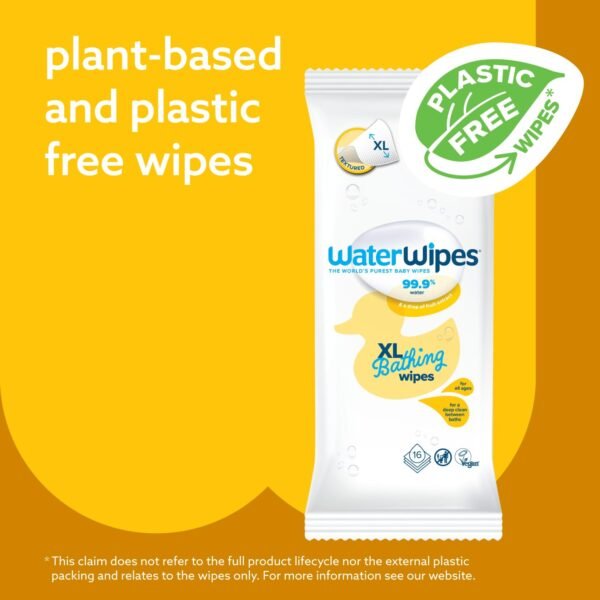
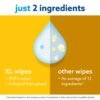
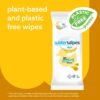
WaterWipes Sensitive Plus Bathing Wipes come sixteen to a pack, extra large and textured, and the manufacturer states the formula is two ingredients: 99.9 percent purified water and a drop of fruit extract. They are unscented and alcohol free, and they are positioned as a full body wipe rather than a hand wipe, which is what the bathing name signals.
What a bathing wipe is for
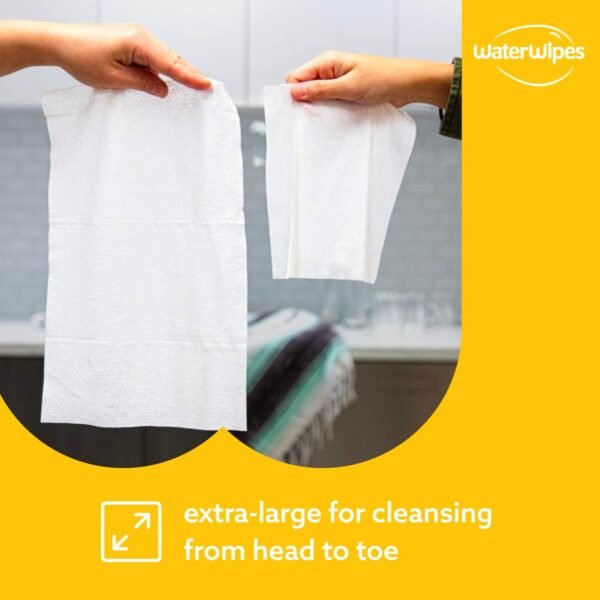
A bathing wipe is a substitute for a wash when a wash is not practical. In practice that means travel, a hospital or care setting, a camping trip, a period of limited mobility, or a small child who needs cleaning from top to toe away from a bathroom. The manufacturer describes the wipes as crafted to clean the body from nose to toes, and the extra large size follows from that: a bigger sheet covers more skin per wipe, which matters when you are cleaning a whole person rather than a pair of hands.
Sixteen wipes is a small pack, and that is the honest limitation. It is a bag or a travel pack rather than a household supply, and anyone using wipes daily for care purposes will be buying in a very different quantity. The household this fits wants a compact pack of a low ingredient wipe for occasional use.
The claims, and who is making them
This listing carries more claims about skin than almost any other product in this catalog, and every one of them belongs to WaterWipes rather than to this review. The manufacturer states that the wipes are unscented and hypoallergenic, that they have a neutral pH range which helps protect the natural skin barrier, that they deliver three in one benefits described as cleans, cares and protects, and that they are suitable for eczema prone skin and allergy sufferers. It further states that the wipes are dermatologically approved by the Skin Health Alliance, accepted by the National Eczema Association of America and registered by the Vegan Society.
Those are third party programs with their own criteria, and naming them is more useful than an unsupported adjective would be. They are still not the same as a clinical finding about a particular person’s skin. This site makes no health claim about this product. Anyone managing eczema, an allergy or any skin condition should be guided by a doctor rather than by a product page, and should read the printed pack, which is where the full ingredient statement and any warnings live. The specification block on this listing is entirely empty, so the pack is the only source of information beyond the marketing bullets.
The plastic free claim, and its own footnote
The listing describes the wipes as plastic free and plant based, and then attaches an asterisk to that phrase. The footnote states the claim does not refer to the full product lifecycle nor the packaging, and that the wipes are made from regenerated cellulose. That is a carefully bounded statement, and reading the footnote is the point: the sheet is a cellulose material rather than a plastic nonwoven, while the pack itself is not covered by the claim. Plastic free with a footnote is not the same as plastic free, and WaterWipes deserves some credit for publishing the qualifier rather than hiding it.
What these wipes do not do
A water based wipe cleans by lifting soil mechanically with a wet sheet. It is not a sanitizer, it is not a disinfectant and no germ claim of any kind appears on this listing, so this review makes none. If germ reduction is what you need, that requires a product whose own label carries the claim and a stated contact time.
Nor is it a surface wipe. Skin wipes and surface wipes are formulated differently and substituting one for the other works badly in both directions: a water wipe leaves a counter wet rather than clean, and a surface disinfectant on skin puts a chemical designed for hard surfaces where it does not belong. Keep this to people. The manufacturer describes a two ingredient formula, which is the appeal, and a two ingredient formula has no detergent to cut grease and no solvent to lift anything stubborn.
Using and storing them
The habit that matters is closing the pack. A wipe pack left open dries from the top down, and with only sixteen wipes there is little margin for waste. Store the pack at room temperature, out of direct sun and out of a hot car in summer, where evaporation works fastest. If a wipe has dried out, it is not worth using.
Dispose of used wipes in the trash. Nothing on this listing describes them as flushable, and regenerated cellulose is not the same thing as toilet paper: it does not break down in a drain line at the same rate and it accumulates. On a septic system that rule is firmer still. Keep the pack out of reach of small children as with any product intended for external use.
Two use cautions apply, both of which come down to reading the pack. Do not use a wipe on an open wound, in the eyes or on a mucous membrane unless the pack specifically says it is intended for that. And if skin reacts, stop using the product regardless of what any certification says, because a program’s criteria describe a formulation rather than an individual’s response. Nothing about a two ingredient wipe requires mixing with anything, and it should never be combined with a cleaning product of any kind.
Cost per wipe, and the alternatives
Wipes are compared per wipe rather than per pack, and a sixteen count pack of extra large sheets is a convenience purchase rather than an economical one. Anyone using bathing wipes regularly, particularly for care at home, will find the cost per wipe falls sharply at larger pack sizes, and the sensible pattern is a large pack at home plus a small one in a bag. The other cost is the one nobody counts: every pack that dries out because it was left open is a pack bought twice.
For a direct comparison from the same brand, our review of the WaterWipes sensitive wipes covers a closely related product, and reading the two listings side by side is worthwhile because the pack sizes and sheet formats differ more than the marketing does. For a conventional baby wipe at a household quantity, our write up of the Huggies Simply Clean baby wipes covers that end of the shelf.
For care use specifically, a larger disposable washcloth is often the better format, and our review of the McKesson adult washcloths covers that. For bathroom use where a flushable format is genuinely wanted, the Dude flushable wipes answer a different requirement. The personal cleansing wipes category lists the skin products together, and the box tissues category covers the dry alternatives.
Who should buy it, who should not
Buy the pack if you want a compact, unscented, low ingredient wipe for travel or occasional full body cleaning and you are comfortable that the ingredient panel and any warnings live on the pack rather than on the page. Skip it if you need a germ claim, if you need a household quantity for daily care use where sixteen wipes is uneconomical, or if you are buying on the strength of the skin claims, because those are the manufacturer’s statements and a doctor is the right authority on a skin condition.