Description
A gallon of rinse aid, and who needs one
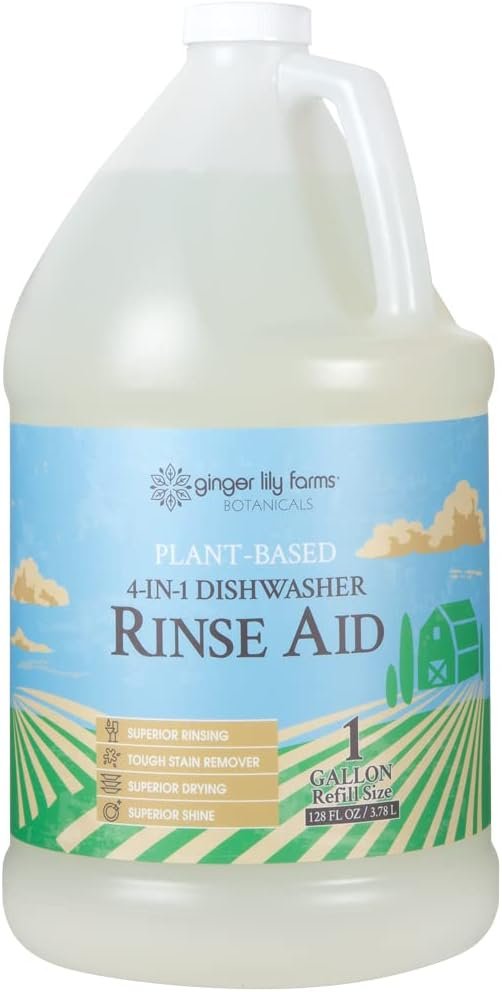
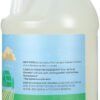
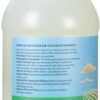
Ginger Lily Farms Botanicals sells this as a plant based 4 in 1 dishwasher rinse aid in a one gallon, 128 fluid ounce refill. TNG Worldwide is the manufacturer, the model number is 802541, the listing dates to October 2022, and the container weighs 8.8 pounds. Amazon places it 47,486th in Health and Household and 13th among dishwasher rinse aids.
A rinse aid does one thing. It is dosed from a small reservoir in the dishwasher door during the final rinse, and it lowers the surface tension of the water so that it sheets off the load instead of beading. Beads dry into spots, because whatever minerals the water carries stay behind in each droplet. Sheeting water carries them down the drain, and the load dries faster because there is less water clinging to it.
A gallon is a commercial quantity. A domestic dispenser holds a few ounces and doses a fraction of that per cycle, so this container is years of supply for a household and a sensible refill for a restaurant, a cafe or an institution. The listing pitches it at exactly that: large capacity washers and both high and low temperature commercial machines.
The claims on this listing belong to a detergent
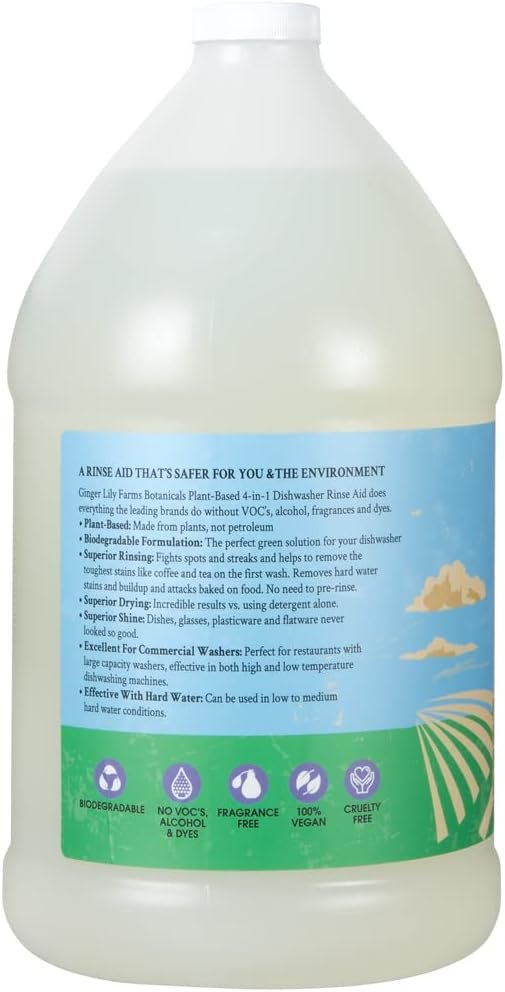
This is the problem with the page and it needs stating clearly. The second feature bullet says the product removes the toughest stains like coffee and tea on the first wash, removes hard water stains and buildup, attacks baked on food, and eliminates the need to pre rinse.
Those are detergent claims. A rinse aid is not in the machine during the wash phase, it carries no enzymes and no bleaching agent, and it is dosed in quantities measured in milliliters during a rinse that lasts a couple of minutes. Removing tea staining from a mug is what a detergent with an oxygen bleach does. Attacking baked on food is what enzymes and alkalinity do. Eliminating pre rinsing is a detergent claim as well. None of it describes a rinse aid, and a buyer who reads those bullets and skips their detergent will get a machine full of dirty dishes with very good drying.
The hard water claims contradict each other within the same listing. One bullet says the product removes hard water stains and buildup. Another says it can be used in low to medium hard water conditions, which is a limitation rather than a capability. Read the second one as the operative statement.
The 4 in 1 designation is never explained. Four of what, the listing does not say.
What is actually in it, and the green claims
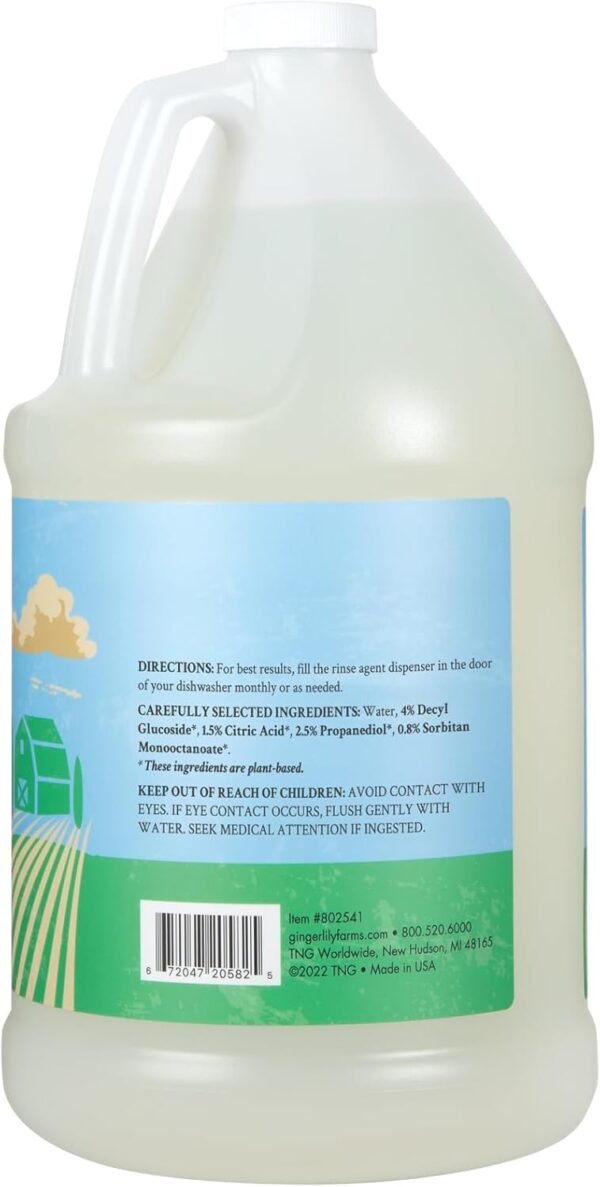
There is no ingredient statement, no surfactant named, no concentration and no pH. The description field is empty. Ginger Lily Farms states that the product is made from plants rather than petroleum, that it is biodegradable, fragrance free, one hundred percent vegan and cruelty free, and calls the formulation a green solution for a dishwasher.
Every one of those is the manufacturer’s own wording. No certifying body is named for the vegan or cruelty free claims, no standard is cited for biodegradability, and the FTC Green Guides expect general environmental benefit claims to be substantiated rather than asserted. The specification block also carries a Material Feature field reading “Biodegradable Warning”, which is two unrelated words run together and appears on other listings in this catalog as an import artifact rather than as information.
Machines, dosing and where it will not help
Fill the rinse aid reservoir to the marked line and wipe up any spill before closing the door, because a rinse aid is a surfactant and spilled product foams in the next cycle. Most machines have a dosing dial from roughly one to six. Start in the middle: raise it if glasses come out spotted, lower it if they look filmy or streaky or the machine foams.
Do not put it in the detergent cup, where it would be flushed away during the wash and do nothing. Do not add it to a sink of hand wash water. Some machines with integrated rinse aid in their detergent, or with zeolite drying systems, do not need it at all, and the manual will say so.
It cannot fix everything that looks like spotting. Permanent cloudiness on glassware is etching, which is physical and chemical damage to the glass itself and no rinse aid reverses it. Mineral film that survives a rinse aid points at water hardness, which is a job for a hard water detergent such as the Finish Quantum hard water formula or for dishwasher salt. Film inside the machine itself needs a cleaning cycle with something like the Rutledge dishwasher cleaner before any rinse aid is judged.
Handling, storage and safety
This is a surfactant concentrate rather than a caustic, but it is still a household chemical in a container heavy enough to be awkward. Decant into a smaller bottle for refilling the dispenser rather than lifting a gallon over an open door.
Keep it out of reach of children, never decant it into a drink container, and rinse skin and eyes with water on contact. Never mix it with dishwasher detergent or any other cleaning product in a bottle or a bucket. Store it upright, capped, at room temperature and away from heat.
Commercial users should note that low temperature machines rely on a chemical sanitizer in the final rinse to compensate for the lower water temperature. That is a separate product with its own registration and its own requirements. Nothing on this listing suggests the rinse aid performs that function, and it should not be assumed to.
Cost per cycle and the alternatives
Cost per cycle is the right measure for a rinse aid, not cost per ounce, because the dispenser doses a very small amount each wash. On that basis a gallon is the cheapest way to buy the category by a wide margin, provided you will actually get through it before the product ages in storage.
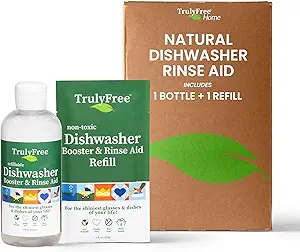
For a household, the smaller bottles make more sense. The Ecos WaveJet rinse aid is a trial size at the opposite end of the range, and the Trulyfree dishwasher rinse aid sits in between. Whatever rinse aid you use, it only works alongside a detergent, so pair it with something from the dishwasher detergent aisle such as the Finish Classic capsules. The rest of the category sits under rinse aids.
Who should buy it and who should not
Buy it if you run a commercial kitchen or a high volume machine, you want a fragrance free rinse aid in a refill container, and the plant based positioning matters to you. At gallon scale the cost per cycle is as low as this category gets.
Do not buy it as a household purchase unless you are prepared to store a gallon for years. Do not read the stain removal and no pre rinse bullets as describing this product, because a rinse aid does not do those things. And do not treat plant based, biodegradable or vegan as verified here, since no certification or standard is named anywhere on the page.