Description
What a rinse aid does, and why this one is filed oddly
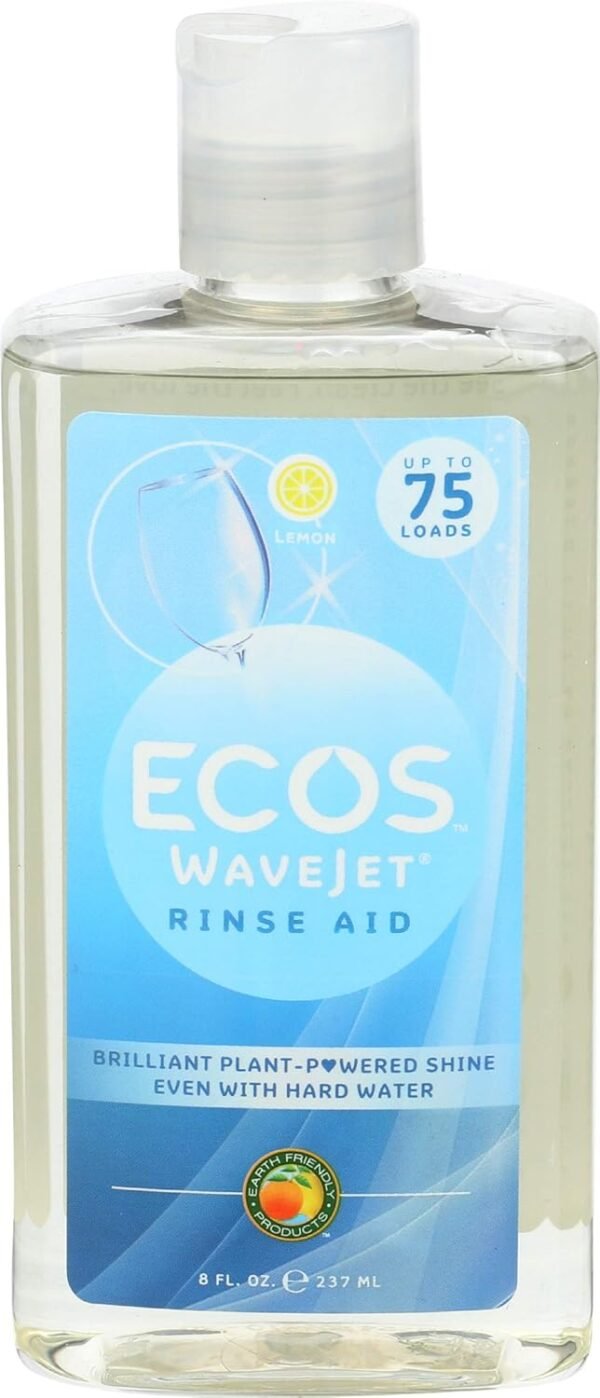
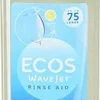
This is an 8 fluid ounce bottle of Ecos WaveJet rinse aid, made by Earth Friendly Products under item number 749174097477 and on sale since April 2009. Amazon ranks it 43,309th in Health and Household and 141st in dish soap.
That last detail is the first thing to correct. This is not dish soap. A rinse aid goes into the small reservoir inside a dishwasher door, not into the detergent cup and not into a sink. It is released during the final rinse and its only job is to lower the surface tension of the water so it sheets off the dishes rather than beading. Water that beads dries into spots, because whatever minerals the water carries are left behind in each droplet. Water that sheets carries those minerals down the drain. A rinse aid does not clean anything, and using it as a hand dish soap or adding it to the detergent cup wastes it. The product is currently placed in the dish soap category on this site and in the source data, which is misleading for anyone browsing.
The household that needs one has hard water, glassware that comes out cloudy or spotted, and a dishwasher with a heated or condensing dry cycle that leaves plastic items wet. In soft water areas a rinse aid does far less, and many people there skip it entirely.
What the listing actually publishes about the formula
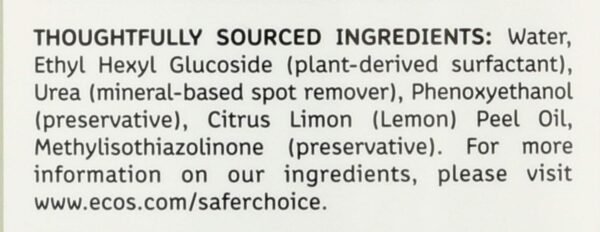
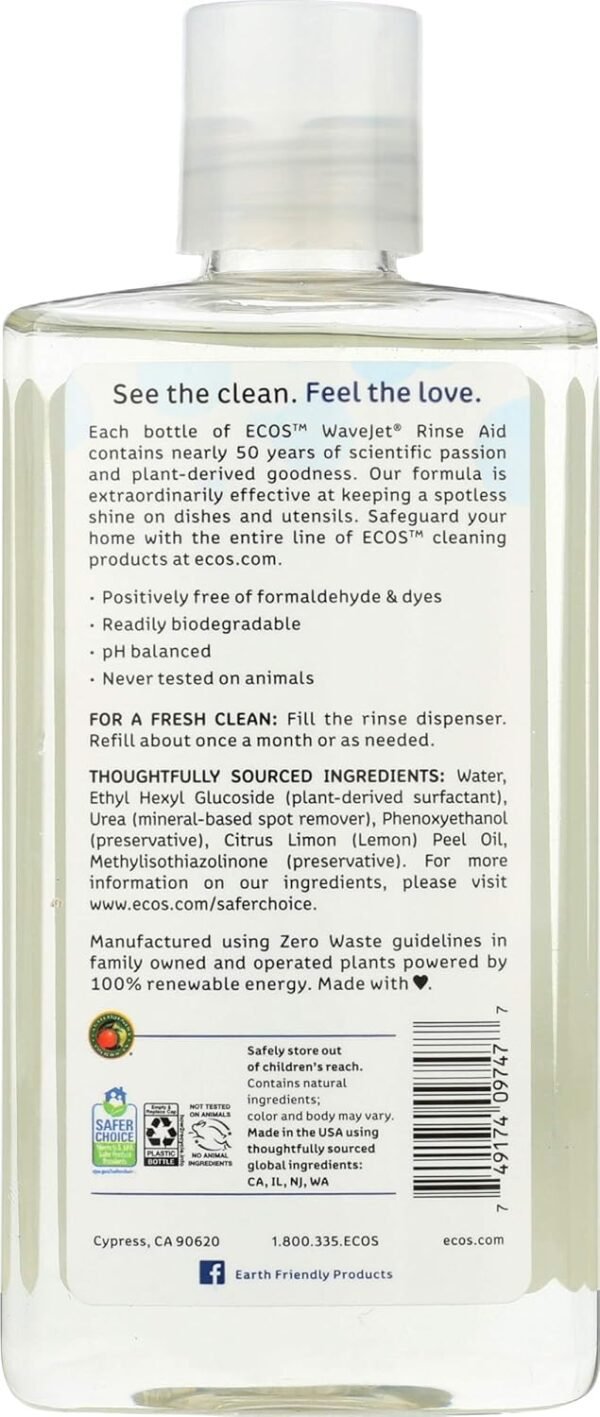
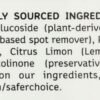
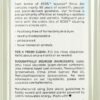
Very little, and this needs saying plainly. The description field on this product contains nothing except the product name repeated back. There is no ingredient list, no surfactant named, no acid named, no concentration for anything. The five feature bullets are the entire body of information available.
Those bullets state that the product rinses away residue and minerals contained in the wash water, that it uses one hundred percent sustainable plant based ingredients, that the formula is non toxic and contains no dyes or synthetic perfumes, and that it has a neutral pH.
How to read those claims
Each of them belongs to Earth Friendly Products rather than to us. Plant based and sustainable are marketing terms with no fixed definition, and the FTC Green Guides expect a general environmental benefit claim to be substantiated. Nothing on this listing substantiates either one: no certification, no ingredient origin, no third party mark. Non toxic is the same kind of term, and it is a strong one, since it is not a category any regulator awards. Repeat these as the manufacturer’s wording and check the bottle before treating any of them as a fact about what is inside.
The neutral pH claim is worth a note of its own. Many rinse aids in this category are mildly acidic, because acidity helps counter the alkalinity carried over from the detergent and helps with mineral film. Earth Friendly says this one is pH neutral. Whether the product performs on hard water without an acid component is not something the listing addresses, and no ingredient is disclosed that would explain it either way. One more oddity sits in the specification block: the Material Feature field reads “Biodegradable Warning”, which is two unrelated words run together and not usable information.
Where it goes, and where it must not
The rinse aid reservoir is the only correct place for this. It is usually a small hinged flap next to the detergent cup, marked with a fan or star symbol, and most machines have an adjustable dosing setting from roughly one to six. Do not put it in the detergent cup, where it will be flushed away during the wash and do nothing. Do not add it to a sink of hand wash water. Do not use it in a machine whose manual says a rinse aid is not required, which is true of some models with integrated rinse aid in their detergent or with a zeolite drying system.
Nothing on the listing addresses surface compatibility, so the general dishwasher rules apply. Items that should not be in a dishwasher at all are not made safe by a rinse aid: cast iron, carbon steel, wooden handles and boards, hand painted or gold rimmed china, and most aluminum, which the alkaline detergent dulls. If your glassware is already permanently cloudy rather than spotted, that is etching, which is mechanical and chemical damage to the glass itself and no rinse aid reverses it.
Correct use, dosing and storage
Fill the reservoir to the marked line and wipe up any overflow before closing the door, because a rinse aid is a surfactant and spilled product foams in the next cycle. Start at the middle dosing setting. If glasses come out spotted, raise it. If they come out with a filmy or streaky look, or the machine foams, lower it. A full reservoir typically lasts many cycles, which is why an 8 fluid ounce bottle is not as small as it looks against a 32 ounce jug of detergent, though it is at the small end of the category.
On safety, this is a surfactant concentrate rather than a caustic, but it is still a household chemical. Keep it out of reach of children, do not decant it into a drink container, and rinse skin and eyes with water on contact. Never mix it with any other cleaning product, including dishwasher detergent, in a bottle or a bucket. Store it upright and capped at room temperature.
What it costs to run, and what else to consider
Cost per cycle is the right measure for a rinse aid, not cost per ounce, because the reservoir doses a very small amount each wash. That makes an 8 ounce bottle a reasonable trial size and a poor bulk buy. If the product suits your water, larger bottles in the category are the cheaper long run.
The direct comparisons are the Ginger Lily Farms rinse aid and the Trulyfree dishwasher rinse aid, both of which sit in the correctly labeled rinse aids section. If spotting persists after a rinse aid is dialed in, the problem is usually the detergent or the water, and a hard water formula such as the Finish Quantum hard water detergent attacks it from the other side. Machines that have built up film often need a cleaning cycle first, which is what a product like the Rutledge dishwasher cleaner is for. The detergents themselves are under dishwasher detergent.
Who should buy it and who should not
Buy it if you want a small bottle to find out whether a rinse aid fixes your spotting, and you are content to take the plant based and non toxic wording as the manufacturer’s own. The size makes it a low commitment trial.
Do not buy it expecting dish soap, whatever the category label says. Do not buy it if you need to read an ingredient list first, because there is not one on the listing. And do not buy this size as a stock up, since a rinse aid dispenses in small doses and larger bottles cost less per cycle.