

Description
A bin that solves a real laundry room problem
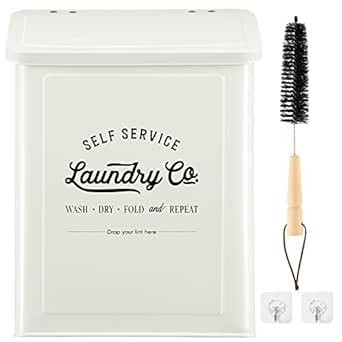
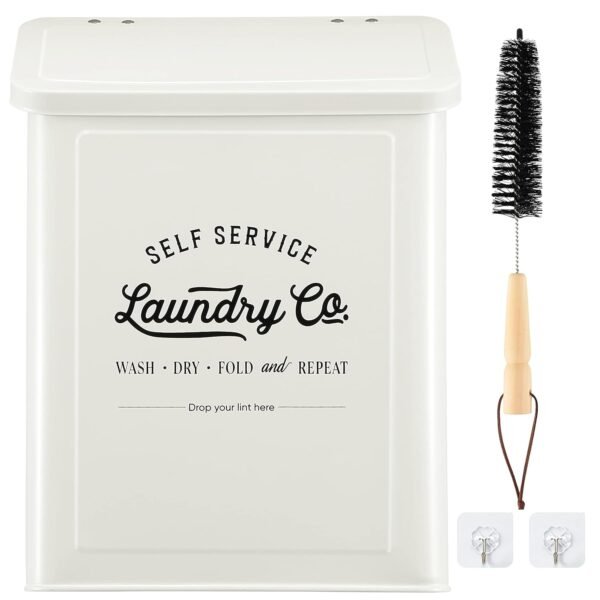
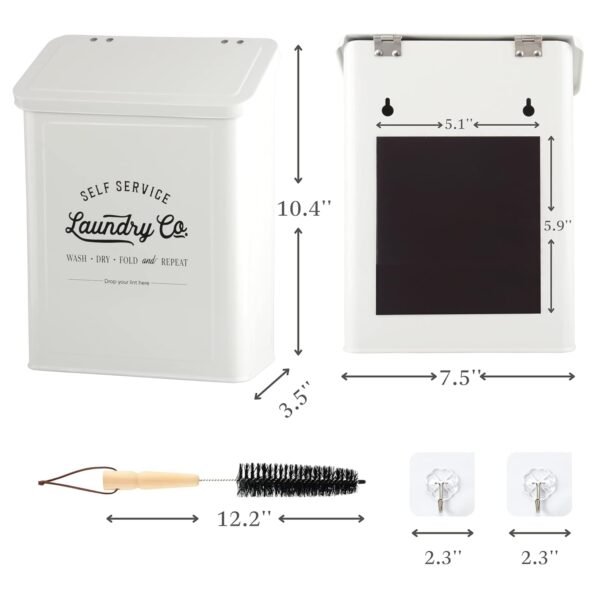
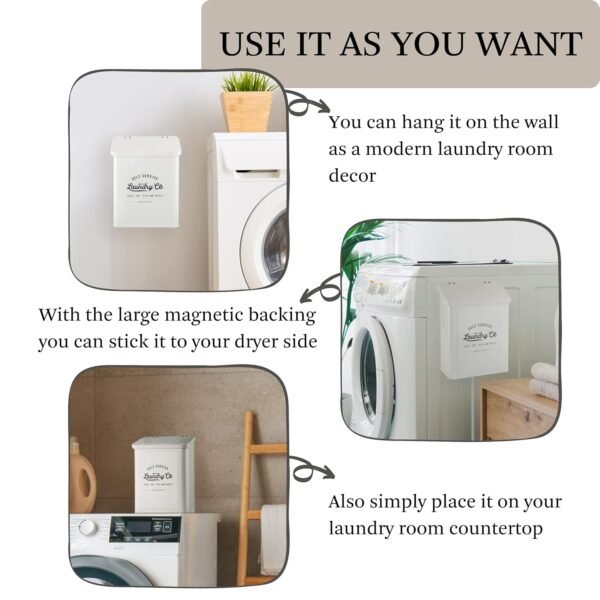
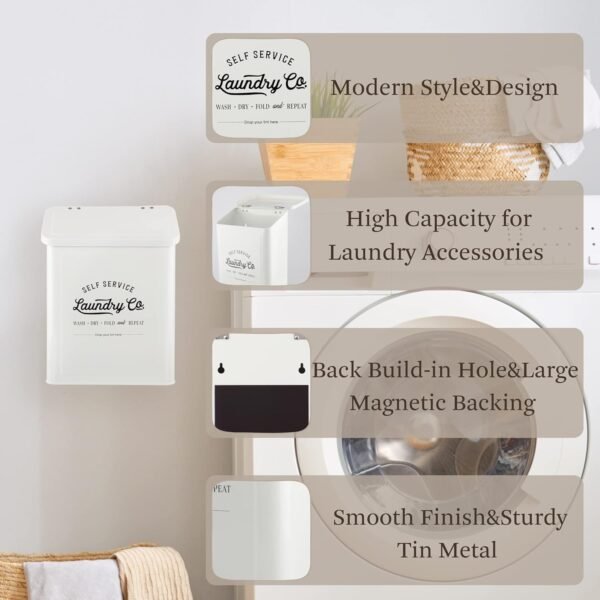
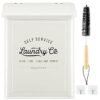
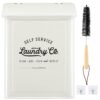
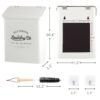
This is a white metal lidded bin, 7.5 inches wide by 10.4 inches high by 3.5 inches deep, with a magnetic back strong enough to hold it on the side or front of a washer or dryer. It ships with a dryer lint brush and two adhesive hooks, and it has keyhole hangers in the back so it can be screwed or stuck to a wall instead. It is styled as a farmhouse piece and it is sold as much on appearance as on function.
The problem it addresses is smaller than it sounds and more useful than it looks. Lint pulled from a dryer screen has nowhere to go: it is fluffy, it clings to hands, it drifts onto the floor, and the trash can is usually in another room. A bin stuck to the machine at eye level means the screen actually gets cleaned every load, which is the entire point. Cleaning the lint screen every cycle keeps airflow up, shortens drying times and reduces the lint that gets past the screen and into the duct.
What it is made of, and what the listing does not say
The listing describes it as a metal trash can with a solid magnetic back, and gives the exterior dimensions and the color. That is the extent of the specification. There is no material grade, no gauge, no weight, no capacity in liters or gallons, no magnet strength and no statement about whether the interior is removable or washable.
The specification block is empty
Unusually even for this catalog, the structured specification data for this item is completely blank. No manufacturer is named. No package weight, no dimensions, no listing date and no sales rank appear. The description field is empty too, so the five bullets are the entire published record. If the identity of the maker or the warranty position matters to you, this page cannot help.
One consequence worth knowing: a magnet holds on ferrous metal only. Most washer and dryer cabinets are painted steel and will take it, but some machines have stainless or plastic front panels that a magnet will not grip, and stainless steel in appliance fronts is often the non magnetic grade. If your dryer front is stainless, check with a fridge magnet before ordering, and plan on using the supplied adhesive hooks or the keyhole slots instead.
Where it goes, and what to keep out of it
The listing offers it for dryer lint, dryer sheets, detergent pods, dryer balls, laundry nets, pegs and other laundry accessories, and as a general small trash can. All of those are reasonable, with one important exception.
Do not use it to store laundry detergent pacs where a child can reach it. Pacs are a documented child poisoning hazard and belong high up in a closed container, not in an open topped decorative bin at waist height on the front of a machine. The same caution applies to Tide PODS and every other pac product on our shelves. Dryer sheets, dryer balls, pegs and laundry nets are all fine.
The other consideration is heat. Dryer lint is highly flammable, which is exactly why lint is a fire risk in ducts, and a metal bin full of it mounted on the side of a machine that runs hot is worth a moment’s thought. Empty it regularly rather than letting it fill, and do not mount it over or beside a gas dryer’s exhaust or vent connection.
The lint reuse suggestions, and the one that does not hold up
The fifth bullet lists creative uses for collected lint: dry compost fiber, spinning into yarn, papier mache, natural weed treatment and campfire starter. Two of those need a caution the listing does not give.
Dryer lint from a typical modern household is not cotton fluff. It is a mixture of whatever fibers the load contained, and most clothing today is polyester, nylon, acrylic or a blend, which means the lint is largely synthetic microfiber. Putting that in a compost heap or spreading it on a garden as a weed treatment puts plastic fiber into soil, where it does not break down. If your household genuinely washes only cotton, linen and wool, the composting suggestion is defensible; otherwise it is not, and the trash is the right destination.
The fire starter suggestion is accurate and it is also the reason to store lint carefully. Lint catches a spark at once, which is useful in a fire pit and dangerous in a laundry room.
Cost, and the tools that do the rest of the job
A decorative metal bin with a magnet is priced against storage accessories rather than against cleaning products, and the included lint brush is a genuine addition rather than a token: a slim brush is what reaches into the lint screen housing, which collects fluff the screen itself does not catch.
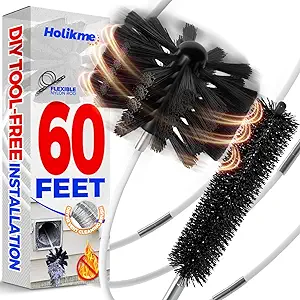
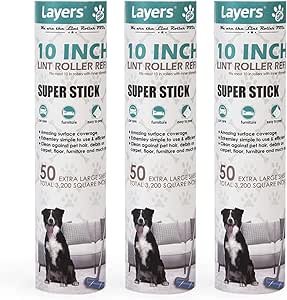
What the bin does not do is address the duct. Lint that gets past the screen accumulates in the vent hose and the wall duct, and that is where dryer fires actually start, so a bin encourages the habit that prevents the small problem while doing nothing about the larger one. Purpose built tools such as the Holikme dryer vent cleaning brush and the longer Holikme FT-60 vent cleaning kit are what clear a duct, and they belong in the same laundry room. For lint on clothing rather than in the machine, a roller such as the Layers lint roller or a reusable brush like the Scotch Brite lint brush is the tool. Everything in this family sits under lint removers, and the consumables that generate half the residue are in dryer sheets.
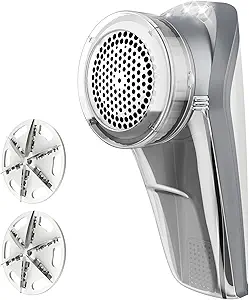
Record oddities to flag: the specification block is an empty set, so there is no manufacturer, no weight, no dimensions beyond those quoted in a bullet, no sales rank and no listing date. The description field is empty. The bullets describe the bin as eco friendly with no explanation of what that refers to on a painted metal container. And this product sits in the lint removers category despite being a storage bin rather than a lint removal tool, which is worth knowing when comparing it against the rollers and shavers listed beside it.
Who should buy it
Buy it if you have a steel fronted washer or dryer, you want the lint screen cleaned every load, and a tidy laundry room matters to you. Skip it if your machine fronts are non magnetic and you do not want to drill or stick anything to a wall, if you were expecting a lint removal tool rather than a container, or if you intended to store detergent pacs in it within reach of a child.