



Description
What a concentrate refill is, and the household it fits
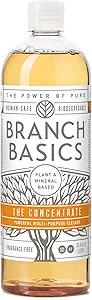
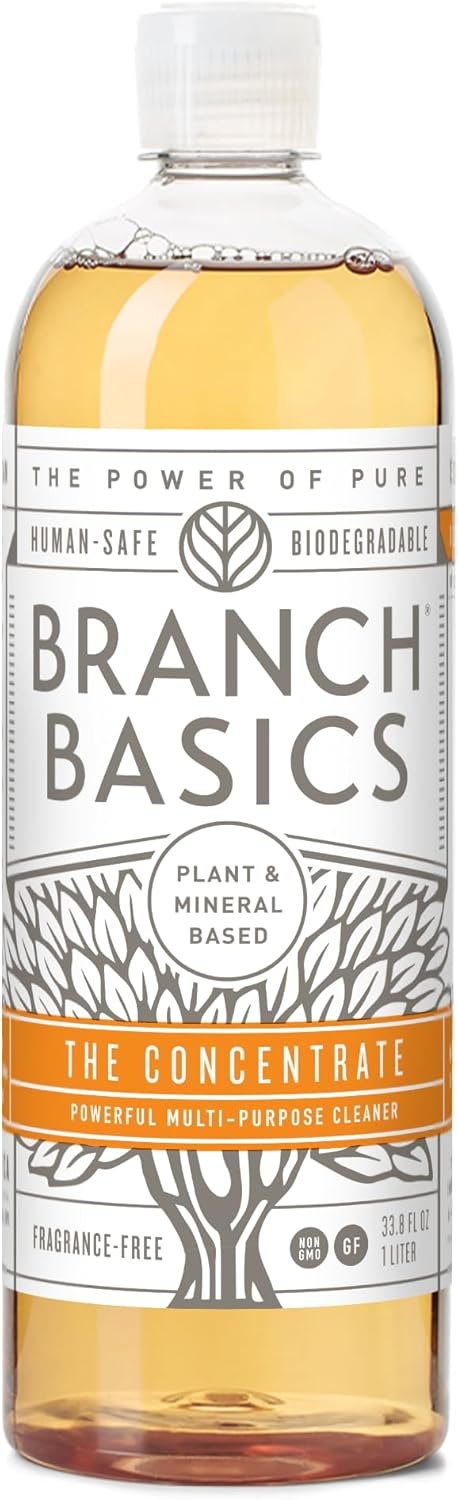
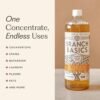
The Branch Basics Concentrate is a 33.8 fluid ounce bottle of undiluted cleaning base that the buyer mixes with water in reusable spray bottles. The listing is explicit that this is a refill only: the first bullet reads “REFILL ONLY”, and a later bullet states that Branch Basics bottles are sold separately. That is the single most important buying detail on the page. Ordering this expecting a ready to use spray produces a bottle of concentrate and nothing to put it in.
The household it fits is one already committed to a dilution routine. Concentrates trade convenience for volume: you carry home one liter and make many liters, you store one bottle instead of five, and in exchange you measure every time you refill. Households that will not measure end up with either a weak solution that does not clean or a strong one that leaves residue. If that describes your kitchen, a ready to use product such as the Cleancult ready to use all purpose cleaner removes the step entirely and is the more honest choice.
The formulation, and how much of it is actually disclosed
Branch Basics describes the concentrate as made from plant and mineral based ingredients, and states that it is free from preservatives, fragrances, dyes, bleach and ammonia. The company also describes the product as human safe, says it is third party tested and proven to be non irritating to skin and eyes, and states that it is MadeSafe Certified and Leaping Bunny Certified. Every one of those is the manufacturer’s own statement. We are repeating them because they are on the label, not endorsing them, and terms like plant based and mineral based are marketing categories rather than defined chemical descriptions.
What is missing is the ingredient list itself
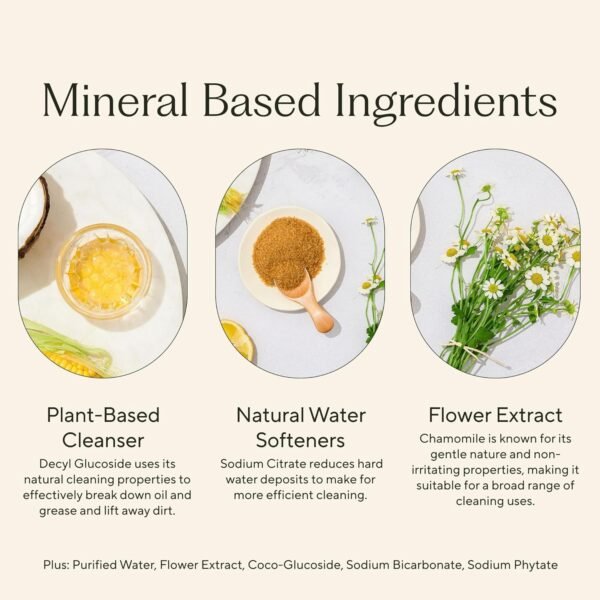
For a product whose entire proposition is what is not in it, the listing publishes no ingredient list. There is no surfactant named, no chelator, no builder, no solvent, no pH. A buyer with a specific sensitivity, or a specific surface to protect, cannot check anything against this page. The specification block adds a further oddity: the Material Feature field reads “Biodegradable Warning”, which is not a claim, a warning or a coherent specification, and appears to be a fragment of imported data rather than something the manufacturer wrote. The Customer Reviews field on this listing contains a sales rank string instead of a star rating, so there is no rating figure to report. The listing records the item as ranked 105th in All-Purpose Household Cleaners and 7,045th across Health and Household.
The absence of fragrance and dye is the claim most likely to be verifiable by a buyer at home, since the listing title itself says fragrance free. The rest sits on the certifications, and a reader who cares should look up what MadeSafe and Leaping Bunny each certify, because they cover different things: one addresses ingredient screening, the other addresses animal testing. Neither is a performance test.
Dilution, surfaces and what to keep it away from
This listing does something unusual and genuinely useful: it publishes the manufacturer’s dilution ratios. Branch Basics gives one part concentrate to eleven parts water for all purpose use, one to five for bathroom use, one to four for a foaming hand wash, one to two for a laundry solution, and one drop of concentrate in 24 ounces of distilled water for a streak free glass mix. Those five ratios are the operating manual for the product, and mixing outside them is where residue, streaking and disappointing results come from. The distilled water instruction for the glass dilution is not decoration: mineral content in tap water is what leaves the film on glass.
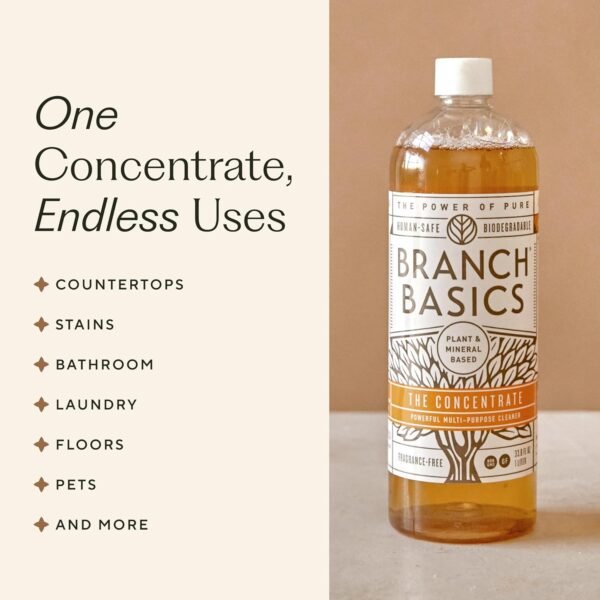
The listing names surfaces, laundry, dishes, grout and stains as intended targets, and the title adds kitchen and bathroom. It does not name a single surface to avoid, and that gap deserves attention. Any cleaner that works across grout and laundry is doing so with alkalinity and surfactancy, and untreated natural stone, unsealed wood, waxed floors and some anodized aluminum finishes are the usual casualties of alkaline cleaners. Test any of those in a hidden spot first. For sealed stone specifically, a purpose made product such as the Bar Keepers Friend stone cleaner is formulated for the surface rather than adapted to it.
Correct use, storage and the safety notes that still apply
Measure the concentrate rather than pouring by eye, and add it to water rather than water to it, which mixes more evenly and reduces foaming. Label every bottle you fill with which dilution it holds, because an all purpose mix and a laundry mix look identical and are five times apart in strength. Use the foaming wash dilution only in a foaming pump; a standard trigger sprayer will not produce foam and you will simply be spraying a stronger solution than the surface needs.
Being fragrance free and described as non irritating does not make a concentrate harmless in its undiluted state. Undiluted cleaning base is the strongest form the product ever takes, and it should be treated with the same care as any other concentrate: keep it capped, store it upright, keep it out of reach of children and pets, and rinse skin and eyes with water on contact. Never combine it with another cleaning product, including bleach, an acidic descaler or a drain product. The manufacturer states there is no bleach or ammonia in the formula, which says nothing about what happens when you add somebody else’s bleach to it. Storing a concentrate is also different from storing a spray bottle: one tipped liter makes a much larger mess than one tipped spray.
What it costs over time, and what to compare it against
The cost structure is the reason to buy a concentrate at all. At the all purpose ratio of one to eleven, a single 33.8 ounce bottle yields well over two gallons of working solution, and at the bathroom ratio it yields roughly six times its own volume. Set against that, you are also buying bottles separately at the outset, and the first order therefore costs more than the ongoing ones. The fair comparison is not bottle against bottle but finished liters against finished liters over a year.
Other concentrates worth comparing on the same basis include the Zep ZUMPP128 multi purpose cleaner, sold in a much larger jug for households that clean by the bucket. Readers drawn here by the fragrance free and dye free angle rather than the concentrate angle will find ready mixed options that make the same claims without any measuring. Branch Basics also sells a powder laundry detergent if you would rather not run the one to two laundry dilution. The full all-purpose cleaners category and the liquid detergent category put the alternatives side by side.
Who should buy it, and who should not
Buy it if you already own the bottles, you will measure, and you want a fragrance free and dye free base that covers several jobs from one container. Skip it if you expected a ready to use spray, if you need a published ingredient list before buying, if your surfaces are unsealed stone or bare wood, or if nobody in the house will keep the dilutions straight. The concentrate model works only when it is actually followed.