

Description
The job this does, and why it is not a laundry product
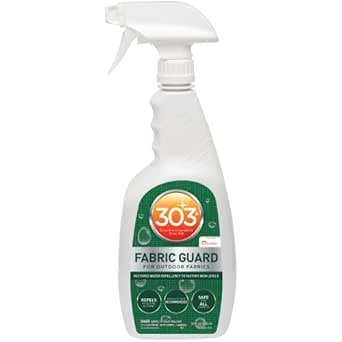
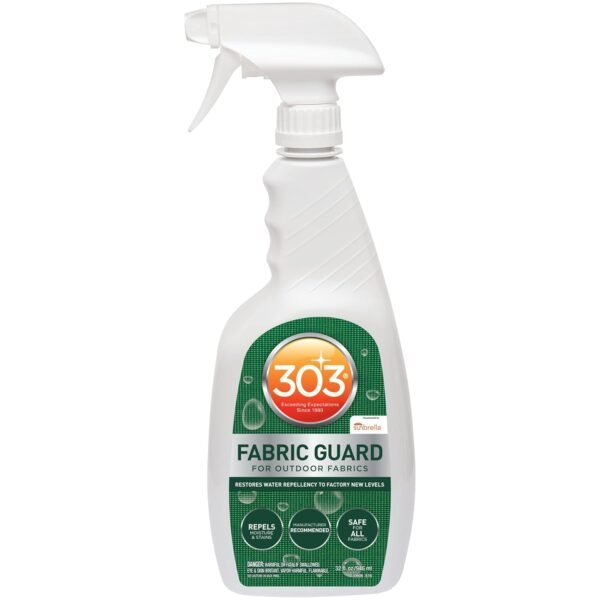
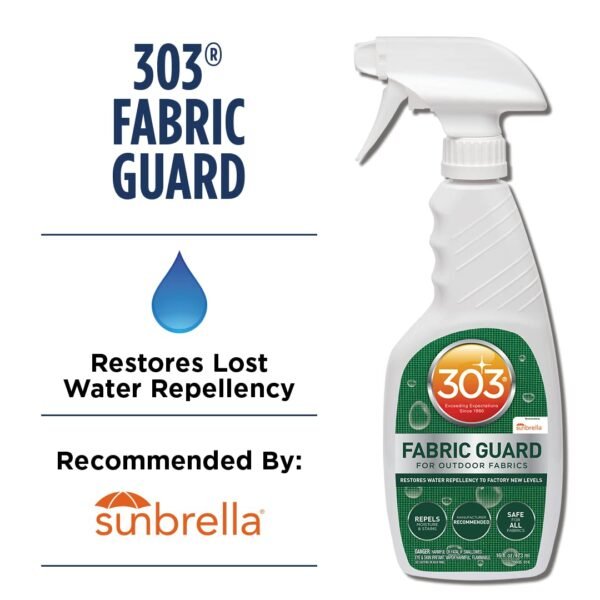
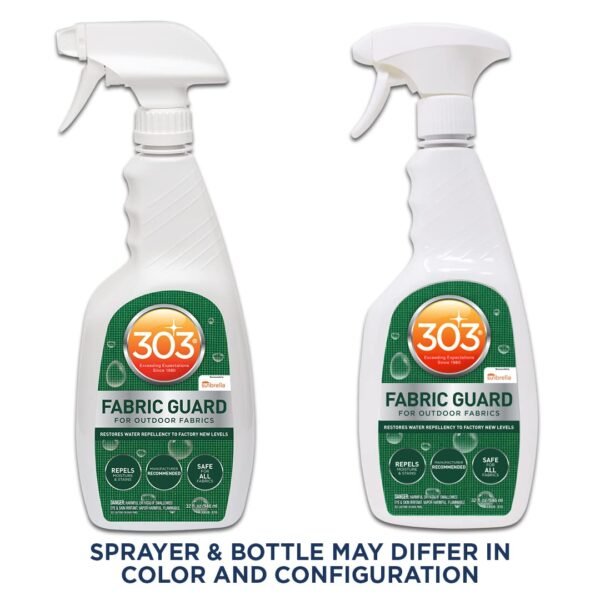
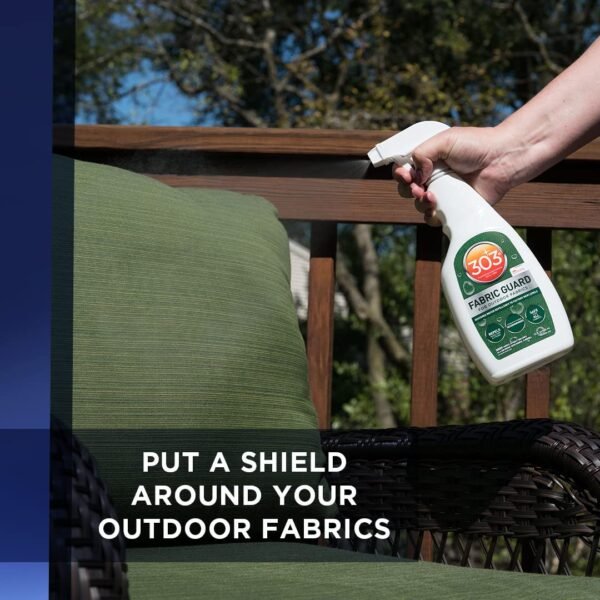
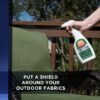
303 Fabric Guard is a spray on fabric treatment that leaves a repellent coating behind after it cures. Gold Eagle Co. states that it restores lost water and stain repellency to factory new levels when applied to clean, dry fabric, and that the coating defends against both water based and oil based spills. The named applications are outdoor: upholstery, cushions, umbrellas, life jackets, suede and canvas, with the manufacturer noting that the product is recommended by Sunbrella, a major outdoor fabric maker.
It sits in the Laundry category here, and that placement is misleading enough to correct at the top. This is not a wash additive, it does not go in a machine, and it is not applied to clothing in any normal sense. The manufacturer’s own directions say to use it outdoors only, spraying onto fabric until evenly wet. It belongs with boat covers, patio cushions and awnings, not with the water softening crystals and detergents that share the category with it.
What is in it, and what the listing withholds
Nothing. The listing gives no active ingredient, no solvent system, no fluoropolymer or silicone identification, no percentage and no pH. Fabric protectants in this class are typically built on a repellent polymer carried in a volatile solvent that flashes off as the coating cures, but this listing does not confirm what chemistry is used, so that description is a category observation rather than a statement about this bottle. Read the label and any safety data sheet before use.
The outdoor only instruction is the clue that matters
Gold Eagle’s direction reads “Use product outdoors only, in supplied packaging.” That is an unusually firm instruction for a household aerosol spray, and it is the single most useful safety detail on the page. A product that must not be used indoors is telling you that the vapor load during application is significant. Treat it accordingly: apply outdoors with air moving, stand upwind, avoid applying in a garage with the door partly closed, and do not bring treated items back inside until they have cured. The phrase “in supplied packaging” also matters, because it rules out decanting the product into a pump sprayer or a paint gun to speed the job up.
The specification block is thin but consistent: 32 ounces, model 30606CSR, manufactured by Gold Eagle Co., first listed in May 2014, and recorded as ranked 795th in Laundry Supplies and 25,688th across Health and Household. The Customer Reviews field on this listing contains a sales rank string rather than a star rating, so there is no rating figure to report from this record.
Fabrics it covers, and the ones to test first
Gold Eagle states the product is safe for use on all fabrics, synthetic and natural fibers alike, and specifically names upholstery, cushions, umbrellas, life jackets, suede, canvas and other outdoor fabrics. The company also states that it does not alter fabric color, feel, flammability or breathability. Those are manufacturer claims covering a very wide range of materials, and “all fabrics” is a broad statement to accept without testing.
Do a test patch regardless. Apply to a hidden section, let it cure fully, then check for color shift, stiffening and water beading before committing to a whole cushion set. Suede and other napped leathers are the most likely to show a change in hand feel, and old, sun degraded fabric can respond unpredictably to any wetting. The listing also gives an absolute prerequisite that is easy to skip: the fabric must be clean and dry before treatment. Sealing dirt under a repellent coating locks the dirt in and wastes the product. Clean the fabric first with an appropriate cleaner and let it dry completely. For fabric that already carries a mark, deal with the stain before the coating goes on, using something like the Attitude 60257 laundry stain remover on washable items or the Star brite fiberglass stain remover for the hard surfaces around a marine or patio installation.
Applying it correctly, curing and storage
The manufacturer’s method is specific and worth following exactly. Spray onto fabric until evenly wet, overlapping in a crisscross pattern so no area is missed, and let it dry. Do not oversaturate. Protect the treated material from rain and dew until it is completely cured, and allow 12 to 24 hours for that cure depending on temperature. The listing states that when those steps are performed correctly, the material is water repellent at the end of the cure. Reapplication is described as needed, depending on how much sun and weather the fabric takes.
The 12 to 24 hour cure window is the detail most likely to be ignored, and the one that ruins the job. A cushion brought in early, or a cover rained on at hour six, has not formed the coating and will not repel. Plan around a dry forecast rather than around your afternoon. Coverage is given as 80 to 150 square feet per 32 ounce bottle, which is a wide range and depends on material and application method, so measure the area before assuming one bottle covers a patio set.
On storage, Gold Eagle publishes a shelf life of up to two years from the bottle fill date, encoded as a five digit Julian date on the back of the bottle in YYDDD form: the first two digits are the year, the last three are the day of that year. That is a genuinely useful piece of label literacy for anyone who finds a half used bottle in a shed. Store it capped, upright, away from heat and ignition sources, and out of reach of children. Never mix it with another product, and never apply it over a fabric still damp with a cleaner.
Cost over time and what else to look at
The cost structure is coverage driven rather than volume driven. A 32 ounce bottle covering 80 to 150 square feet means a large patio set or a boat cover can consume most of a bottle in one pass, and reapplication is periodic rather than annual by rule. The two year shelf life caps how far ahead it is sensible to buy. Set against that, the alternative to a repellent coating is cleaning the fabric more often, and outdoor fabric cleaning is slow work.
Products worth comparing depend on which half of the job you are solving. For removing what is already there rather than repelling what comes next, the Bissell 1784L oxy stain remover handles fabric marks. For the wood and teak that usually sits alongside treated cushions, the Star brite teak oil is the parallel protective treatment. The stain removers category covers the cleaning half, and the laundry category is where this product currently sits, alongside items that genuinely do go in a washing machine.
Who this suits and who should pass
Buy it if you have outdoor fabric that has stopped beading water, you can work outdoors, and you can leave the treated items untouched and dry for a full day. The Sunbrella recommendation and the published cure time, coverage figure and date coding make this a better documented product than most in this catalog. Pass on it if you were looking for a laundry additive, if you have no outdoor space to apply it in, if the fabric is dirty and you are not willing to clean it first, or if you need to know what is in a product before spraying it. The complete absence of an ingredient list, combined with an outdoors only instruction, is the notable gap on this listing.