Description
A marine hull product in a laundry category
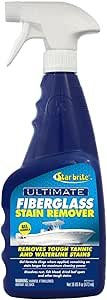
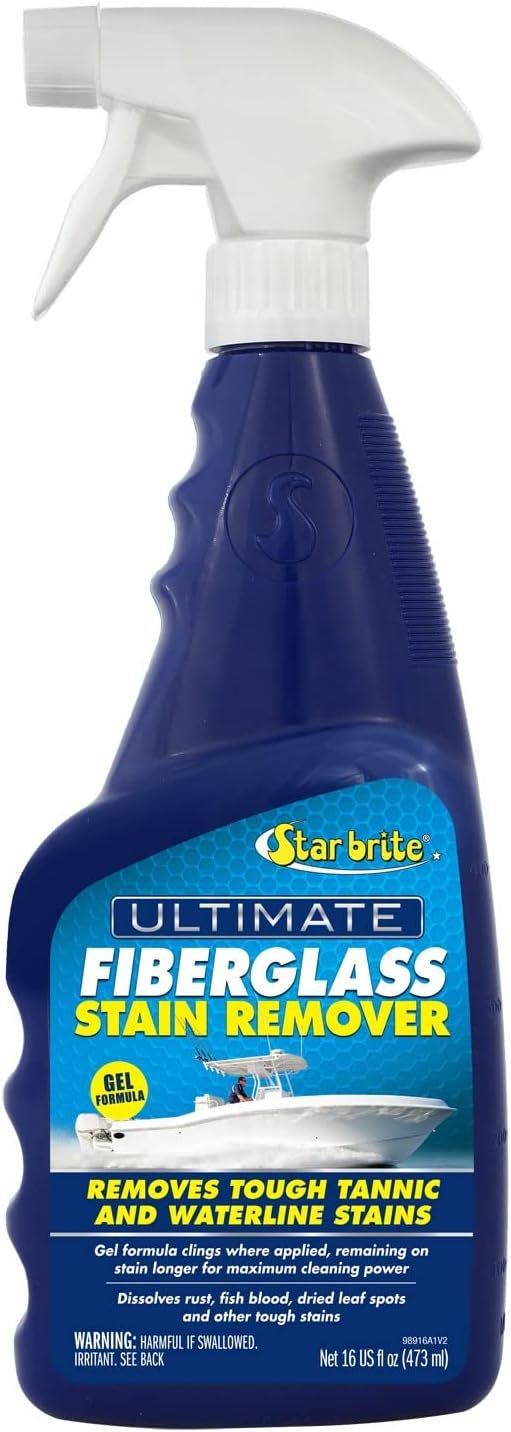
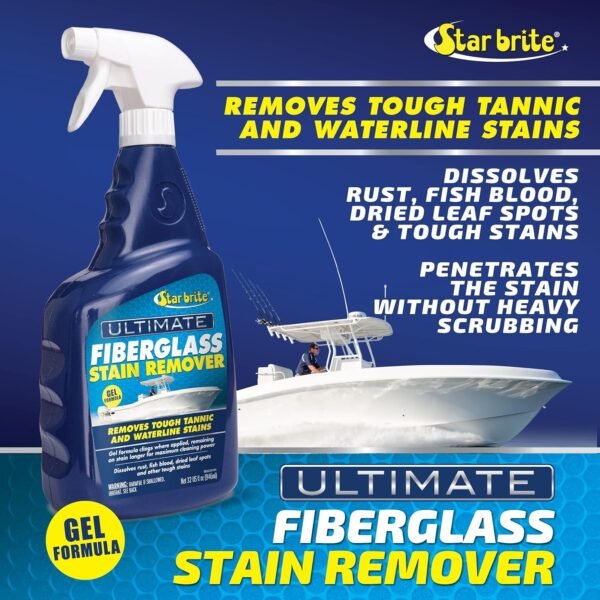
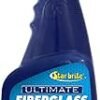
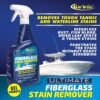
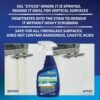
Star brite Ultimate Fiberglass Stain Remover is a gel spray made for boat hulls. The listing describes it as a marine grade solution for rust, dried fish blood, leaf stains and waterline stains on fiberglass and painted surfaces, and Star brite has been a marine, auto and RV brand since 1973.
This site files it under Stain Removers, and Amazon’s own category path for the listing runs through Laundry to Stain Removers. That placement is wrong in a way that could cause real damage, so it needs correcting at the top rather than buried later: this is not a laundry product. It is not for clothing, upholstery, carpet or any fabric. Anyone who reaches for it because it appeared in a stain remover search and sprays it on a shirt is likely to ruin the shirt.
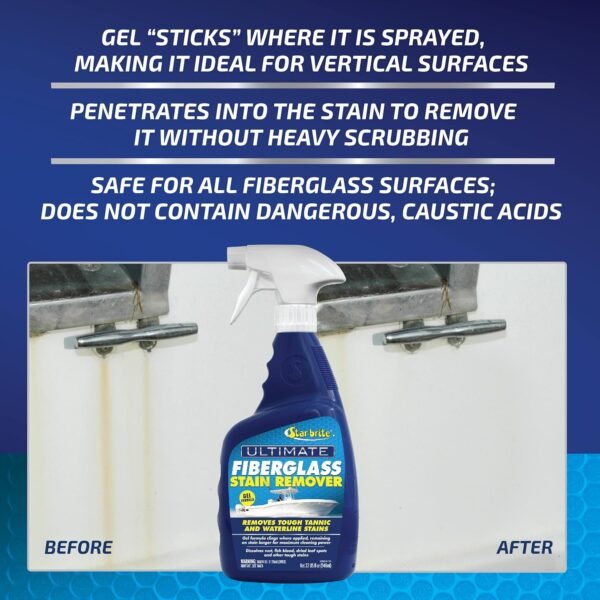
What it actually addresses is the yellow brown band that forms along a boat’s waterline, the rust weeping from a fitting, and the tannin marks that fallen leaves leave on a hull or a painted surface. Those stains are mineral and organic deposits bonded to a gelcoat, and they do not come off with soap. The households this suits own a boat, a trailer, an RV or fiberglass outdoor furniture, and nobody else.
How a gel spray works, and what the listing withholds
The format is the most useful thing the listing tells you. A gel clings to a vertical surface instead of running straight down it, which is exactly what a hull needs, since a liquid sprayed on a topside runs to the rubrail in seconds and does nothing. Star brite describes the gel as sticking for better stain penetration without run offs or drips, and says the targeted application ensures only the stained area is treated. That is a fair description of why the format exists.
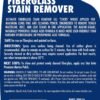
The stated method is: spray the affected area, let it soak until the stain disappears, then rinse thoroughly with water. Note what is missing there. No dwell time is given, only the instruction to wait until the stain goes, and no maximum contact time is given either, which matters because leaving an aggressive cleaner on a gelcoat indefinitely is not risk free.
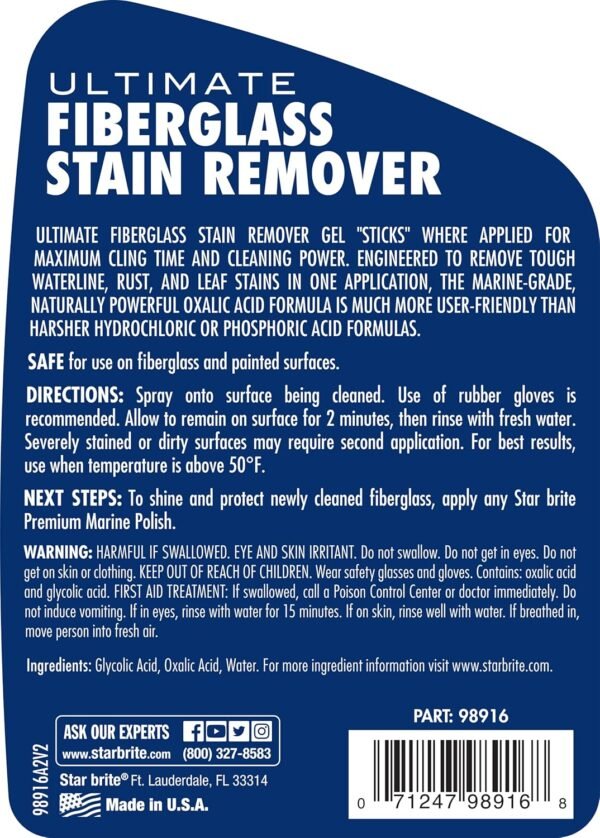
More significantly, this listing publishes no ingredient information at all, no pH, no safety guidance, no protective equipment recommendation and no specification block whatsoever. There is no ASIN, no weight, no dimensions and, remarkably, no bottle size anywhere on the page. You cannot tell how much product you are buying, which makes any cost comparison impossible.
Treat it as an acid until the label tells you otherwise
Products that remove rust and waterline staining from fiberglass generally work through acidic chemistry, and a stain remover that acts on rust in minutes is not a mild product whatever the packaging says. Since the listing names nothing, the only safe approach is to read the label and the safety data sheet on the bottle before opening it, and to handle it as you would any acidic cleaner: gloves, eye protection, ventilation, and no contact with skin.
Surfaces, and everything to keep it away from
Star brite names fiberglass, painted surfaces, boat hulls and plastic. Test any surface first in a hidden area, particularly on older gelcoat, which is porous and chalky once oxidized and can absorb a cleaner unevenly.
Keep it away from a long list. Fabric, canvas, upholstery, carpet and clothing, none of which this product is for. Aluminum, which is attacked by many acidic cleaners and appears on every boat as rails, cleats and trim. Anodized and polished metals. Chrome. Glass adjacent to a treated area, since drips mark. Teak and other unsealed woods, which stain. Vinyl seating and clear vinyl windows. Natural stone anywhere near a dock.
Rinse thoroughly and rinse wider than the treated area, because a gel that runs slowly still runs eventually, and residue left to dry in the sun on a fitting is where corrosion starts.
Safety, and the environmental point that comes with a boat
Two safety rules matter more than everything else in this section.
The first is the mixing rule and it is critical here. Never combine this with any other cleaning product, and in particular never use it in the same session as a chlorine bleach product. Boaters commonly use bleach based mildew removers on canvas and hulls, and an acidic cleaner meeting chlorine bleach releases chlorine gas. On a dock or in a cockpit, with limited airflow and nowhere to retreat, that is genuinely dangerous. Finish one product, rinse the surface thoroughly with water, and let it dry before using another.
The second is where the rinse water goes. Anything you rinse off a hull at a dock or a ramp goes into the water. Federal and state rules restrict what may be discharged into navigable waters, and many marinas have their own washdown rules and wash pads with collection. Check the marina’s rules and, where possible, do this work on a trailer over ground rather than over water. The listing says nothing about this at all, and it is the most significant regulatory dimension the product carries.
Beyond that, wear eye protection and chemical resistant gloves, work in open air, keep it off skin, avoid spraying on a windy day, and keep children and pets away from the work area and from any pooled runoff. Store the bottle upright, capped, out of reach of children and away from heat, and never decant it into an unlabeled container.
Cost, and where to look for the right product instead
With no bottle size published, cost per use cannot be calculated from this listing at all, which is a genuine problem when comparing against another hull cleaner. Buy on the assumption that a gel goes further per bottle than a liquid on vertical surfaces, because less of it ends up on the ground.
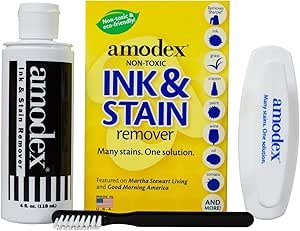
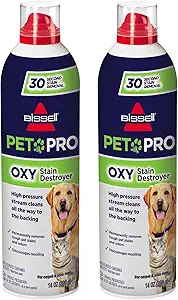
If what you actually wanted was a laundry stain product, the catalog carries proper ones: the Bissell Oxy stain remover, the Amodex ink stain kit for ink specifically, and the IBB stain remover, along with the wider stain remover listings. If mildew on canvas or a hull is the actual problem rather than rust, the same brand’s Star brite mildew stain remover is the matching product, and general hard surface work is covered by the all purpose cleaner listings.
Who should buy this and who should not
Buy it if you own a boat, an RV or fiberglass outdoor equipment with waterline, rust or leaf staining, you can work outdoors with gloves and eye protection, and you have somewhere to rinse that does not discharge straight into water.
Do not buy it as a laundry or upholstery stain remover, whatever category it appears under. Do not use it near aluminum, anodized metal, teak or vinyl without testing. Do not use it in the same session as any bleach product. And be aware that the listing publishes no bottle size, no ingredients and no safety guidance, so the label is your only source.