
Description
What teak oil is for, and the boat owner’s calendar
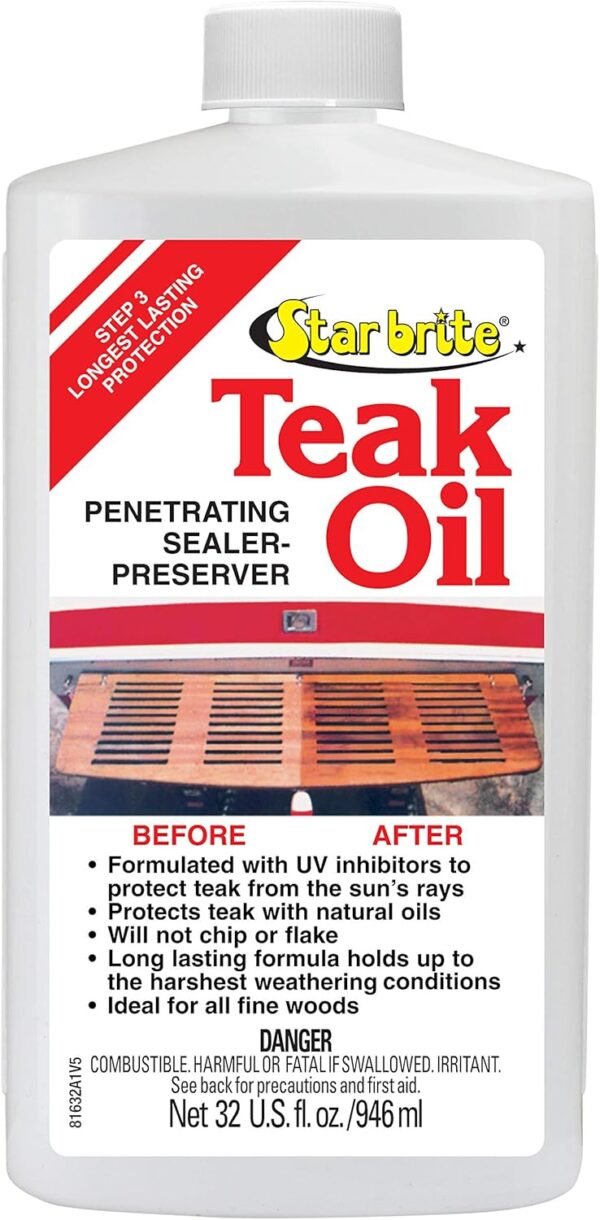
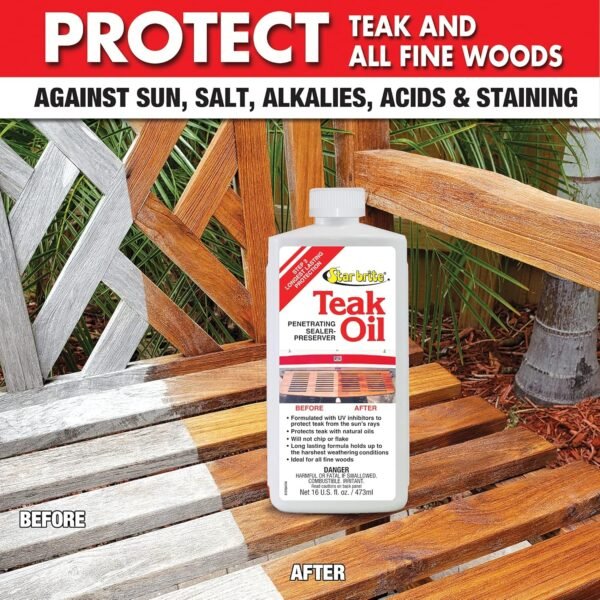
Star brite Marine Grade Teak Oil is a 32 ounce penetrating finish for teak and other dense hardwoods, sold under part number 081632 and listed continuously since 2003. The household it fits is one with exterior wood that lives in weather: boat trim, cockpit tables, patio and garden furniture, deck rails, pool surrounds. Teak weathered outdoors goes silver as ultraviolet light breaks down the surface lignin and rain washes it away. An oil finish is the traditional response, and it is a maintenance commitment rather than a one time job.
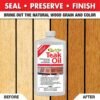
The distinction that matters is penetrating versus film forming. Star brite states this oil penetrates deep into the wood rather than sitting on top the way a varnish does, preserving the grain and the natural color. That means no glossy shell to crack or peel, and no sanding back when it fails; it fades instead, and you reapply. Star brite’s own direction is to reapply at the first sign of weathering, which in strong sun and salt is a seasonal or twice seasonal job rather than an annual one.
What is in the bottle, which is more than most listings tell you
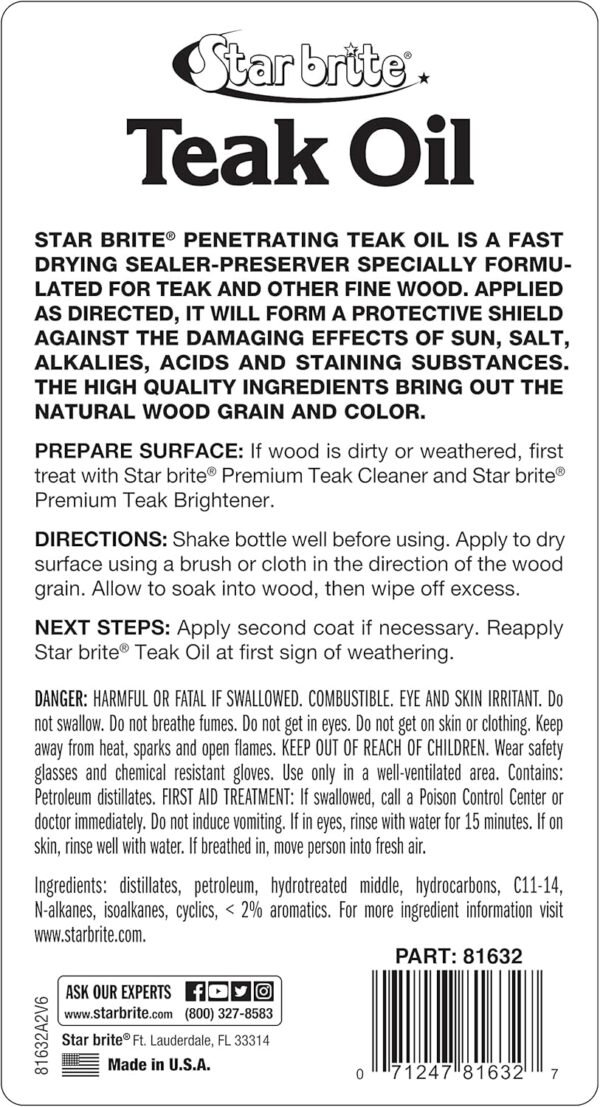
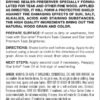
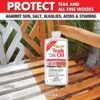
Star brite is unusually forthcoming here. The description names an advanced formula of polymers and a tung oil blend, and states it contains ultraviolet absorbers to resist weathering and to protect against sun, salt, alkalis, acids and future staining. Tung oil is a drying oil, meaning it cures by reacting with oxygen rather than by evaporating, which is what produces a hardened, water resistant surface inside the wood. The polymer component is what Star brite credits for durability beyond a plain oil.
The fire hazard nobody in this listing mentions
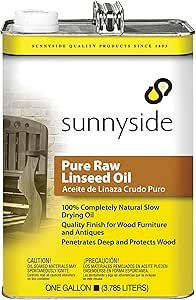
This is the most important paragraph on this page. Rags, cloths, paper towels and brushes soaked with drying oils, tung oil and linseed oil among them, can heat up on their own as the oil cures and can catch fire without any ignition source. It is the documented reason oil finish cans carry a combustion warning. Nothing in this listing states it. The safe practice is to lay used rags out flat, singly, on a non combustible surface outdoors until they are fully dry and stiff, or to submerge them in a sealed metal container of water, and never to leave them balled up in a bin, a bucket or a plastic bag. The same applies to the rags from any oil in this category, including the Sunnyside raw linseed oil and the Sunnyside boiled linseed oil. Read the printed can for the manufacturer’s own handling and disposal instructions.
Woods it suits, and where oil is the wrong answer
Star brite names teak, acacia and Amazonia hardwood, and offers the product for boats, decks, pools, trim and patio furniture, describing the result as a warm golden color. Dense, oily tropical hardwoods are the natural fit; the oil sits in the wood’s own structure rather than fighting it.
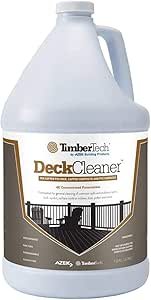
Some surfaces are poor candidates. Do not oil wood that already carries a varnish, a polyurethane or a hard sealer, because a penetrating oil cannot get through a film and will simply sit on top and stay tacky. Composite decking is not wood at all and needs a purpose built product such as the TimberTech composite deck cleaner. And treat one bullet with care: Star brite offers the oil for shower stools and bath mats, and an oiled wooden stool in a wet shower is a slip risk as well as an item that will need frequent renewal in constant moisture. That is a use to think about rather than to adopt because a bullet mentioned it.
Preparation decides the result. Star brite states that if wood is dirty or weathered it should first be treated with its own teak cleaner and brightener, and calls that pre treatment necessary for the best outcome. That is an honest instruction and also an upsell: oil applied over gray, dirty or mildewed wood locks the discoloration in. If mildew is the problem rather than weathering, address it first with a product such as the Star brite mildew stain remover and let the wood dry completely before any oil goes near it.
Applying it, and the safety that comes with a solvent finish
The published method is precise. Apply to a dry surface with a brush or cloth, working in the direction of the grain. Allow it to soak into the wood, then wipe off the excess. Apply a second coat if needed, and add further coats to build sheen. Wiping off the excess is the step people skip and it is the one that separates a good finish from a sticky one, because oil left standing on the surface never fully cures.
Work outdoors or with the space thoroughly ventilated. Oil finishes of this type carry solvents, and the vapor is both an inhalation issue and a flammability issue, so keep the work away from pilot lights, grills, heaters and anything that sparks, and do not smoke while working. Wear nitrile gloves and eye protection. Keep the container closed, store it upright, out of sun and heat, and out of reach of children. Never mix it with any other product; combining a solvent finish with a cleaner, a bleach or an unchecked thinner is how a routine job becomes an emergency. Dispose of leftover product through a local hazardous waste route rather than down a drain.
Coverage, running cost and the alternatives
Thirty two ounces of penetrating oil goes further than a film finish does, because you are wiping the excess off rather than building thickness, but the running cost is dominated by frequency rather than by volume. A finish that must be renewed at the first sign of weathering on a sunny, salty mooring is a recurring purchase, and Star brite’s claim that the formula outlasts basic teak oils by up to six times is measured against an unnamed comparison product and cannot be checked from the listing.
The alternatives split by philosophy. Plain linseed oil is the low cost traditional route and needs the most frequent renewal. A hard varnish lasts longest, at the cost of sanding and recoating when it fails. Letting teak go silver and cleaning it periodically is a legitimate third option. For indoor furniture, a wax or polish such as the Howard orange oil wood polish serves a different purpose entirely and should not be used outdoors. The rest of the shelf is in wood conditioners, waxes and oils, with the indoor products grouped under wood polish.
The specification block for this item is a mess and the contradictions should be named. Item dimensions are given as 15 by 9.5 by 10 inches while the shipping package is listed as 9.21 by 4.21 by 2.13 inches, so the product is recorded as larger than its own box. Package weight reads 0.95 kilograms and item weight 1.96 pounds. Material is listed as plastic, which describes the bottle. Color reads “No Color” while the description promises a warm golden color. And the suggested users field reads unisex adult, an apparel attribute with no meaning here. The item currently ranks 90th in the retailer’s wood conditioners, waxes and oils chart on 773 ratings averaging 4.6 stars.
Who should buy it
Buy it if you own teak or another dense hardwood exposed to weather, you accept a maintenance cycle rather than a one time coating, and you will prepare the wood properly first. Skip it if the wood is varnished, if it is softwood or composite, or if you are not prepared to handle oil soaked rags correctly, because that single habit matters more than any difference between brands.