Description
The job, and the machines this is for
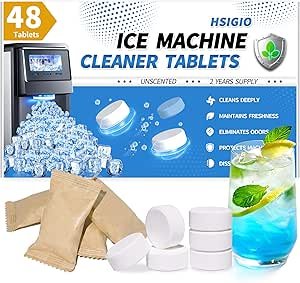
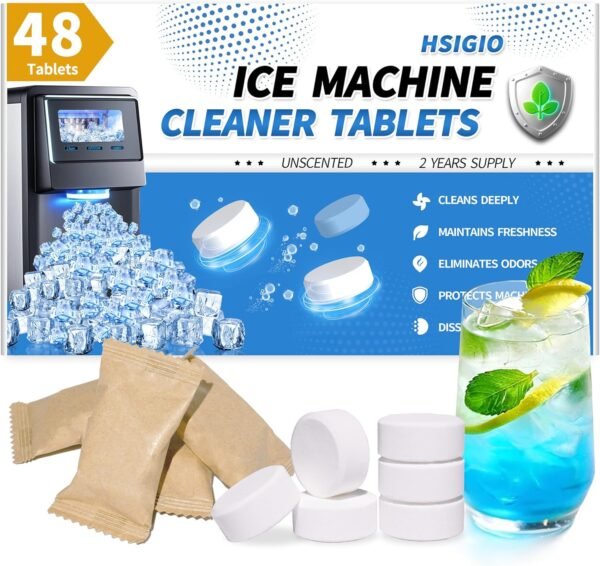
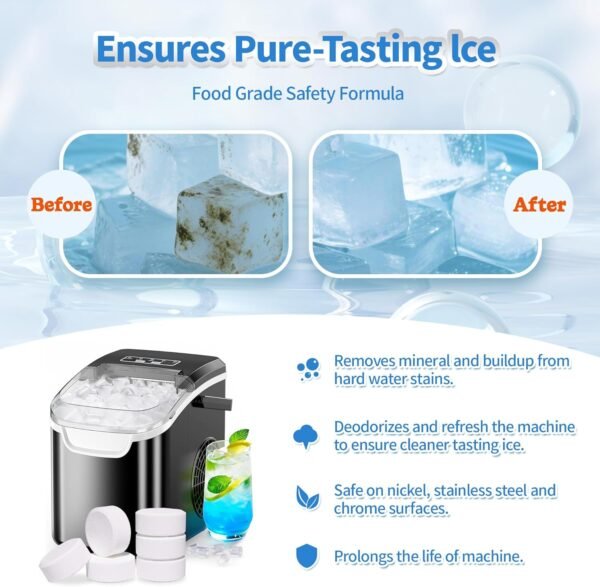
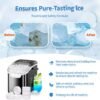
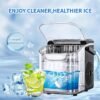
These are descaling tablets for countertop and portable ice makers, sold as a 48 tablet pack. Descaling is a specific job and it is not the same as cleaning. Every ice maker fed with tap water accumulates mineral scale on the evaporator, in the water path and in the reservoir, because freezing water leaves its dissolved minerals behind. Scale slows the freeze cycle, changes the shape and clarity of the ice, and eventually stops the machine working properly. A descaler dissolves that mineral deposit chemically. It does not remove biofilm, and it does not disinfect anything.
The listing is explicit about one machine type it does not cover: it states in the first bullet that the tablets are not for built-in refrigerator ice makers. That restriction matters, because a refrigerator ice maker is plumbed into the household supply and cannot be filled with a treatment solution and run in isolation. If your ice maker is inside a refrigerator, this is the wrong product and the manufacturer’s own service instructions apply instead.
The active ingredient, which is actually published
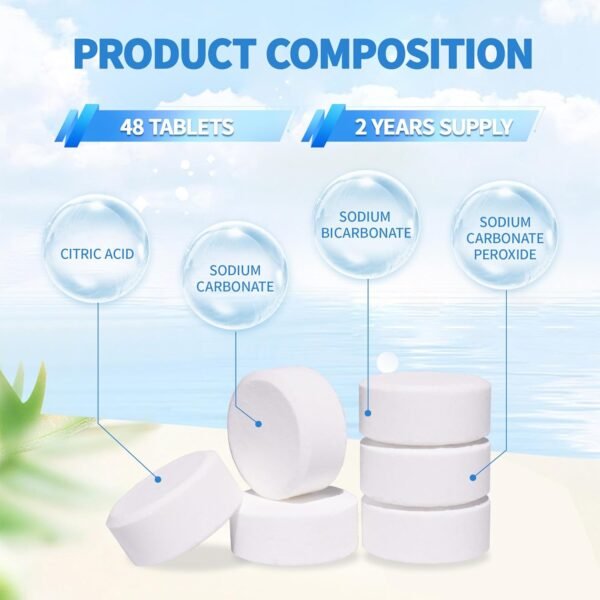
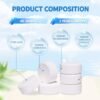
This listing does something unusual for this catalog: it names the active. The tablets are described as made from food grade citric acid. That single disclosure answers most of the questions a buyer would otherwise have to guess at.
Citric acid is a weak organic acid, and it works on scale by chelating calcium and magnesium, which means binding the mineral ions into a soluble complex that rinses away rather than eating the metal underneath. That is why it is the standard chemistry for descaling coffee machines, kettles and ice makers, and it is why the manufacturer’s nickel safe claim is plausible: a weak organic acid at descaling concentration is far gentler on nickel plating, stainless steel and aluminum than a strong mineral acid would be.
What is still missing
The concentration is not stated, the tablet weight is not stated, and no other ingredient is named, so whether the tablets are pure citric acid or citric acid with a binder, an effervescent agent or a surfactant is not disclosed. The specification block on this listing is entirely empty, with no manufacturer, no dimensions, no weight, no rating and no sales rank. Read the packaging for the full declaration.
The sanitized claim, and why it should not be relied on
The fifth bullet ends by inviting you to enjoy “a sanitized” ice maker. That word does a lot of work and it is not supported by anything else on the page. Sanitizing is a defined antimicrobial claim, and in the United States products making antimicrobial claims for surfaces are regulated by the Environmental Protection Agency and carry a registered label with an EPA registration number and a stated contact time. Nothing of the sort appears here. Citric acid at descaling strength is a scale remover, not a registered sanitizer.
The practical consequence is straightforward. Descaling this machine will improve the ice and the cycle time. It should not be treated as a substitute for whatever cleaning and sanitizing routine the ice maker’s own manufacturer specifies, and if slime or a musty smell is the problem rather than white mineral crust, descaling is not the answer to it. Follow the appliance manual.
Using the tablets, and the rules for a machine that makes food
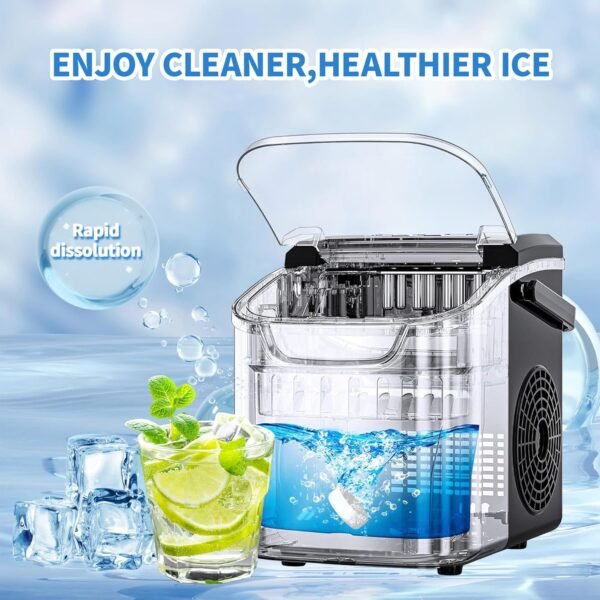
The listing gives a full method, which is welcome. Turn off the ice maker and empty the bin. Let the remaining water drain and any ice melt. Add one or two tablets and fill with water to the fill line. Run two cycles, emptying the water and ice after each. The recommended interval is every two to four weeks.
Two additions to that method matter because this appliance produces something you put in a drink. First, discard everything the machine produces during and immediately after the treatment. The first batch of ice after a descale is not for drinks. Second, run at least one extra plain water cycle beyond the two the manufacturer specifies, and discard that ice too, particularly if you can still smell or taste anything. Rinsing costs a few minutes and removes any doubt.
The safety rule that carries the most weight here is about mixing. Do not combine these tablets with bleach or with any chlorine based cleaner, and do not use bleach in the machine before or after a descale without a thorough rinse in between. Acid and chlorine bleach together release chlorine gas, and a kitchen appliance that has just been descaled and then bleached is a realistic way for that to happen. Pick one treatment, complete it, rinse thoroughly, and only then consider the other. Keep the tablets in their packaging and out of reach of children, since a small tablet that looks like a mint is exactly the sort of thing that gets swallowed, and do not handle them with wet hands.
The two year supply claim, and the machines it covers
The pack is advertised as a two year supply, and the arithmetic only works under one set of assumptions. Forty eight tablets at one to two tablets per clean, cleaned every two to four weeks, gives a very wide range: at two tablets every two weeks the pack lasts under a year, and at one tablet every four weeks it lasts more than three. Two years sits in the middle of that range rather than being a property of the pack. Work out your own interval and dose before treating the claim as a planning number.
The compatibility statements also pull in two directions. The title says compatible with most brands and describes the tablets as being for countertop and portable ice makers. The bullets variously say compatible with all major brands, and describe the tablets as working for industrial, home and countertop models and for standalone and commercial ice makers. Countertop and portable is a very different scale of machine from industrial and commercial, and the listing does not reconcile them. If your machine is a commercial unit, follow its own service schedule rather than a consumer tablet listing. The bullets are also heavily padded with repeated search phrases, which is worth noticing as a signal about how carefully the rest of the page was written.
Cost, alternatives and where this sits
Descaling tablets are cheap per treatment and the real cost of skipping them is a failed appliance, which is the argument for keeping some in the cupboard. The comparable products are all appliance descalers and machine cleaners rather than surface cleaners: the Rutledge Brands dishwasher cleaner and the Anhui Greenland dishwasher cleaner do the same job in a dishwasher, and the Lemi Shine washing machine cleaner and the Splash Spotless washing machine cleaner do it in a washer. For hard water at the source rather than the symptom, dishwasher salt addresses a related problem in machines that have a softener. Browse the dishwasher cleaners category for the appliance side and the all-purpose cleaners category, where this product currently sits despite being an appliance descaler rather than a general cleaner.
Who should buy them
Buy them if you own a countertop or portable ice maker on hard water, you want a descaler whose active ingredient is actually named, and you will follow the rinse cycles properly. Skip them if your ice maker is built into a refrigerator, if your problem is odor or slime rather than mineral scale, or if you run a commercial machine with its own service schedule. And do not read the sanitized wording as an antimicrobial claim: this is a descaler, and nothing on the listing supports anything more than that.