Description
The job, and why a dishwasher needs cleaning at all
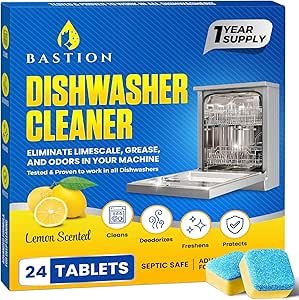
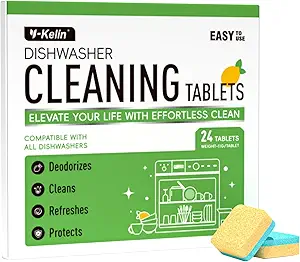
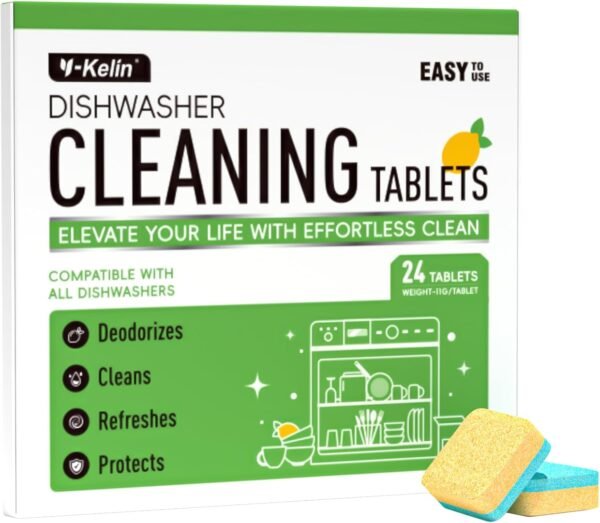
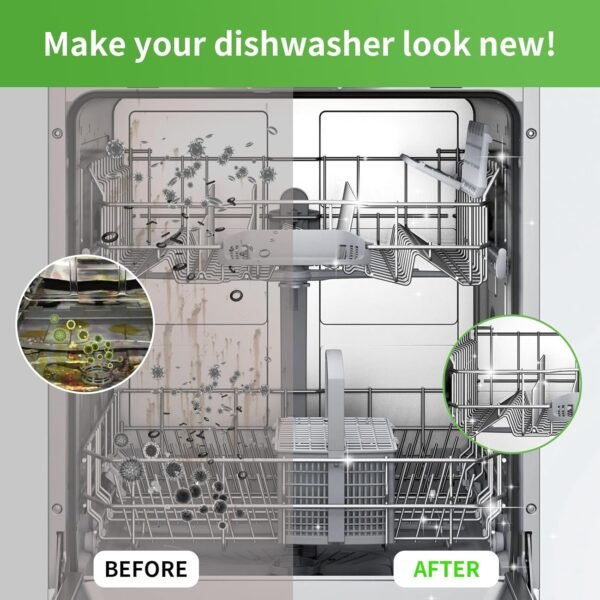
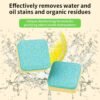
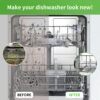
These are machine cleaning tablets for a dishwasher, sold as a 24 pack. The job is not washing dishes: it is cleaning the appliance that washes them. Over time a dishwasher accumulates limescale on the heating element and the spray arms, grease on the interior walls and the door seal, and food debris in the filter and the sump. That combination is what produces the smell people notice when they open the door, and it is also what makes a machine wash progressively worse.
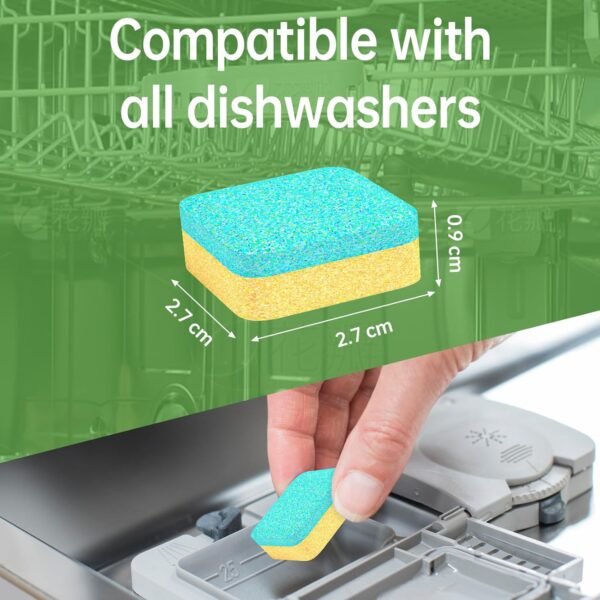
The method here is simple and the listing gives it clearly: place one tablet in an empty machine and run the normal cycle. No dishes, no detergent, nothing else in the drum.
If the underlying problem is water hardness rather than accumulated residue, a machine cleaner treats the symptom and returns. In that case dishwasher salt in a machine with a softener, or a rinse aid for spotting, address the cause instead.
The claims on this listing go further than the evidence
The second feature bullet is the one that needs naming. It states that the product thoroughly sanitizes, that it eliminates odor residue from hidden parts, and that the cleaner disinfects your equipment and improves hygiene. Sanitize and disinfect are both antimicrobial claims, and in the United States products making antimicrobial claims for surfaces are regulated by the Environmental Protection Agency and carry a registered label with a registration number, a named active ingredient and an organism specific contact time.
None of those appear anywhere on this listing. There is no registration number, no active ingredient, no concentration and no contact time. There is no ingredient list of any kind, and the specification block contains only five fields with no dimensions, no weight, no tablet size and no model number.
What the product can reasonably be expected to do
Removing limescale, grease and food residue is a cleaning claim, it is what a machine cleaner is for, and nothing about it requires a registration. The listing supports that claim in the sense that it is the ordinary function of the category. Treat the descaling and degreasing as the product’s job and treat the disinfection wording as marketing language that is not backed by anything on the page. If disinfecting an appliance genuinely matters to you, that requires a registered product with a stated contact time, not a tablet in a wash cycle.
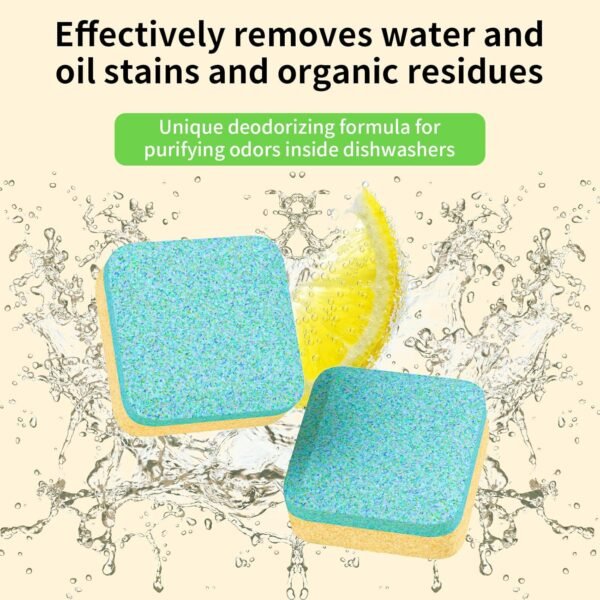
The description also says the tablet naturally removes scale, and natural is not a mechanism. Descaling is done by an acid, most commonly citric acid in consumer products, which chelates the calcium and magnesium so it rinses away. This listing does not confirm what is used, and the difference matters for the mixing rule below.
Frequency, quantity and a contradiction
The listing cannot agree with itself about how often to use the product. The usage bullet says to run the cycle twice a month. The final bullet describes the 24 pack as a full year of monthly cleanings. Twice a month for twelve months is 24 tablets and monthly for twelve months is 12, so one of those two statements is wrong and the pack lasts either one year or two depending which you follow.
The practical answer is that cleaning frequency should follow your water hardness and how heavily the machine is used, not a number on a box. A machine in a hard water area running daily benefits from a monthly treatment. A lightly used machine on soft water does not need one that often. Check the appliance manufacturer’s own recommendation first, since many manuals specify a cleaning interval and some specify which products may be used.
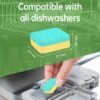
The listing states the tablets suit all brands and models of dishwasher and mentions use on stainless steel basins. That is a broad compatibility claim with nothing behind it, and if your machine has a manufacturer recommended cleaner, that recommendation is worth more than a general statement on a product page.
Using it safely
Run the machine empty. Do not put dishes, glassware or cutlery in with a machine cleaner: the tablet is more aggressive than a detergent and there is no benefit to combining the two jobs. Do not add dishwasher detergent to the same cycle, and do not add rinse aid, salt or anything else on top. One product, one empty cycle.
Clean the filter by hand before running the tablet. A cleaner circulates water through the machine, and it cannot dissolve a filter packed with solid food debris. Pull the filter, rinse it under a tap, and check the spray arm holes for blockages while you are there. That mechanical step does more for a poorly performing machine than any tablet.
The mixing rule carries particular weight here. Never use bleach in a dishwasher before or after a descaling tablet without a thorough empty rinse cycle in between. If the tablet is acid based, which is the norm for descalers, an acid meeting a chlorine bleach releases chlorine gas, and a closed appliance in a kitchen is a poor place for that. Pick one treatment, complete it, run a plain rinse, and then consider the other.
Store the tablets in their packaging, closed and dry, and out of reach of children. A small tablet is exactly the sort of object that gets swallowed, and no hazard information appears anywhere on this listing to say what would happen if one were. Do not handle tablets with wet hands.
Cost, and what else does this job
Machine cleaner tablets are cheap per treatment and the real economics are about the appliance rather than the tablet: a machine that scales up and clogs performs worse, uses more energy and fails sooner. Twenty four tablets is one or two years of treatment depending which of the listing’s own frequencies you follow.
The alternatives on this site include the Rutledge Brands dishwasher cleaner, which is the direct comparison, and the same idea applied to other appliances: the Lemi Shine washing machine cleaner for a washer, and the ice machine descaler tablets, which name citric acid as their active and are a useful example of what this listing could have published. Browse the dishwasher cleaners category for machine care and the dishwasher detergent category for the products that actually wash the dishes, which these are not.
Who should buy them, and who should not
Buy them if your dishwasher smells, glasses have started coming out cloudy, or you can see scale on the element, and you want a simple one tablet routine. That is a real job and a machine cleaner is the right category for it. Skip them if you need to know what is in a product before running it through an appliance that touches your dishes, if your appliance manufacturer specifies a particular cleaner, or if you were buying on the strength of the sanitizing and disinfecting wording, because nothing on this listing supports either claim.