
Description
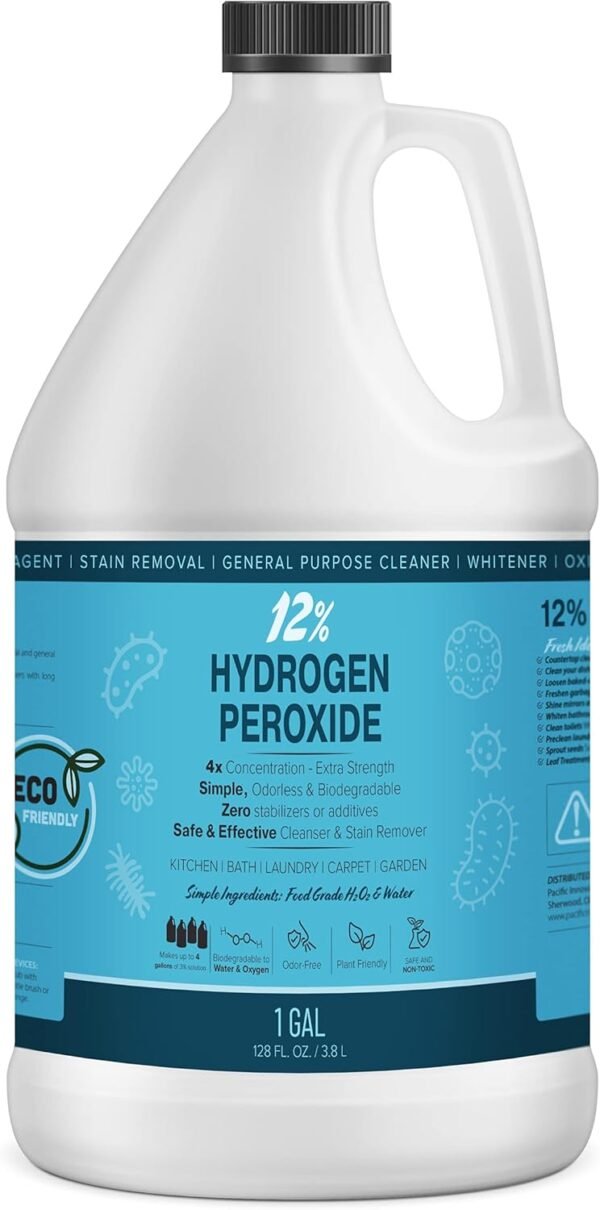
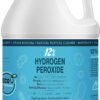
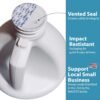
This is a one gallon jug of 12 percent hydrogen peroxide from Pacific Innovations, sold under the MAXTITE name in an HDPE container with what the title describes as a child safe cap. The concentration is the single most important number on the page, and it is four times the strength of the three percent hydrogen peroxide sold in drugstores. Everything in this review follows from that.
What a 12 percent solution is, and what it is not
Hydrogen peroxide is an oxidizer. It works by releasing oxygen, which breaks down colored compounds and organic soils, and it decomposes into water and oxygen as it does so, which is why it leaves no residue. At three percent it is a mild household product. At 12 percent it is a concentrate, and concentrates in this family are capable of causing skin whitening and burns, serious eye injury, and damage to materials that a dilute solution would leave alone.
A gallon of concentrate is a bulk purchase for someone who intends to dilute and use it repeatedly. That is a reasonable thing to want, because buying strength and adding water is cheaper per use than buying pre diluted bottles and shipping the water. But it puts the responsibility for getting the dilution right onto the buyer, and this is where the listing falls badly short.
The listing gives no dilution instructions at all
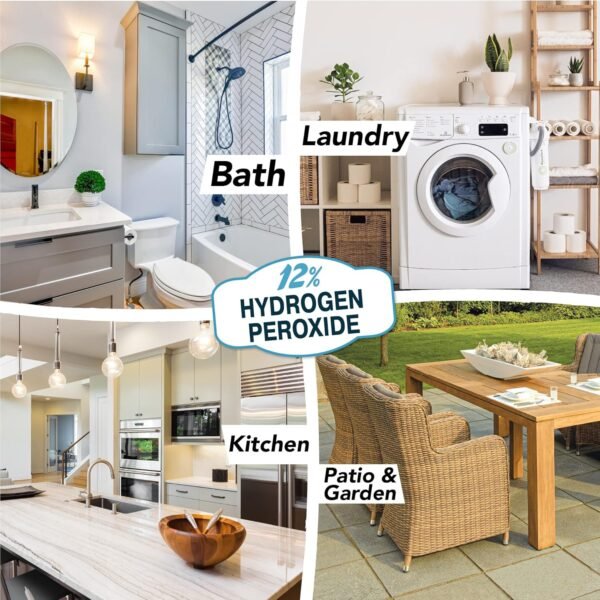
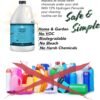
The four description bullets suggest four uses: cleaning countertops and toys, lifting stains from fabrics and carpets, treating soil for plant care, and tackling mold, mildew and grime around the home. Not one of them gives a ratio, a target concentration, a dwell time or a rinse instruction. The word diluted appears only once, in the plant care bullet, and no figure follows it. The first bullet, which suggests cleaning toys, also contains a typographical error where countertops has lost its opening letter, which is a fair indication of the editorial care the page received.
This review will not supply a dilution ratio. Inventing one for a 12 percent oxidizer would be irresponsible, and the correct source is the printed label on the jug together with the manufacturer’s safety data sheet, which any supplier of a concentrated chemical should provide on request. Read both before opening the container. If the label does not carry dilution guidance for the use you have in mind, do not guess: contact Pacific Innovations, or buy a product sold at the strength you actually need.
The claims that do not fit the chemistry
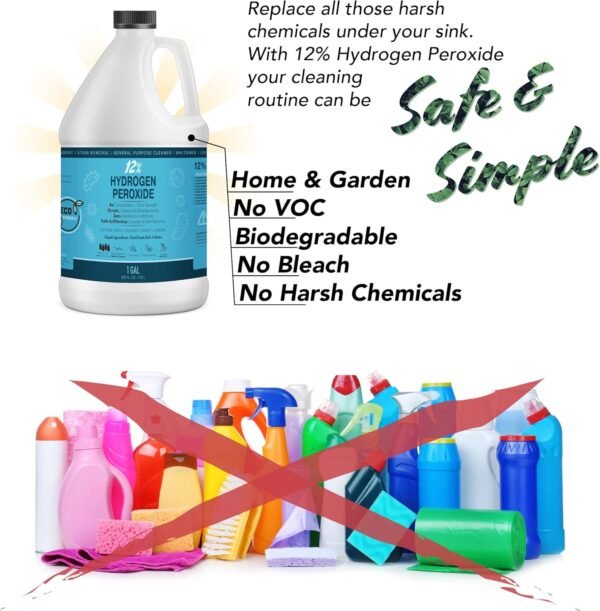
The title describes the product as an ecofriendly natural cleaning solution. Those are the manufacturer’s terms, they are not defined anywhere on the page, and they sit uncomfortably on a concentrated oxidizer, because a product that decomposes into water and oxygen at the end of its life is not therefore mild at the point of use. The suggestion that it can safely clean toys is the one to treat with the most caution, since toys are handled and mouthed by children and the listing gives no dilution for that use. Anyone applying this to a child’s item needs a ratio, a rinse step and a dry time, and the page provides none of the three.
Materials, fabrics and what to test first
Hydrogen peroxide bleaches. That is the mechanism, and at 12 percent it is a capable bleaching agent, so anything colored is at risk until you have tested it. On fabrics and carpet, test on a hidden area, let it dry fully, and look at it in daylight, because color loss frequently only appears after drying. Wool and silk are protein fibers and are more vulnerable than cotton. Anything with a dye you would be sorry to lose should be treated as at risk regardless of what the bullet says about not damaging colors, which is the manufacturer’s claim rather than a tested result.
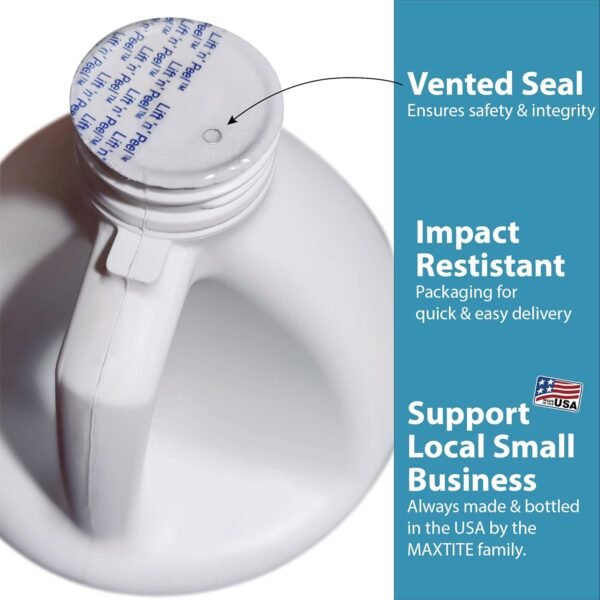
On hard surfaces, be careful with bare metals and with anything plated, since oxidizers accelerate corrosion, and be careful with natural stone and grout, which are porous. Do not store or decant it into a metal container, and do not use a metal spray head, because contact with certain metals accelerates decomposition and can pressurize a closed container. Keep it in the HDPE jug it came in, or in a container the label specifically permits.
Handling a concentrate safely
Eye protection is not optional with a 12 percent solution. Splash goggles rather than glasses, chemical resistant gloves, and long sleeves are the sensible minimum for decanting or diluting. Work in a ventilated space, over a sink or a surface you do not mind, and always add the peroxide to the water rather than the water to the peroxide. If it contacts skin, rinse with plenty of water immediately; if it reaches eyes, rinse for an extended period and get medical help.
Store the jug closed, upright, cool and out of direct sunlight, and keep it out of reach of children and pets. Light and heat both accelerate decomposition, which is why concentrated peroxide is sold in opaque containers, and a jug stored in a hot garage loses strength and can build pressure. Vent the cap carefully rather than cracking it open fast. Do not store it near fuels, solvents, rags or anything combustible, because an oxidizer makes a fire worse rather than better.
The mixing rules are absolute. Never combine hydrogen peroxide with chlorine bleach. Never combine it with vinegar or any other acid, because that combination forms peracetic acid, which is corrosive and hazardous to breathe. Never combine it with ammonia or with any drain opener. Do not mix it with another cleaner to make something stronger. Use it on its own, on a surface that has been rinsed clear of any previous product, and clean up spills with plenty of water.
Cost, and the alternatives worth considering
The cost argument for a gallon of concentrate is genuine: diluting to a working strength yields far more usable liquid than buying ready to use bottles, and the packaging waste is lower. That argument only holds if you dilute correctly and store it properly, and it collapses entirely if the jug degrades in a hot cupboard or if you use it at full strength because no ratio was published.
For most households, a product sold at the strength intended for the job is the better buy. Our review of the Essential Oxygen hydrogen peroxide covers a lower strength option, and the sodium percarbonate stain remover delivers oxygen bleaching as a powder you dose by the spoon, which is a much easier thing to control. The all purpose cleaners category covers the general options.
If mold and mildew are the actual problem, a product formulated and labeled for that job carries the directions this one lacks. Our write up of the Lysol mold and mildew remover covers that route, with more in the mold and mildew removers category. For a different oxidizing chemistry at consumer strength, the Briotech hypochlorous acid spray is worth comparing.
Who should buy it, who should not
Buy the gallon only if you already know the dilution you need, you have goggles, gloves and a safe storage place, and you are comfortable working from a printed label and a safety data sheet rather than from a product page. Do not buy it as a general household cleaner, do not use it undiluted, and do not follow the toy cleaning suggestion without a ratio and a rinse step from the label. This is a concentrate sold with consumer marketing language attached, and the gap between those two things is the risk.