


Description
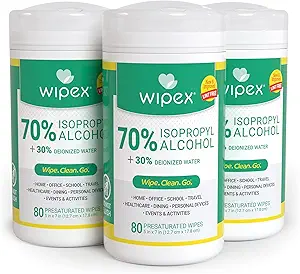
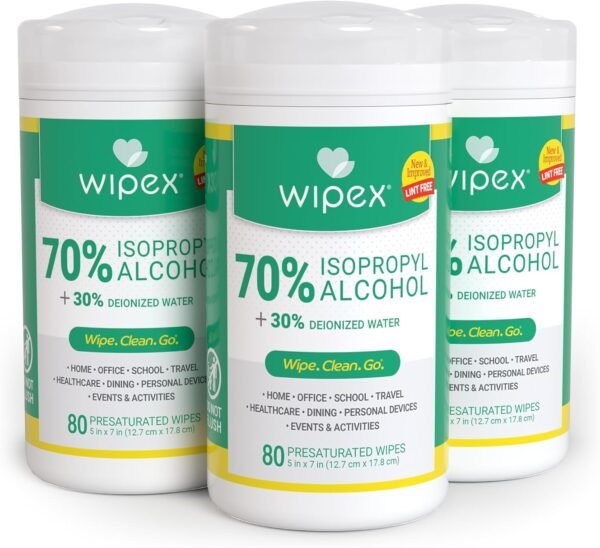
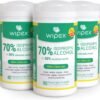
Wipex 70 percent isopropyl alcohol wipes come as three sealed canisters of eighty, giving 240 wipes in total, each five by seven inches, from Dutch Harbor Brands. The listing describes them as lint free wipes for electronics, computer screens, glasses and general surfaces, with a stated shelf life of thirty six months. One thing has to be said before anything else, because the category placement invites a misunderstanding.
These are cleaning wipes, not disinfecting wipes
This product sits in the disinfectant wipes category on this site and ranks among household disinfectant wipes on Amazon, but the listing itself makes no disinfection claim at all. There is no statement that the wipes kill anything, no pathogen is named, no contact time is given and no registration number appears anywhere on the page. Dutch Harbor Brands describes the wipes as removing dust, dirt and debris, which is a cleaning claim.
So this review makes no germ claim either. If you need a product that reduces microbes on a surface, buy one whose own label states that claim along with the contact time, and then follow that contact time, because a claim only holds if the surface stays visibly wet for the stated period. A quick wipe that dries in seconds does not meet any such requirement. The listing does describe the wipes as suitable for use as alcohol prep wipes, which is language borrowed from a medical product category, and nothing on the page supports treating them as one.
Why 70 percent is the number on the label
The concentration is the most informative fact here. Isopropyl alcohol is sold at various strengths, and 70 percent is the standard general purpose concentration for a reason: the remaining water slows evaporation, which keeps the alcohol in contact with the surface longer, and water also helps carry the alcohol into residues. Higher percentages evaporate faster and are often less effective for that reason, which is why 99 percent isopropyl is used for specific electronics work rather than for general wiping.
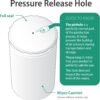
The manufacturer addresses the practical consequence directly and honestly, telling buyers not to be alarmed if a wipe feels dry after one quick use. That is the alcohol doing exactly what alcohol does. It is also the main limitation of the format: one wipe covers a modest area before it stops being wet, and a large surface takes several. The five by seven inch size and the self dispensing canister with a tight sealing lid are both aimed at that problem, the first by covering more per swipe and the second by keeping the remaining wipes from drying out.
What the listing leaves out
There is no full ingredient statement beyond the alcohol percentage, no information on the substrate material, and no statement about whether any additive or preservative is present. The specification block gives dimensions, a shipped weight of 1.72 pounds for the three pack, a model number, a first availability date of August 2021 and ranking data. For a product used on expensive equipment, the substrate matters as much as the liquid, and lint free is a description rather than a specification.
Surfaces, and the coatings that alcohol damages
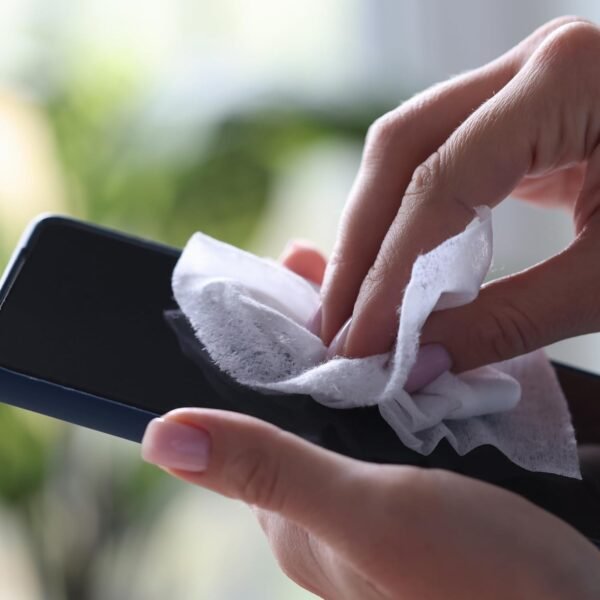
Alcohol wipes are genuinely useful on hard plastic, glass, metal and painted electronics housings: keyboards, mice, phone bodies, printers, remote controls, tool handles and workshop surfaces. They evaporate without leaving a film, which is why they are the standard choice around electronics where a wet cleaner would be a risk.
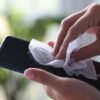
The manufacturer’s suggestion to use them on computer screens and on glasses deserves a caution the page does not give. Many modern displays carry an anti glare or oleophobic coating, and many spectacle lenses carry anti reflective and hydrophobic coatings, and repeated alcohol contact is a known way to degrade those coatings over time. Device makers and lens makers frequently advise against alcohol for exactly this reason. Check what the manufacturer of your screen or your lenses recommends before making these a routine, and treat an occasional use differently from a daily one. Also keep alcohol off leather, off painted or lacquered furniture, off acrylic and polycarbonate panels which can craze, and off anything with printed lettering, since alcohol lifts ink.
Handling them safely
Isopropyl alcohol is flammable, and 240 wipes soaked in it is a quantity worth respecting. Keep the canisters away from open flame, cooktops, heaters and any ignition source, do not use them near a soldering iron or a lit candle, and never use them on a device that is powered on and warm. Let a wiped surface dry fully before restoring power to anything electrical. Store the canisters closed and upright, at room temperature, away from direct sun and out of a hot car.
Ventilate the room if you are wiping a large area, since alcohol vapor concentrates in a small closed space. Keep the wipes off eyes and off broken skin, and note that repeated use dries the skin on your hands. Used wipes go in the trash, never down a toilet, and keep the canisters out of reach of children, because a canister of alcohol wipes is not something a child should be able to open.
One mixing rule applies. Do not use an alcohol wipe on a surface that still holds a bleach based cleaner, an acidic descaler or ammonia, and never wet a wipe with another product to make it stronger. Combining household chemicals is how injuries happen, and alcohol adds flammability to any mixture. Clean with one product, let the surface dry, then use another if you need to.
Cost per wipe, and the alternatives
The cost structure of a three canister pack is easy to compare: 240 wipes at a known size gives a clean cost per wipe, and the thirty six month shelf life means a bulk purchase is not a gamble provided the lids stay closed. The hidden cost is the one the manufacturer already flagged, which is that alcohol wipes dry fast and a large job consumes more of them than you expect. For wiping down a desk, that is fine. For cleaning a whole room, a spray and a cloth costs far less.
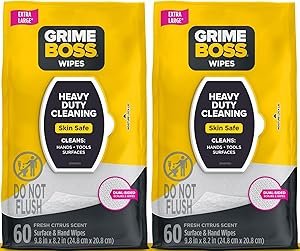
For a wipe aimed specifically at screens and devices, our review of the Weiman electronic wipes covers a product formulated for that use, which is the safer starting point if coatings are a concern. For heavy hands and workshop grime rather than delicate equipment, the Grime Boss wipes are the more suitable format.
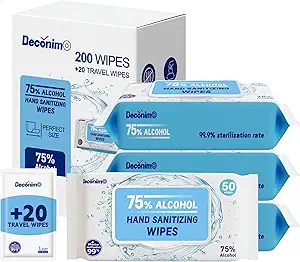
If you genuinely need a product with a stated germ claim, our write up of the CaviWipes covers a wipe from the professional end of that market, and the disinfectant wipes category collects the group. For hands specifically, a skin product is the right choice rather than a surface wipe, and the Deconimo hand sanitizing wipes cover that. General surface cleaning is covered in the all purpose cleaners category.
Who should buy it, who should not
Buy the three pack if you want a residue free wipe for electronics housings, keyboards, tools and general hard surfaces, and you have somewhere cool and safe to keep 240 flammable wipes. Skip it if you need a disinfection claim, because this listing does not make one, and think twice before making it your routine screen or eyeglass cleaner unless the device or lens maker specifically permits alcohol.