

Description
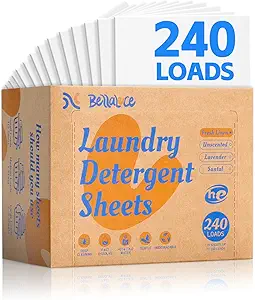
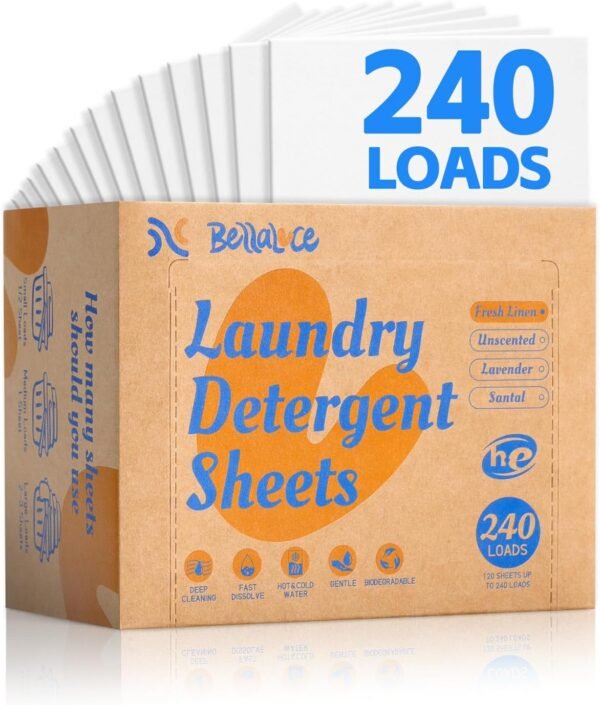
Bellaluce laundry detergent sheets come as 120 sheets in a cardboard box weighing twelve ounces, in a fresh linen scent. The manufacturer rates the box at up to 240 loads, and the arithmetic behind that number is stated openly: one easy tear strip, meaning half a sheet, for a normal load, or a whole square for a larger one. Understanding that halving is the key to judging the value.
What a detergent sheet is trying to solve
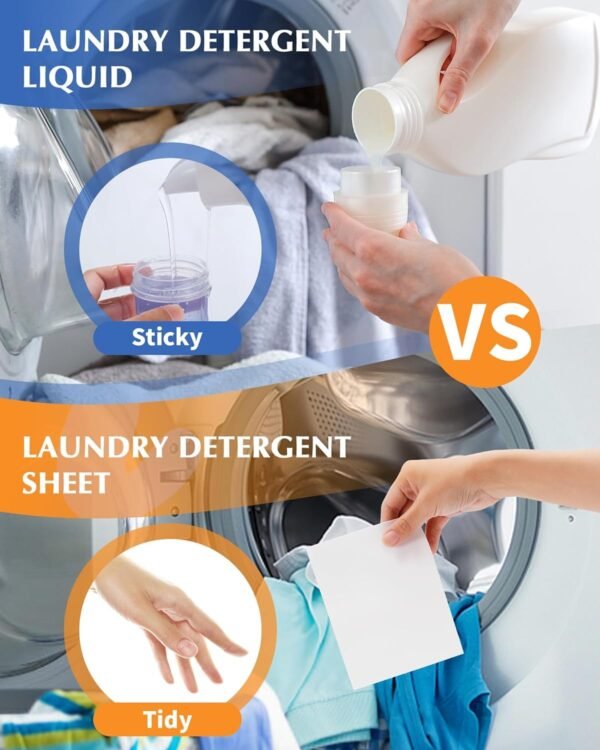
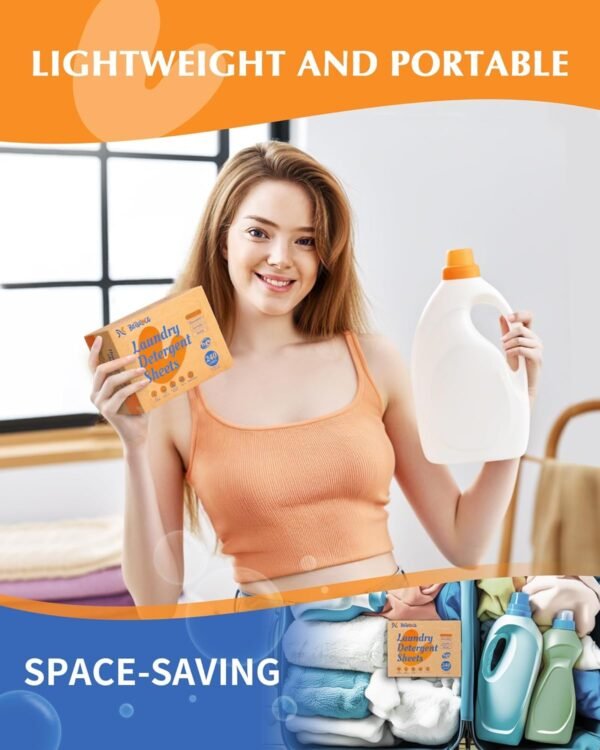
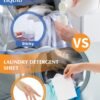
A detergent sheet is a thin, dry film impregnated with concentrated detergent that dissolves in the wash. The format exists to remove three things from the laundry routine at once: the measuring, the plastic bottle, and the weight of shipping water. A twelve ounce box replaces a jug that weighs several pounds, and it fits in a drawer or a suitcase.
The household this fits values that compactness. It genuinely suits travel, dorms, boats, camper vans, and small apartments with no laundry cupboard, and it suits anyone tired of a sticky measuring cap. It is a poor fit for a household that already buys detergent in bulk and has somewhere to put it, because compactness has no value there and a sheet is a more expensive way to buy surfactant.
What the listing claims, and who is claiming it
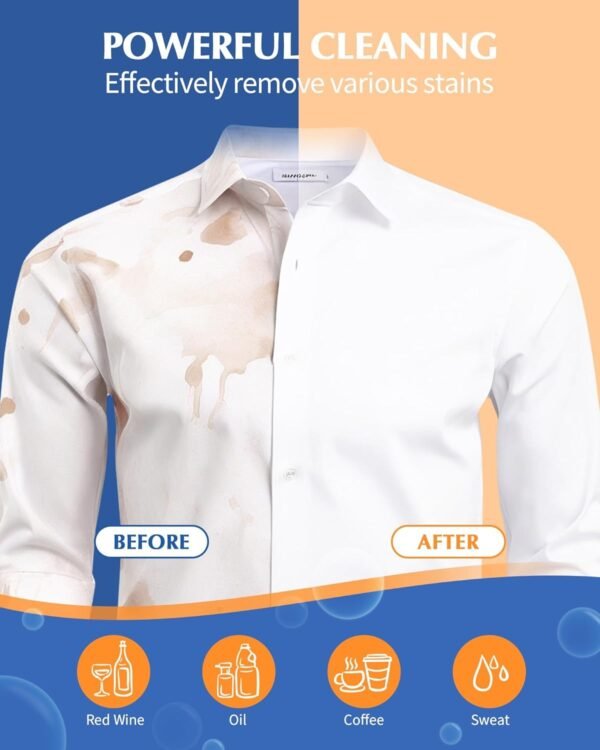
Bellaluce states that the sheets dissolve fully in seconds in hot or cold water, that they are made with safe ingredients, and that they remove red wine, oil, lipstick, coffee, mud and sweat. It also gives a genuinely useful tip that many sheet listings omit: for very dirty clothes, soak the garment with a sheet for fifteen to thirty minutes before washing. That is a real instruction with a real number attached, and it is the most practically useful line on the page.
The environmental and skin claims need attributing rather than repeating. The manufacturer describes the product as plastic free, paraben free, phosphate free, bleach free, dye free, hypoallergenic, eco conscious, zero waste, closer to the pH of your skin, and states that the slim cardboard packaging keeps plastic out of the ocean. Not one of those is defined, quantified or supported anywhere on the listing, and there is no ingredient list of any kind. Hypoallergenic in particular is not a regulated term and this site makes no skin claim about the product. Read the printed box, which is where an ingredient panel would appear if one exists.
What plastic free means for a sheet
The plastic free claim on a detergent sheet usually refers to the packaging, since the box is cardboard rather than a plastic jug, and that part is visible and real. The sheet itself is a dissolving film, and the listing does not say what that film is made of. Films of this type are commonly built on a water soluble polymer, and whether a particular one counts as plastic free is exactly the question the page does not answer. Bellaluce makes the claim; the material is not disclosed; and this review will not fill in a polymer the manufacturer has not named.
Machines, water and fabrics
The manufacturer states the sheets work in conventional and high efficiency machines, in hot or cold water. The placement rule is the same as for a pac: put the sheet in the empty drum, at the back, before the clothes go in. A dispenser drawer will not dissolve a dry film reliably, and a sheet trapped under a folded towel in a cold, short cycle is the usual explanation for a fragment of film found stuck to a garment afterward.
Cold water is where sheets are most often criticized, and the reasonable approach is to give the machine help rather than adding a second sheet. Put the sheet in first so it meets water directly, avoid stuffing the drum, and use a longer cycle for a cold wash. On fabrics, treat this as a general detergent for cottons, synthetics and blends. Wool, silk and anything requiring a specialist wash are not addressed on the listing, and because no ingredient list is published there is no way to judge whether the formula is safe on them.
Dosing, storage and safety
The dose is a half sheet for a normal load and a full sheet for a large or heavily soiled one, and getting that right is what determines whether you achieve the stated 240 loads. Using whole sheets throughout halves the box to 120 loads, which changes the cost per load considerably. Tear along the perforation rather than guessing.
Storage is the format’s weak point and deserves attention. A dry film that dissolves in seconds also reacts to humidity, so keep the box closed, off the floor and out of a steamy laundry room. Sheets that have absorbed moisture stick to each other and tear unevenly, which makes dosing guesswork. Room temperature, dry and out of direct sun is all that is needed.
Two safety points. A detergent sheet is concentrated detergent in a thin form, so keep the box out of reach of children and pets, handle sheets with dry hands, and do not leave one lying on top of the machine. And the mixing rule applies here as to every laundry product: do not put a sheet and a chlorine bleach dose in the same place at the same time, and never soak a sheet in a bucket with another cleaning product. If a load needs bleach, use the machine’s bleach dispenser or add it to the water separately according to the bleach label.
Cost per load, and the alternatives
The honest comparison is per load and it depends entirely on the half sheet assumption. At 240 loads the format competes reasonably with a bottle; at 120 loads it does not. Work out what your own loads actually need over the first box, then compare. What you are buying beyond the detergent is compactness and packaging, and both are genuine benefits that a large jug does not offer.
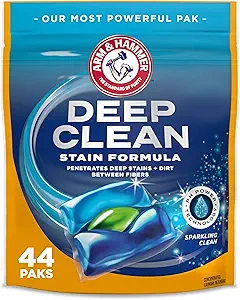
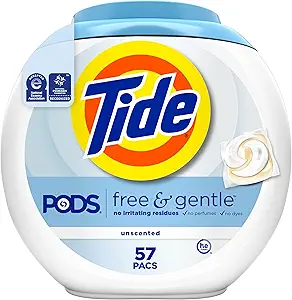
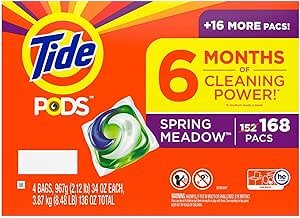
For a dosed format with a longer track record, our reviews of the Tide Pods laundry detergent and the Dropps laundry pods cover pacs, which solve the same measuring problem in a different physical form, and both carry a child safety requirement that a flat sheet handles slightly better. The Arm and Hammer laundry detergent pacs are another comparison, and the detergent pacs and tablets category lists the dosed formats together.
If cost per load is the priority rather than compactness, a large bottle still wins on price, and our write up of the Tide Simply liquid laundry detergent covers that end, with more in the liquid detergent category.
Who should buy it, who should not
Buy the box if you travel, live somewhere small, or want the bottle out of your laundry routine, and you will tear the sheets in half as intended. Skip it if you need published ingredients before a product touches your clothes, if you wash exclusively cold in short cycles where dissolution is hardest, or if cost per load is your main criterion. The format is genuinely convenient and the page sells the environmental story far harder than it sells the chemistry.