
Description
Refill pads for a wand you may not own
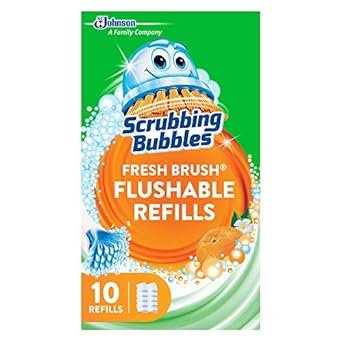
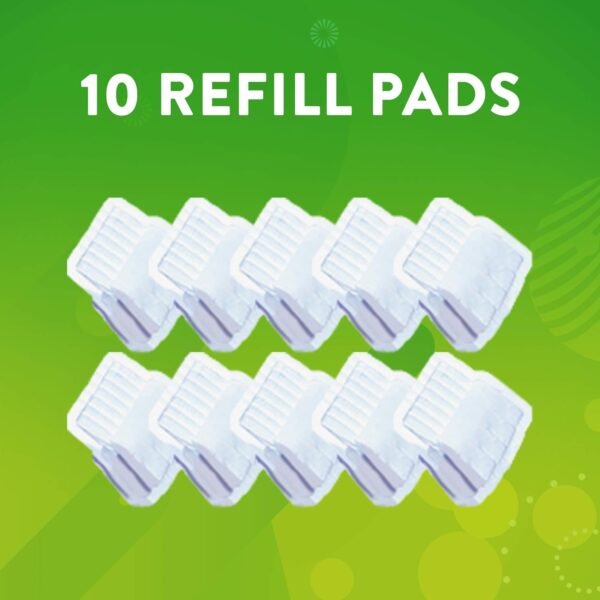
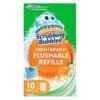
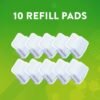
This is a ten count pack of Scrubbing Bubbles Fresh Brush refill pads in a citrus scent, made by SC Johnson. The first thing to establish is what is in the box, because the listing itself flags it in a bullet: the Fresh Brush starter kit, meaning the wand that holds the pad, is sold separately. These are refills. If you do not already own the wand, this pack on its own does nothing.
The system is a disposable head design. A pre loaded cleaning pad clips onto the end of a plastic wand, you scrub the bowl with it, and then you release the pad without touching it. The appeal is straightforward and it is about contact rather than chemistry: nobody enjoys storing a wet toilet brush in a holder that collects drips, and a wand that ejects the used head sidesteps that entirely.
The household this suits is one that finds the brush and holder unpleasant, or one where a second bathroom needs a cleaning tool without a second permanent brush. The household it does not suit is one already happy with a brush, because a brush has no consumable cost at all.
What is on the pad, and what SC Johnson does not say
The listing states the pads remove limescale and odors, that they power through the toughest build ups and stains, and that they leave a citrus scent. That is the extent of the performance information.
No ingredient is named anywhere on the page. Limescale is a calcium carbonate deposit and it is removed by acid, so a pad that claims limescale removal is very likely acidic, but the listing does not say so and this review will not assert an ingredient that has not been published. There is no acid named, no concentration, no pH, no disinfectant claim and no EPA registration number. That last point is worth being precise about: this listing makes no disinfection or sanitizing claim at all, so nobody should treat these pads as a substitute for a disinfectant. They are described as a cleaner, and cleaning and disinfecting are different operations.
The listing carries no specification block either. There is no weight, no dimensions, no model number and no manufacturer field, so ten count and citrus scent are the only firm facts on the page.
The flushable claim, read carefully
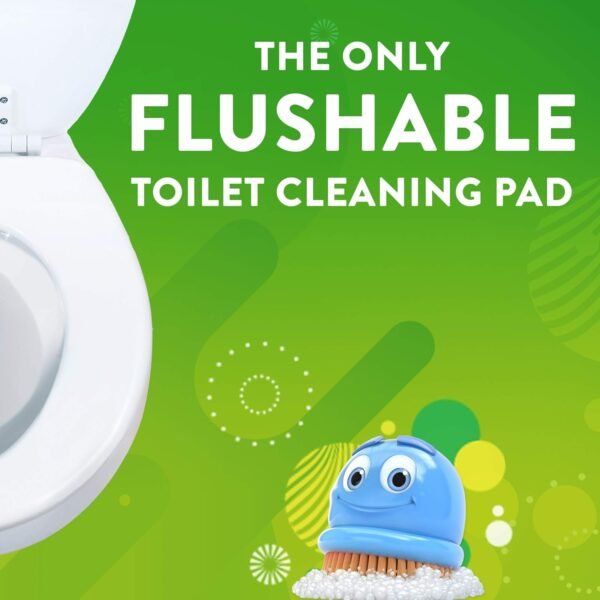
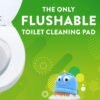
SC Johnson describes the pads as flushable and calls this the only flush friendly toilet cleaning pad. That claim needs handling honestly rather than repeated flat.
Wastewater utilities across the United States have campaigned for years against flushing anything other than toilet paper, and non woven pads and wipes are repeatedly identified by those utilities as a contributor to sewer blockages and to the fatbergs that form when textile fibers bind with grease. Manufacturers test to their own dispersibility standards, and those standards and the conditions in a real sewer are not the same thing. Anyone on a septic system should be more cautious still, since a septic tank has no way to break down a non woven pad and it will accumulate in the tank between pump outs.
The practical advice is simple. If you are on a municipal sewer with no history of blockages, follow the label. If you are on a septic system, if your drain line is old or shallow, or if the house has a history of slow drains, put the pad in a bin instead. It costs nothing to bin it, and clearing a blocked lateral costs a great deal, whether that means a caustic product from the drain opener listings or a call out.
Surfaces, and the rest of the bathroom
These pads are for the inside of a toilet bowl. That is the whole scope. The wand geometry is designed to reach under the rim and around the trap, which is where staining actually happens, and the pad is not intended for the seat, the lid, the cistern or the floor. Using a bowl cleaning pad on a seat risks scratching plastic and leaving cleaner residue on a surface people touch.
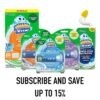
The rest of the bathroom needs a different product. A bathroom surface cleaner such as the Scrubbing Bubbles bathroom cleaner covers tile and tubs, and the wider multipurpose bathroom cleaner listings cover the same ground.
Take care with the bowl itself if it is not standard vitreous china. Some older bowls, and some colored or matte finishes, react badly to acidic cleaners. Chrome and brass fittings should not be splashed, and a pad should never be used on a marble or stone vanity top.
Correct use, storage and the mixing rule
Clip the pad on the wand, scrub under the rim first and then the bowl and trap, then eject the pad without handling it. Wash your hands afterward regardless, because ejecting a pad is not the same as never touching anything.
Store the refills dry and closed. They are pre loaded with cleaner, so a torn pack in a damp bathroom cupboard dries out or leaks. Keep them out of reach of children and pets: a small scented pad is exactly the sort of item a toddler or a dog will investigate, and a cleaning pad is not a bath toy.
The most important safety rule with any toilet cleaner is about combinations, and it applies whether or not you know what is on the pad. Never use two toilet products in the same bowl. In particular, never put a bleach based cleaner or a bleach tablet into a bowl that has been treated with an acidic cleaner, and never mix bleach with an ammonia based product. Chlorine bleach with acid releases chlorine gas, and bleach with ammonia releases chloramine, and a toilet bowl in a small unventilated bathroom is a particularly bad place to generate either. If you use an in cistern block or a bowl tablet, take it out before using anything else, and flush through first. Ventilate the bathroom while cleaning, and do not lean over the bowl while scrubbing.
What the format costs to run
The economics of a disposable head system are the same as any razor: the handle is cheap and the refills are forever. Ten pads is ten cleans, and if you clean a toilet twice a week that is five weeks. Against that, a conventional brush and a bottle of bowl cleaner has a much lower running cost, because the brush lasts for years.
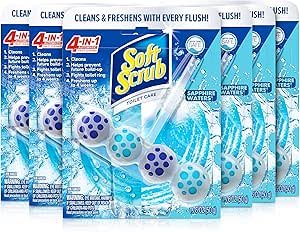
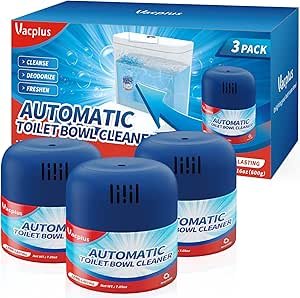
So the fair comparison is convenience against consumables. If the disposable head is what makes you willing to clean the toilet at all, it is worth the money. If you would clean it either way, a liquid product such as the Soft Scrub toilet cleaner or the Vacplus toilet cleaner costs far less per clean. There is also a compatible refill alternative in the Caspeak toilet wand refills, which is worth checking against your wand before ordering.
Who should buy this and who should not
Buy it if you already own the Fresh Brush wand, you value never handling a wet brush, and you are on a municipal sewer where the flushable claim is a reasonable risk to take. As a refill for an existing system it does what it says.
Do not buy it without the wand, which is sold separately. Do not buy it if you are on a septic system or have a history of drain problems, unless you are willing to bin the pads rather than flush them. And do not treat it as a disinfectant, because the listing makes no disinfection claim at all.