Description
A chlorine free dishwasher pod, and what that trade off means
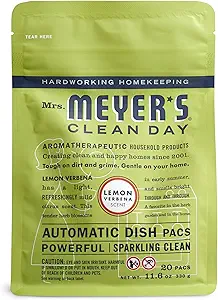
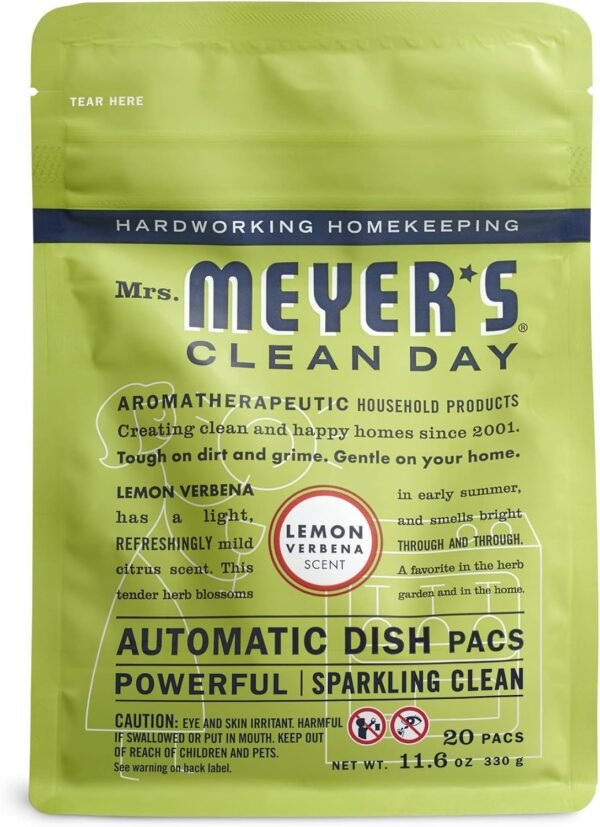
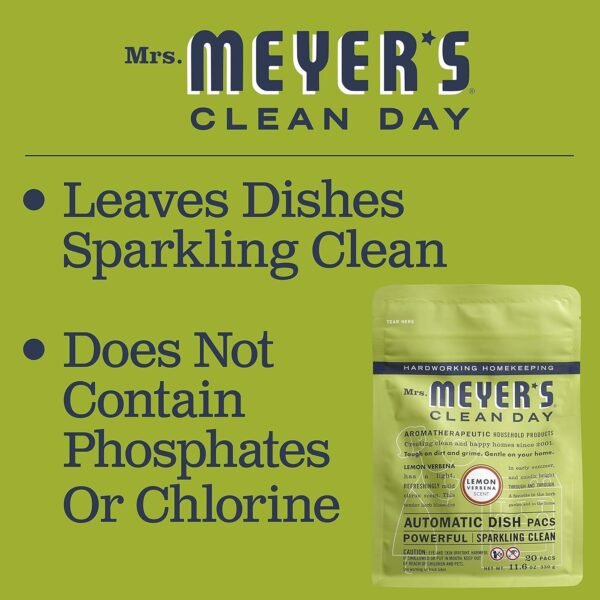
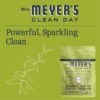
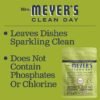
Mrs. Meyer’s Clean Day Automatic Dishwasher Pods are sold here as a twenty count pack in the Lemon Verbena scent, model 651355p. The brand’s position in the market is straightforward: garden inspired fragrances and a formulation that leaves out several ingredients other detergents include. The listing states the pods are made without phosphates and without chlorine, and that they contain no animal derived ingredients.
Those omissions are the whole product, so they deserve to be understood rather than treated as marketing noise. Phosphates were removed from consumer automatic dishwasher detergents across the United States more than a decade ago, so a phosphate free claim in this category describes the entire shelf rather than this pod in particular. Chlorine is different and it is a real formulation choice. Chlorine bleach in a dishwasher detergent is what removes tea and coffee staining from the inside of mugs. A chlorine free detergent has to do that work with enzymes and surfactants instead, and it generally does it more slowly.
The listing does claim that the pods clean coffee and tea stains from cups without phosphates or chlorine, so the manufacturer is aware this is the question buyers ask. Whether it satisfies you depends on how stained your mugs get. Households that drink strong tea and want a mug that comes out white every time are the ones most likely to be disappointed by any chlorine free detergent.
What the pack tells you about the formula
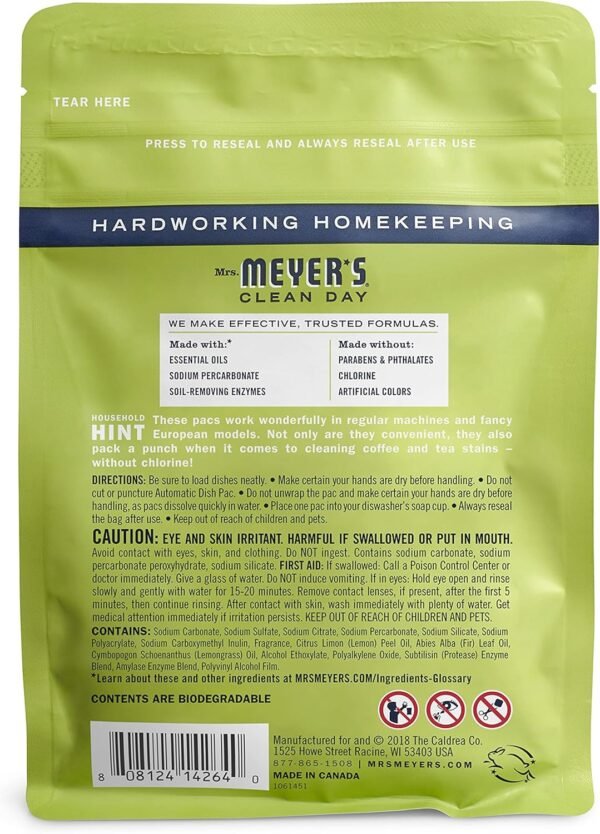
The listing names no ingredients. There is no surfactant identified, no enzyme named, no builder disclosed and no pH given. What is published is a set of exclusions and certifications: no phosphates, no chlorine, no animal derived ingredients, cruelty free formulas and Leaping Bunny certification. The word biodegradable appears in the description in relation to the wider Mrs. Meyer’s range rather than to these pods specifically, and there is no standard cited for it. All of this is the manufacturer’s own wording and it is repeated here as such.
Two housekeeping oddities are worth flagging. The Leaping Bunny bullet is duplicated word for word in the feature list, which suggests the copy was assembled rather than written. The manufacturer field reads AmazonUs/SCJAB, which is a marketplace seller code rather than a company name, so the page does not actually identify the manufacturer in the place you would expect to find it.
The pack dimensions do not match twenty pods
The specification block gives product dimensions of 14.5 by 5.5 by 9.5 inches and a weight of five pounds. A twenty count tub of dishwasher pods is not that large or that heavy. Those figures are much more consistent with a case or a multipack, so if quantity matters to you, confirm with the seller what actually ships before ordering. Amazon ranked this listing seventy seventh in Dishwasher Detergent when the data was captured.
Machines, loads and what to keep out of the dishwasher
The listing states the pods load into the dishwasher’s soap cup and are safe for use in all machines. Put one pod in the closed detergent cup rather than loose in the tub, since a pod rolling around the base dissolves during the prewash and is gone before the main cycle starts.
A unit dose pod cannot be adjusted, which is the standing limitation of the format. A half load and a heavily soiled full load receive the same detergent. In hard water areas that inflexibility shows up as film on glassware, because a fixed dose of a phosphate free detergent has only so much capacity to deal with dissolved minerals. If your glasses come out cloudy, the answer is a rinse aid such as the Truly Free rinse aid or a hard water specific detergent rather than a second pod.
Keep the usual items out of the machine regardless of detergent. Aluminum pans and anodized cookware dull and pit in an alkaline wash. Cast iron loses its seasoning. Crystal etches permanently, and that damage cannot be undone. Hand painted china, gold banding, wooden handles and anything glued should be washed by hand.
Storage, handling and the point that matters most
Automatic dishwasher pods carry the same storage risk as laundry pacs, and it is under discussed because people associate the hazard with laundry. They are small, soft, brightly colored and stored at floor level under a sink, which is exactly the wrong combination in a home with a toddler. The concentrated detergent inside is alkaline and causes burns to the mouth and throat and serious eye injury if a pod ruptures.
Store the pack closed, high, and out of sight and reach of children, ideally in a latched cupboard rather than under the sink. Do not decant pods into a decorative jar on the counter, which is a common kitchen habit and a bad one. Handle pods with dry hands only, because the film is designed to dissolve in water and wet fingers start that process immediately. Rinse skin thoroughly if a pod ruptures, and rinse and seek medical advice if contents reach an eye.
Keep the pack away from humidity, since a damp cupboard makes pods stick together and tear apart when separated. Never add another cleaning product to the dishwasher alongside a pod. In particular, do not introduce chlorine bleach into a machine that has been run with an acidic descaler, and never mix bleach with an ammonia based cleaner anywhere in the house, since both combinations produce toxic gases.
Cost per load and where else to look
Twenty pods is twenty loads, and that is the honest number to compare against rival packs. Twenty is a small pack by category standards, where forty five to ninety count tubs are common, so the cost per load here is toward the top of the market. You are paying for the fragrance positioning and the exclusions, not for more detergent.
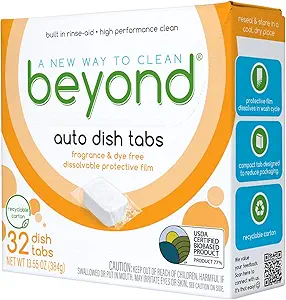
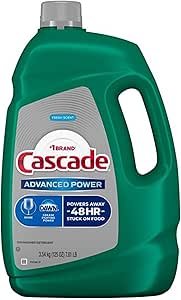
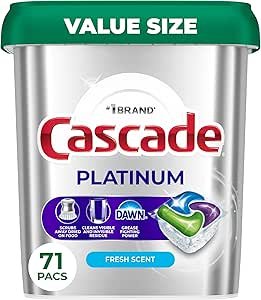
If chlorine free is the priority, the Seventh Generation dishwasher detergent occupies similar ground, and the Beyond automatic dishwasher detergent is another option in the same part of the shelf. If raw stain removal matters more than formulation exclusions, a mainstream pod such as the Cascade Platinum pacs is the comparison to make. The full dishwasher detergent listings put pack counts side by side, and the rinse aid listings cover the drying and spotting problem that no detergent solves on its own.
Who should buy this and who should not
Buy it if you actively want a chlorine free dishwasher detergent, the Lemon Verbena fragrance appeals to you, and the Leaping Bunny certification matters in your household. Twenty pods is also a reasonable trial size before committing to a large tub.
Do not buy it if heavily stained mugs are your main complaint, since chlorine is the ingredient that addresses that and this formula leaves it out. Do not buy it if you want a published ingredient list, because there is not one. And do not buy pods of any kind if there is a small child in the house and the cupboard cannot be secured.