
Description
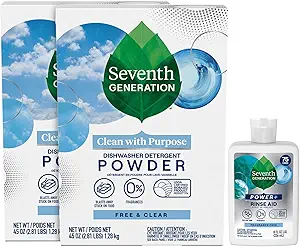
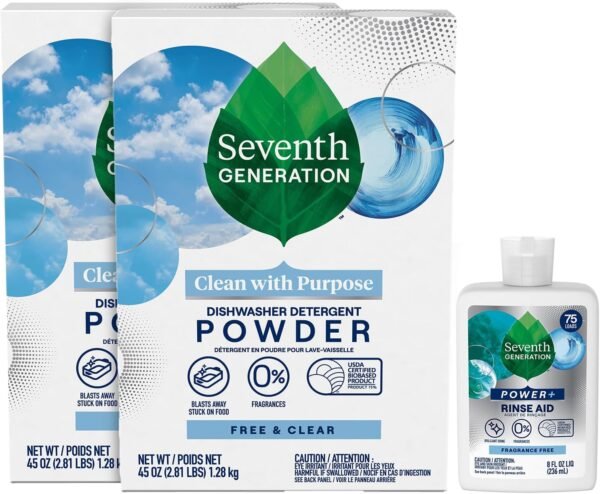
Two boxes of powder and a bottle of rinse aid, sold as a routine
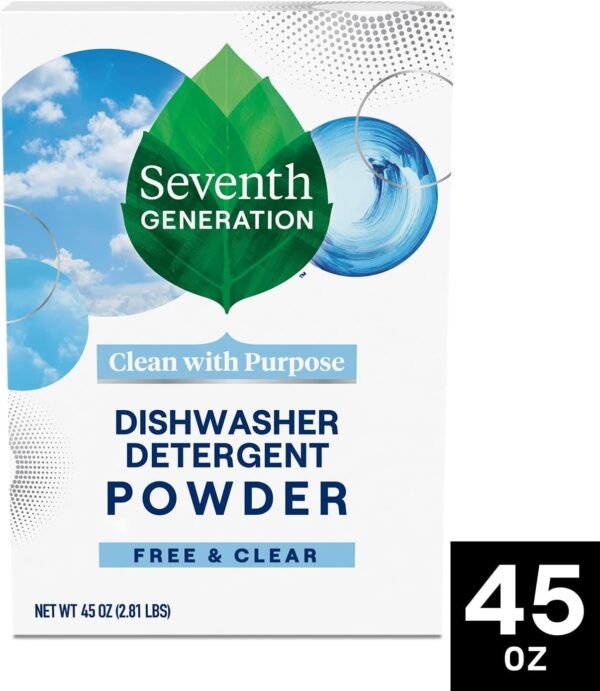
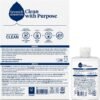
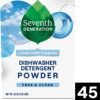
This Seventh Generation bundle contains two 45 ounce boxes of Free and Clear dishwasher detergent powder plus one 8 ounce bottle of the brand’s Power Plus rinse aid, which the listing says treats 75 loads. It is sold as a complete dishwashing setup rather than as a single product, and the household it fits is one that has decided to avoid fragrance and dye in the kitchen and is willing to trade some stain performance for that.
Powder is the format worth pausing on, because it is now the minority choice against pacs and tablets. Its advantage is dosing: you decide how much goes in, which means you can use less in soft water and more on a heavy load, and you are not paying for a dissolvable film on every wash. Its disadvantages are that it clumps if it gets damp, and that a scoop is one more thing to keep dry in a cupboard. If dosing control does not matter to you, a pac such as the Mrs Meyers automatic dishwasher pods is less thinking per load.
The formulation, as Seventh Generation describes it
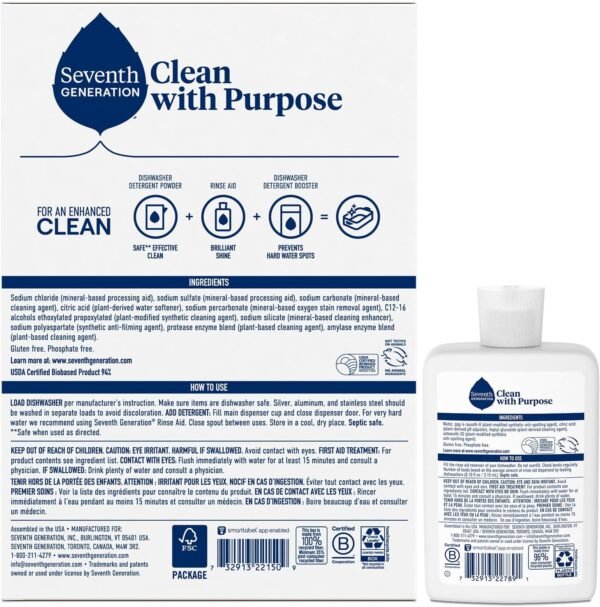
The company states the powder is free of chlorine bleach and uses plant based enzymes to break down greasy food soils, and that the product is free from dyes, fragrances and what it calls harsh chemicals. The rinse aid is described as a plant based surfactant that prevents water spots and film and helps dishes dry faster by reducing how much water clings to surfaces. The title adds that the product is biodegradable and septic safe, and the bullets state that the detergent and rinse aid are Leaping Bunny certified, which is a certification about animal testing rather than about performance or ingredients. Terms such as plant based, eco friendly and biodegradable throughout this listing are the manufacturer’s own descriptions and not our assessment; no full ingredient list, no enzyme names and no concentrations appear on the page.
What leaving out chlorine bleach actually costs you
This is the trade at the center of the product and it is worth understanding before you buy two boxes of it. Enzymes are very good at proteins, starches and fats: egg, cheese, oatmeal, gravy. Chlorine bleach is very good at something enzymes barely touch, which is colored staining, the brown film that tea and coffee leave inside mugs and the red tint that tomato sauce leaves on plastic. A chlorine free detergent will typically leave those marks behind. If your dishwasher’s main workload is tea mugs, expect to scrub them by hand or to use an oxygen based booster; if it is cooked on food, the enzyme route is arguably the better one. A chlorinated mainstream product such as Cascade Platinum sits at the other end of that trade.
Machines, water and what the rinse aid is really for
Powder suits any standard domestic dishwasher and goes in the main detergent cup, with a little in the pre wash cup if your machine has one and the load is heavy. The rinse aid goes in the separate dispenser inside the door, not in with the powder.
Two conditions change how well this performs. Hard water is the first: enzymes and surfactants both work less efficiently when calcium and magnesium tie them up, which is why hard water households find fragrance free, chlorine free detergents underperform and reach for more powder rather than for the real fix. If your machine has a built in softener, keeping it filled with dishwasher salt does more for results than changing detergent brand. Second, water temperature: enzymes have a working range and a very hot sanitize cycle can denature them, while a cold fill leaves them sluggish, so a normal cycle usually beats an extreme one with this kind of formula.
On dishware compatibility, the usual dishwasher rules apply and the listing does not restate them. Keep hand painted china, gold or silver trim, cast iron, carbon steel, wooden handles, anodized aluminum and antique glass out of the machine entirely; a chlorine free detergent is gentler than a bleaching one but it is still an alkaline product running hot for an hour.
Dosing, storage and the safety points that apply to any dishwasher detergent
Use the machine’s cup as the measure and start below the fill line in soft water. Overdosing dishwasher powder is the most common cause of a white residue on glassware, and people usually respond to that residue by adding more, which makes it worse. Fill the rinse aid dispenser to the mark and adjust the machine’s rinse aid setting down if you see streaking.
Keep the boxes dry and closed. Powder that has absorbed moisture cakes into a block, dispenses unevenly and leaves lumps that do not dissolve. Storing them above the sink or beside a kettle is the usual mistake; a cupboard away from steam is better.
On safety, automatic dishwasher detergents are alkaline and are irritating to eyes and skin, which is true of the fragrance free ones as much as the perfumed ones. Keep the boxes out of reach of children, do not leave powder sitting in an open dispenser cup where a child can reach into the door, and rinse hands after handling. Never mix dishwasher detergent with a chlorine bleach product, with an acidic descaler or with any other cleaner, in the machine or in a bucket. If you also periodically descale the appliance, do that as a separate empty cycle with a dedicated dishwasher cleaner, never alongside a normal wash.
Cost per load, and the alternatives
Ninety ounces of powder across two boxes is a lot of loads, and powder is generally the lowest cost per wash of the three dishwasher formats because you are buying detergent rather than detergent plus a dissolving wrapper. Bundling the rinse aid is genuinely useful, since a machine running a chlorine free detergent depends more on rinse aid to avoid spotting than a bleaching one does. Eight ounces at a stated 75 loads is a small bottle relative to the powder, so the rinse aid will run out first.
Worth comparing: Beyond automatic dishwasher detergent covers similar fragrance free ground, and a standalone rinse aid such as the Truly Free dishwasher rinse aid lets you keep the routine going once this bottle is empty. The full shelf sits under dishwasher detergent with the drying products under rinse aids.
Two record problems should be flagged. The package weight is given as 2.81 pounds, while two 45 ounce boxes alone come to 5.6 pounds before the rinse aid or the carton, so the shipping specification is wrong by more than half. And the manufacturer field reads Quidsi, which was an online retailer rather than the maker of this product; Seventh Generation is the brand and the field appears to be a stale import artifact from the listing’s original source. The listing dates to 2011 and the item currently ranks 133rd in the retailer’s dishwasher detergent chart.
Who should buy this bundle
Buy it if you want a fragrance free, dye free, chlorine free dishwashing routine, you prefer powder for its dosing control, and your loads are mostly cooked on food rather than tea and coffee staining. Skip it if brown mug staining is your main complaint, if your water is hard and your machine has no softener, or if you would rather not measure anything, in which case a pac is the format for you.