Description
A raw chemical rather than a finished product
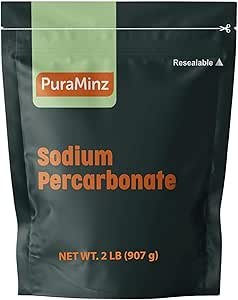
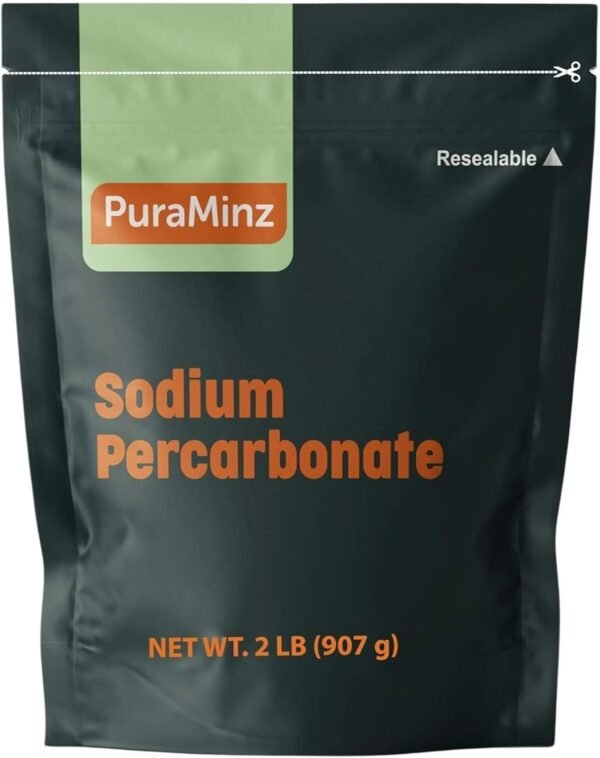
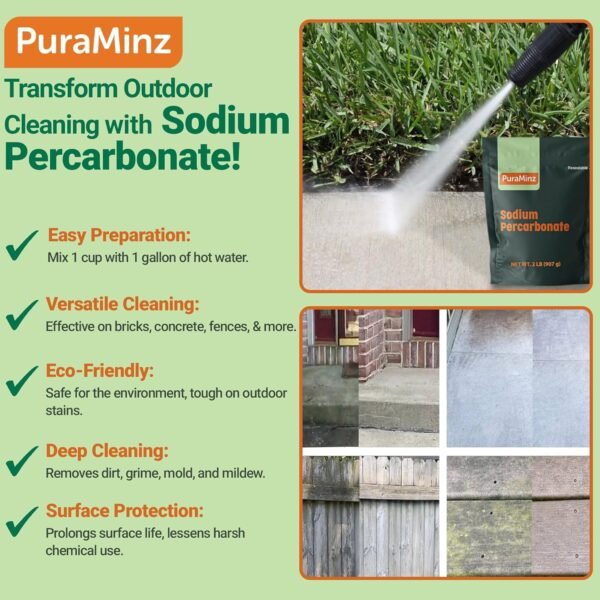
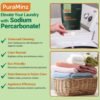
This is two pounds of sodium percarbonate powder in a resealable pouch, described on the listing as ninety nine point nine percent pure and sold as oxygen bleach or solid hydrogen peroxide. That description is accurate and it is the most important thing on the page.
Sodium percarbonate is not a formulated cleaning product with surfactants and fragrance. It is a single compound: a solid that, when it meets water, breaks down into hydrogen peroxide and soda ash. The hydrogen peroxide releases oxygen, which is what lifts colored stains, and the soda ash raises the pH of the solution, which is what helps with grease and grime. That is the whole mechanism, and it is why the same powder appears as the active ingredient in a great many branded oxygen stain removers at much lower concentrations.
What you are buying here is the active on its own, at high purity, in bulk. That has a real advantage, which is cost per use, and a real cost, which is that everything a formulated product would have done for you, you now have to do yourself.
The instruction this listing does not give
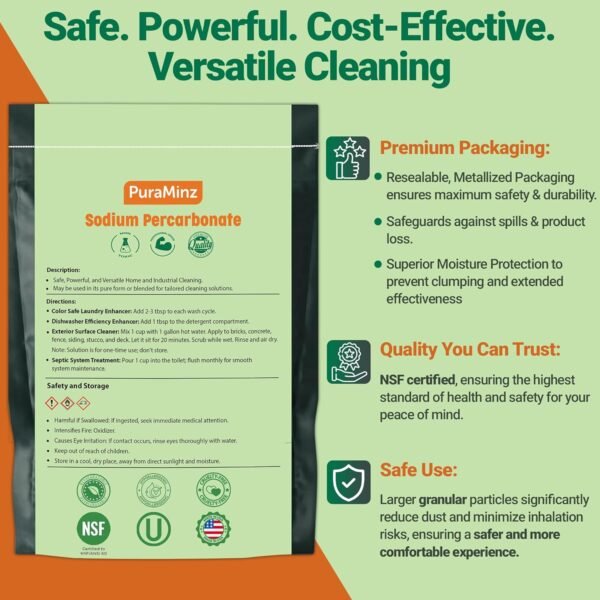
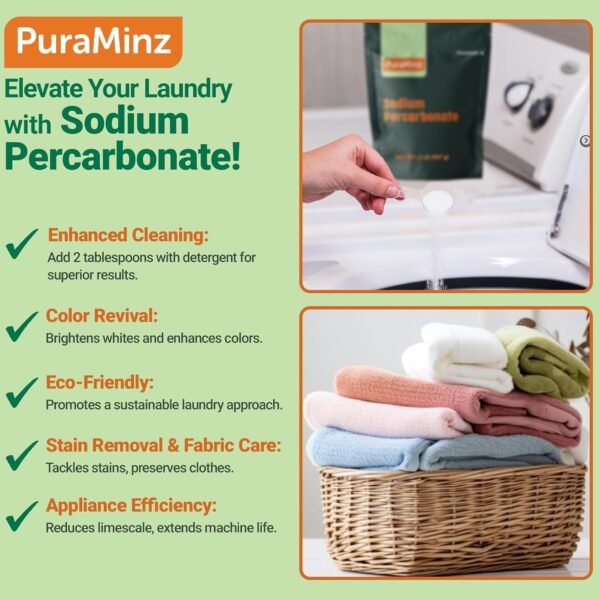
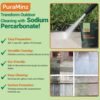
Here is the significant gap, and it is not a small one. The listing publishes no dilution ratio for any application. None. It describes the powder as a laundry booster, a multipurpose and multisurface cleaner for indoor and outdoor tasks, and a dish detergent booster that removes hard water deposits, and it gives no quantity per gallon, per load, per bucket or per sink anywhere.
It also gives no water temperature guidance, which matters a great deal with this compound, because sodium percarbonate is slow to activate in cold water and works considerably faster warm. It gives no soaking time, no maximum contact time, and no hazard, handling or first aid information at all.
Selling a concentrated oxidizer with no use instructions puts the entire burden on the buyer. The printed pouch is the only source, and it should be read before the pouch is opened. If the pouch is equally silent, look up the manufacturer’s safety data sheet, which is the document that exists precisely for a raw chemical sold in this form.
The environmental wording, and the typo behind it
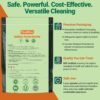
One bullet describes the compound as releasing active oxygen for safe and eco friendly cleaning. Sodium percarbonate does break down into oxygen, water and soda ash, which is the basis for that positioning, and it is a fair reason many people prefer it to chlorine bleach. Safe and eco friendly are still unqualified terms with no standard cited, and a compound being benign after it has broken down says nothing about how it behaves as a concentrated powder in your hands. The same bullet list contains the word strength misspelled, and describes the product as both premium and industrial grade in different places.
Handling an oxidizer safely
This section matters more than any other in this review, because a two pound pouch of a concentrated oxidizer is one of the more hazardous things in this catalog and the listing says nothing about it.
Keep it dry. Sodium percarbonate reacts with moisture, including humidity, and a pouch that gets damp degrades and can cake. Store it sealed, in a cool dry place, away from heat and away from sunlight.
Never seal a container of a made up solution. Once dissolved, the compound releases oxygen gas continuously, and a sealed bottle of solution builds pressure and can burst or spray its contents. Mix what you need, use it, and discard the remainder. Do not decant a solution into a screw top bottle or a trigger sprayer and store it.
Wear eye protection and gloves when handling the powder. A fine alkaline oxidizing powder is an irritant to eyes, skin and airways, and pouring two pounds of it produces dust. Do not breathe the dust, work in a ventilated space, and add powder to water rather than water to powder to reduce dusting.
Never mix it with anything else. This is the most important sentence here. Do not combine it with chlorine bleach, with ammonia based cleaners, with acidic products such as vinegar, descalers or toilet bowl cleaners, or with any other household chemical. Mixing an oxidizer with an acid or with bleach is exactly the scenario every product label warns against, and combinations of that kind release toxic gases. There is no household task that requires it.
Store it out of reach of children and pets, in its labeled pouch, and never decant it into an unlabeled tub or a food container. A white powder in an unmarked jar in a kitchen is a genuine hazard.
Fabrics and surfaces, and what to keep it off
Sodium percarbonate solutions are alkaline, and alkalinity is what damages protein fibers. Wool, silk, cashmere and anything with a wool blend should not be soaked in it. Leather should not go near it.
Aluminum is the other exclusion worth knowing. Alkaline solutions attack aluminum, dulling and pitting it, so aluminum pans, cookware and window frames should be kept away. The same applies to some painted and anodized finishes and to unsealed natural stone.
On colored fabric the compound is generally kinder than chlorine bleach, which is the basis for the color safe claim on the listing, but generally is not always. Test on an inside seam of anything dyed, dark or valuable, and never assume a color is safe because a product is described as color safe.
On any surface, a longer soak at a lower concentration is safer than a strong solution left briefly, and rinsing thoroughly afterward matters because soda ash residue left on a surface leaves a film.
Cost, and the alternatives worth weighing
Buying the active in bulk is far cheaper per use than buying it formulated, and that is the honest argument for this product. A two pound pouch, used at the concentrations typical of branded oxygen boosters, goes a very long way.
What you give up is the instructions, the measuring scoop, the surfactants that help a formulated product wet a fabric, and the hazard information on a consumer label. For most households that trade is not obviously worth it, and a formulated stain product such as the Bissell Oxy stain remover arrives with a dose and a set of instructions. Liquid hydrogen peroxide products such as the Maxtite hydrogen peroxide solution and the Essential Oxygen peroxide deliver similar chemistry ready diluted. For general cleaning, an alkaline powder such as raw borax is a different compound sold the same bulk way. The stain remover listings and the all purpose cleaner listings cover the formulated routes.
Who should buy this and who should not
Buy it if you already know how to use sodium percarbonate, you have a use that consumes it in quantity such as soaking laundry or cleaning outdoor surfaces, and you are comfortable working out and measuring your own dilutions from the pouch or a safety data sheet.
Do not buy it as a first stain remover, because the listing gives you no dilution, no temperature, no soak time and no safety information. Do not use it on wool, silk or aluminum. Never store a made up solution in a sealed container, and never mix it with any other cleaning product.