Description
A dish soap aimed at one very specific pile of washing up
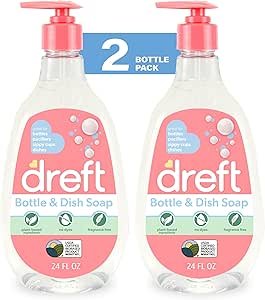
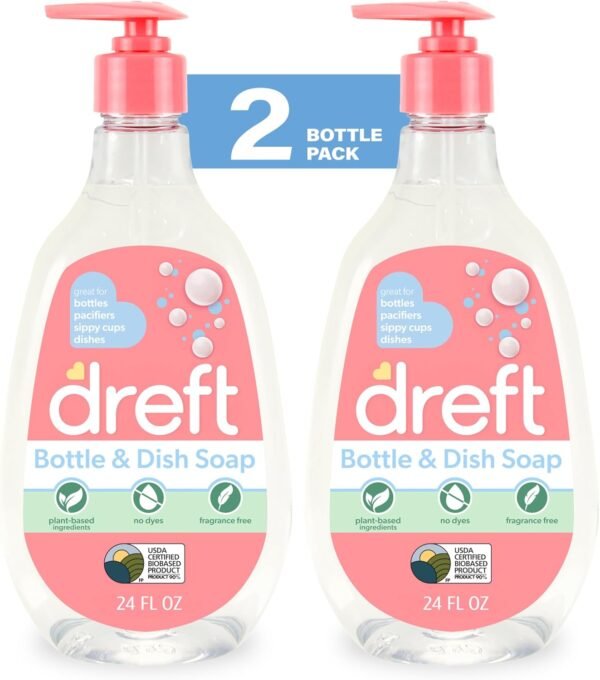
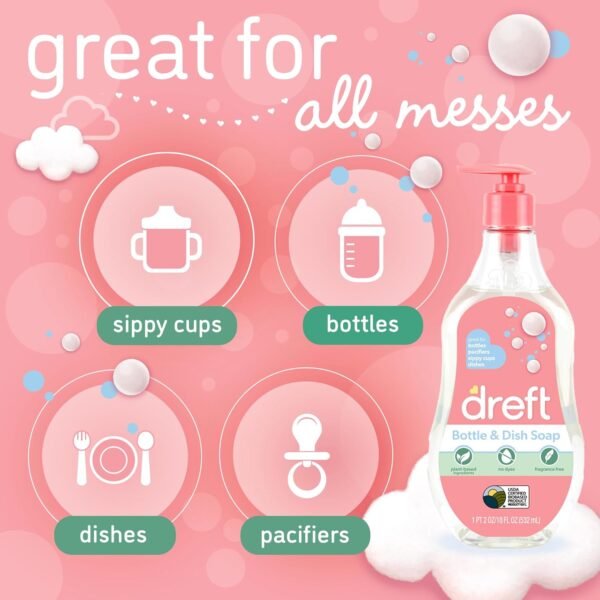
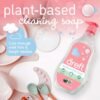
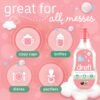
Dreft Baby Bottle and Dish Soap comes as two 24 fluid ounce bottles, fragrance free, and the items it names are the ones that accumulate in a kitchen with an infant in the house: baby bottles, sippy cups, pacifiers, breast pump components, utensils and silicone bibs. Dreft also says it handles the whole family’s dishes, so it is a general dish soap with a particular target rather than a niche chemical.
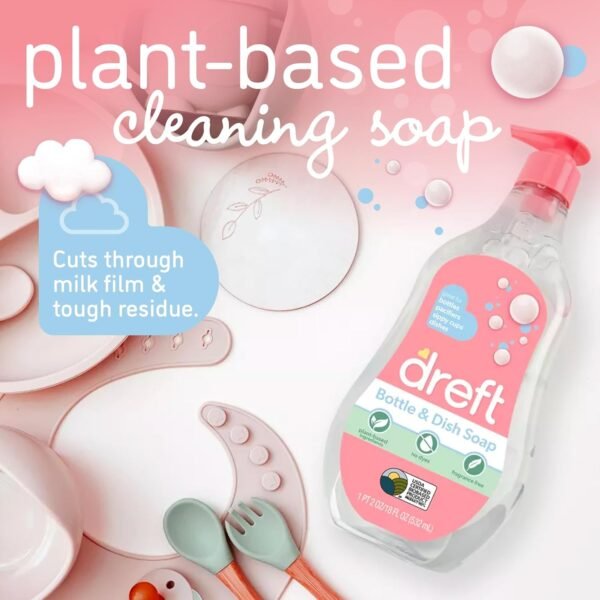
The specific job is milk film. Milk leaves a thin, faintly greasy, faintly sour deposit that ordinary rinsing does not shift and that carries odor with it, and it settles in exactly the places that are hardest to reach: the inside of a bottle nipple, the threads of a screw ring, the valve of a pump set. That is why bottle brushes exist and why a soap sold for the job leans on cutting fat rather than on fragrance. Dreft names milk film and odor as the two things it removes.
What is published, and how to read the certifications
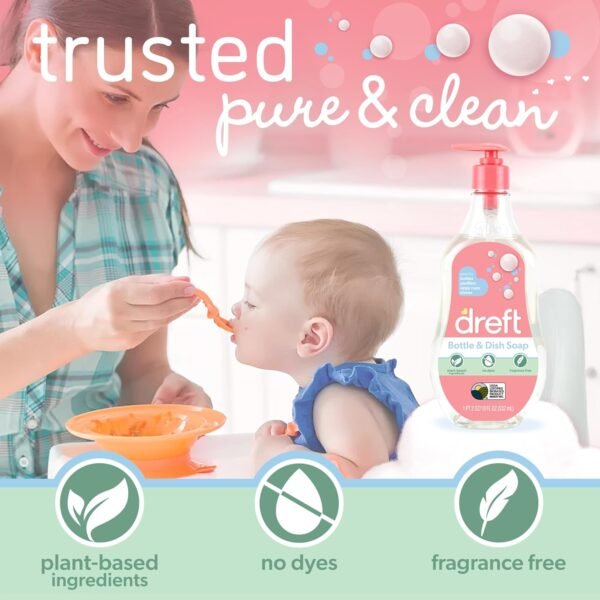
There is no ingredient list. What Dreft gives instead is a set of attributes: made with 90 percent plant based ingredients, certified as a USDA Certified Biobased Product, fragrance free, dermatologist tested, hypoallergenic, and containing no phosphate, dyes or parabens.
What the biobased certification does and does not tell you
The USDA Certified Biobased Product label measures the proportion of a product’s carbon that comes from renewable biological sources rather than from petroleum. It is a content certification and nothing more. It says nothing about toxicity, nothing about skin safety, nothing about how well the soap cuts grease, and nothing about environmental impact once the product goes down the drain. The 90 percent figure is a specific number rather than a vague plant based badge, which makes it more useful than most claims in this catalog, but it is a sourcing statement.
Treat hypoallergenic and dermatologist tested the same way as everywhere else: hypoallergenic has no regulated definition in the United States, and dermatologist tested confirms that a test happened without saying what it found. Fragrance free is the attribute that will matter most to many buyers here, and it is a plain, checkable one.
Where it goes, and the thing a dish soap does not do
Bottles, nipples, rings, valves, pacifiers, sippy cups, pump parts, silicone bibs and ordinary dishes are all in scope, and a fragrance free liquid is a reasonable choice for anything a child puts in their mouth simply because there is no perfume residue to rinse away.
The important limit is that this is a cleaning product, not a sterilizing one. No antimicrobial claim is made anywhere in the listing, no organism is named and no contact time is given, so washing with it removes soil and does not sanitize. Cleaning and sanitizing are separate steps with separate methods, and the guidance that matters for infant feeding equipment comes from the equipment manufacturer and from your pediatrician or public health authority, not from a soap bottle. Follow it. Rinse thoroughly with clean water after washing, since a rinse is the step that removes the surfactant along with the soil.
Use a dedicated brush rather than a sponge for bottle interiors, and dry parts on a clean rack. A brush such as the Full Circle bamboo dish brush reaches into a bottle in a way a cloth cannot, and mesh scrubbers from our dish scouring pads shelf dry faster between uses than a foam sponge does.
Dosing, storage and the mixing rule
No dose is published: no drops per sink, no dilution, no coverage figure. Use as much as the water and the soil call for, which with a concentrated dish liquid is almost always less than people pour. Overdosing dish soap produces a basin of foam that is harder to rinse off and no better at cleaning, and residue on a bottle is exactly what you were trying to avoid.
Store both bottles capped, upright, out of reach of children and pets. That instruction applies to a baby product as much as to any other cleaning chemical, and arguably more, since a bottle of clear liquid on a kitchen counter next to feeding equipment is easy to grab without thinking. Do not decant it into an unlabeled container and never into a drinking bottle.
Never combine it with another cleaner. Do not add bleach to a sink of dish water, do not follow it with an ammonia based product in the same basin, and do not use it in a mixture with a sanitizing solution. If a sanitizing step is part of your routine, do it separately, after washing and rinsing, with a product and a method intended for it. Do not use dish soap in an automatic dishwasher either; hand dish liquids foam far too much for a machine, and the foam will come out of the door. Dishwasher products are a separate category entirely.
Cost, and how it compares with a general dish soap
Forty eight fluid ounces across two bottles is a substantial quantity of dish liquid, and it will outlast the bottle feeding phase in most households, which is fine given that the listing offers it for family dishes too. The premium over a mainstream dish soap buys the fragrance free formulation, the biobased content and the brand.
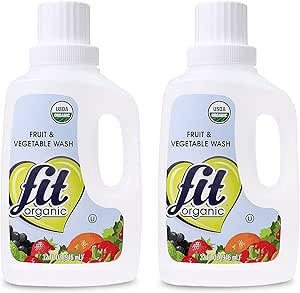
The honest comparison is against a general purpose liquid. Dawn Ultra dish soap is the mainstream degreasing benchmark and costs considerably less per ounce, while Seventh Generation dish soap covers the plant based, low fragrance ground from a different brand. For produce rather than dishes, the Fit Organic fruit and vegetable wash is a different product for a different job. Households that already use the Dreft laundry range, such as the Dreft newborn liquid detergent, are the natural buyers here. Everything comparable is under dish soap.
Several record problems deserve flagging. The product title describes these as travel size bottles while selling 24 fluid ounce bottles, and 24 ounces is a full size kitchen bottle by any measure; the two statements contradict each other outright. The model number field reads 000. The manufacturer of record is Nehemiah Brands rather than the brand owner, and the fourth bullet carries a claim about being the top pediatrician recommended baby laundry detergent, which is a survey based marketing claim about a different product in the range and not about this soap. One bullet also spells milk with an extra letter. The pack weighs 3.66 pounds and the item currently ranks 107th in the retailer’s dish soap chart.
Who should buy it
Buy it if you are washing bottles, pump parts and pacifiers daily and you want a fragrance free dish liquid with a stated biobased content. Skip it if cost per ounce is your priority, if you want an ingredient list before choosing what washes feeding equipment, or if you expected a sanitizing product, because this makes no such claim and none should be read into it.