Description
Sixteen cells at the top of the capacity range
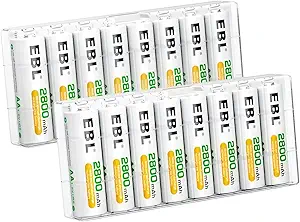
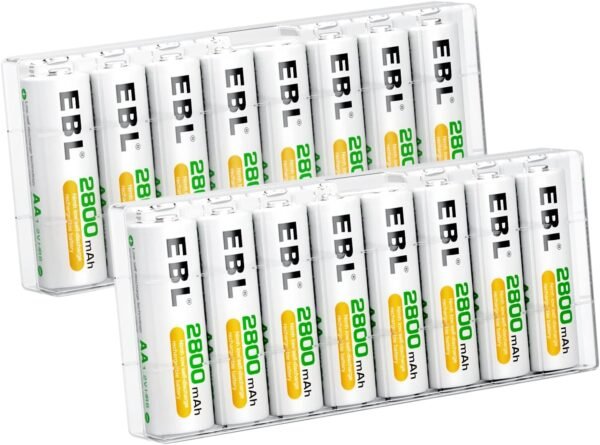
EBL sells this as a 16 count pack of AA nickel metal hydride rechargeables rated at 2800 milliamp hours, under the Ready2Charge name and model LN-8112. The manufacturer of record is Jiangxi Beston Electronics, and the listing has been live since 2013 with 13,277 ratings averaging 4.5 stars, which makes it one of the longest established items in this catalog.
Capacity is the headline and it sits at the upper end of what an AA NiMH cell can carry. General purpose rechargeable AAs commonly run from around 1900 to 2500 milliamp hours, and low capacity cells built for solar garden lights, such as the BEVIGOR rechargeable AA cells, sit near 1000. A 2800 rating targets the opposite end of the market: high drain devices that empty a battery quickly, which means camera flashes, motorized toys, radio controlled equipment, wireless game controllers, portable audio and bright flashlights. Sixteen cells is enough to run a device and keep a charged set waiting.
The specification claims, and one that sits awkwardly
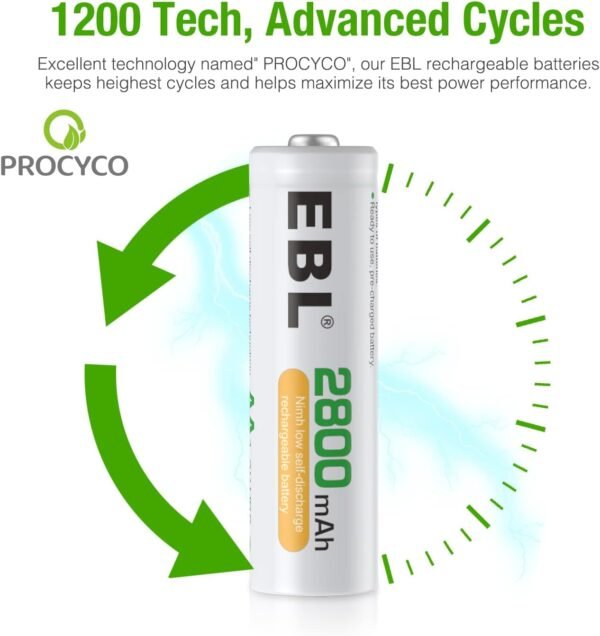
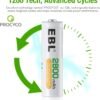
The listing offers several named technologies with no definition behind any of them. It refers to 1200 Tech, to ProCyco, which it glosses as professional recycle and says helps maximize power performance while charging, and to a supercell lattice structure said to create more internal space for power and to provide constant voltage under heavy load. None of those terms is a standard industry designation and none is explained in a way a buyer can evaluate. Read them as branding rather than specification.
The capacity and self discharge claims pull against each other
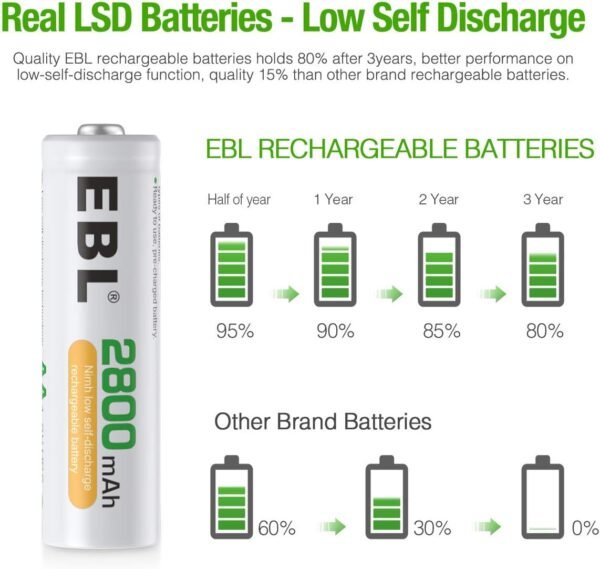
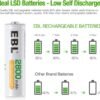
The fourth bullet states that the cells hold 80 percent of their power after three years of storage, attributing this to an embedded seal structure that expands the crystal lattice. Low self discharge is a real and valuable NiMH property, and it is what separates a cell you can leave in a drawer from one that is flat when you need it.
The tension is that low self discharge and very high capacity generally trade off against each other in this chemistry. Cells marketed on retention, the ones that hold most of their charge for years, typically sit around 1900 to 2100 milliamp hours, while cells pushed to 2700 and above are usually the ones that lose charge fastest in storage. This listing claims both the top of the capacity range and long term retention, and offers no test standard, temperature, or measurement method for either figure. That does not mean the claims are wrong; it means neither can be checked from the page. If you need cells that sit unused for months, look for a stated low self discharge rating and treat capacity headlines with the same caution as any unqualified number.
Devices these suit, and the voltage caveat
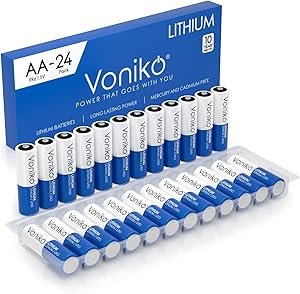
NiMH cells are 1.2 volts nominal against the 1.5 volts of an alkaline. Most devices with a wide input range never notice, but two situations do. A device that judges remaining charge by voltage may report a fully charged NiMH cell as low, and anything that depends on peak brightness will run slightly dimmer. Where that matters, a lithium primary such as the Voniko AA lithium cells holds 1.5 volts and is the drop in replacement instead.
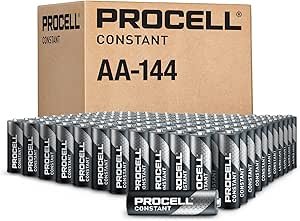
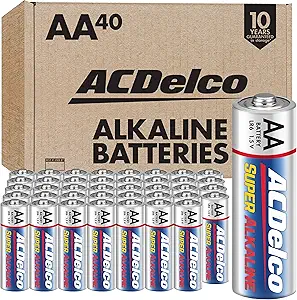
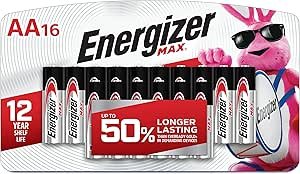
Smoke and carbon monoxide alarms are a case to handle separately. Alarms are designed around a specific battery type with a predictable end of life decline, and a rechargeable that quietly self discharges in a ceiling is the wrong component for a life safety device. Use whatever the alarm manufacturer specifies. The same logic applies to anything sealed into a device for years, where a primary cell is the better choice; the Energizer AA alkalines and the AC Delco AA batteries cover that ground.
Charging, mixing and safe handling
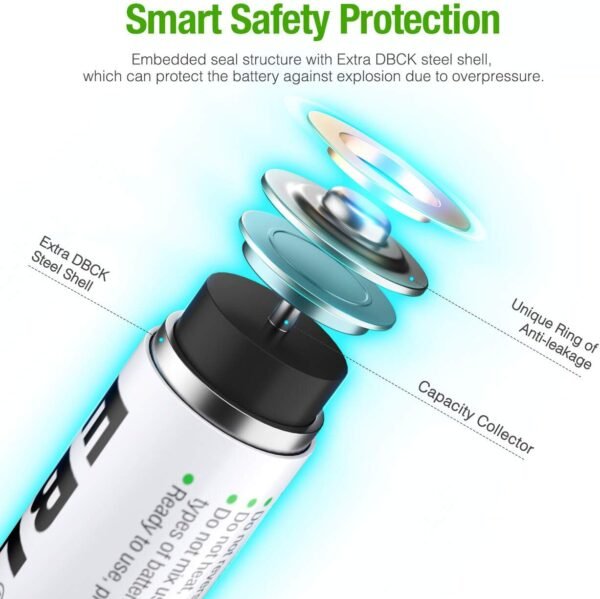
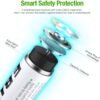
Charge only in a charger rated for NiMH. Never use a charger built for lithium ion or for single use alkalines, and prefer a charger with proper termination detection over a simple timer, since overcharging is what shortens NiMH life fastest. EBL describes the cells as using a DBCK steel shell said to protect against explosion from overpressure; that is a manufacturer statement about its own construction with no standard cited.
Do not mix chemistries or ages in one device. Never put a NiMH cell in the same compartment as an alkaline, a lithium or a carbon zinc cell, and never mix a new cell with a used one. Mismatched cells in series discharge unevenly and the weakest can be driven into reverse, which is the mechanism behind most leaks and vent events. Keep sets of four together for their whole life and mark them.
Do not short the terminals, do not carry loose cells with keys or coins, do not puncture, crush or heat them, and never put a battery in a fire. Store spares at room temperature in a case, out of reach of children and pets, and recharge a stored set before you rely on it. At end of life, take them to a battery collection point rather than putting them in household trash. The same applies to every format in this catalog, including the Energizer AAA batteries.
Cost over the life of the pack, and where rechargeables lose
The economics of rechargeables turn entirely on cycle count. A device that empties a set every week justifies the purchase within months; a remote control that takes one battery a year never will. Sixteen cells is a sensible quantity for a household running several high drain devices, and the up front cost has to be measured against several years of disposables rather than against one pack.
Where rechargeables genuinely lose is convenience and shelf readiness. You need a charger, you need to remember to charge, and you need to accept the lower nominal voltage. That is the whole trade. The rest of the size sits under AA, with other formats in household batteries.
Record oddities: the description field is empty, so five bullets are the entire published content. The specification block contains a field reading “16 AA batteries required” on a product that is itself sixteen AA batteries. The environmental language is loose, with the cells described as eco friendly and as making no pollution to the environment on the basis of containing no mercury, cadmium or lead, which is a composition fact rather than an environmental assessment. And the terms 1200 Tech, ProCyco and supercell lattice appear without explanation. The item currently ranks 52nd in the retailer’s AA batteries chart, and a pack of batteries in a household cleaning catalog is a category placement worth noting.
Who should buy this pack
Buy it if you run high drain devices that empty batteries regularly and you already own or will buy a NiMH charger, where a 2800 milliamp hour cell is exactly the right specification. Skip it for low drain devices left alone for years, for anything where 1.5 volts is required, and for smoke alarms, where the manufacturer’s specified battery type is the only correct answer.