
Description
What a dye trapping sheet is for
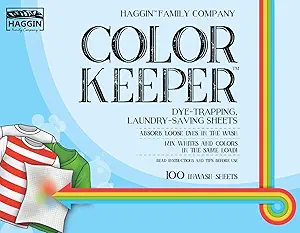
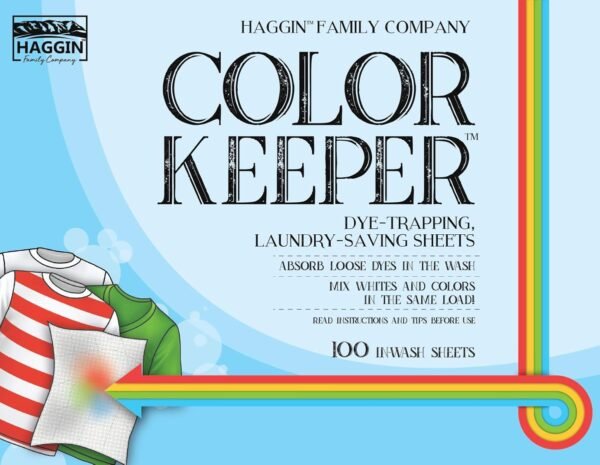
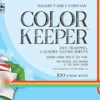
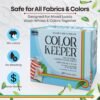
Haggin Family Company sells Color Keeper as a pack of 100 dye trapping laundry sheets, fragrance free and bleach free, under model number 80240 in a carton weighing 8.1 ounces. The listing carries 1,946 ratings at 4.7 stars and sits 38,252nd in Health and Household and 158th among laundry stain removers.
That category placement is the first thing to correct. This is not a stain remover. It does not treat a mark on a garment and it will not touch grease, wine or grass. It is a dye catcher, and its only job is to intercept loose dye that has already left one garment and is floating in the wash water, before that dye settles onto something else. Buying it to remove an existing stain will disappoint. The products that do that job are under stain removers, and something like the Vanish pretreat stain remover is the right tool for a mark that is already on the fabric.
The household this suits runs mixed loads on purpose: a small apartment machine, a shared laundry room, a family where sorting into three piles is not going to happen. It also suits anyone with new dark denim or a deeply dyed towel set going through their first few washes, which is when dye loss is at its worst.
How the sheet is described as working
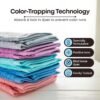
Haggin says the sheet is a high performance nonwoven fabric infused with positively charged ionic compounds, and that these attract and bond with free dyes released during the wash, so that once trapped the dye can no longer discolor anything else. That is the manufacturer’s own description of the mechanism and it is consistent with how this product class is generally explained: most textile dyes carry a negative charge in solution, so a positively charged substrate pulls them out of the water.
The specification block adds that the product is bleach free, dye free, fragrance free, phosphate free and surfactant free. Those five claims appear in a field labeled Mildewresistant, which is a data error rather than a claim about mildew. Another field lists Skin type as All, which is not a meaningful entry for a laundry sheet.
The claim to be careful with
Several bullets say to stop sorting entirely and that children can safely mix all colors together without worry. Then the usage instructions say to take care with new fabrics by using two or three sheets at the beginning. Those two statements do not sit comfortably together. The honest reading is that a dye catcher reduces dye transfer, it does not guarantee against it, and a heavily bleeding new garment can release more dye than a sheet can hold. Wash genuinely new, dark, saturated items separately for the first couple of cycles, and use a sheet as insurance rather than as permission.
Fabrics, machines and compatibility
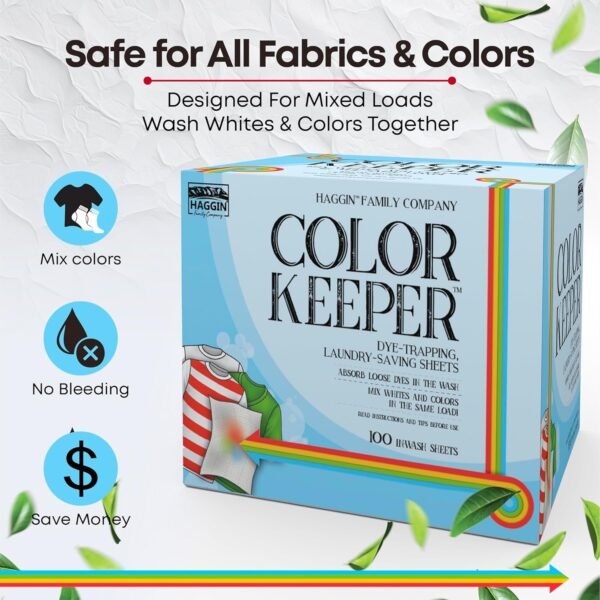
Haggin says the sheets suit all colors and fabric types including delicates, quilts and linens, and that they work in both standard and high efficiency machines. There is nothing in a dye catcher that acts on fabric, so that broad compatibility is plausible in a way that most all fabric claims are not.
The listing also says to use other laundry products as usual, including detergents and stain removers. That is right, and it is worth being explicit about the one combination that makes the sheet pointless: chlorine bleach. Bleach destroys dye rather than trapping it, and running a dye catcher alongside a chlorine bleach load is spending money on a sheet that has nothing to do. Never combine chlorine bleach with any ammonia containing product, in the machine or anywhere else.
One instruction contradicts another. The directions say the sheets are safe in dryers, and also say to dispose of used sheets after each wash. Both can be true if a sheet occasionally survives into the dryer by accident, but there is no reason to put a spent sheet through a drying cycle, and a saturated one can transfer some of what it has absorbed onto warm damp fabric. Pull it out with the wet laundry and bin it.
Correct use, storage and cost per wash
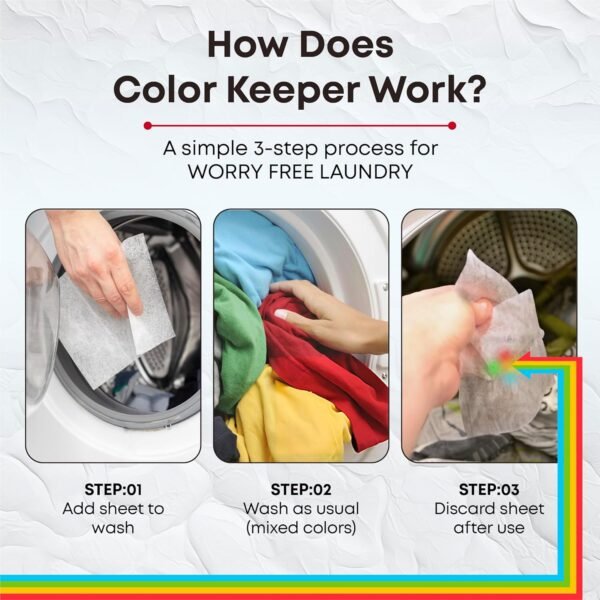
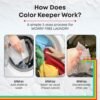
Use is simple. Drop one sheet into the drum with the load, run the wash as normal, and remove and discard the sheet afterward. Two or three sheets for the first washes of new dark items. The sheets change color as they absorb loose dye, which is a genuinely useful feedback loop: a sheet that comes out heavily stained tells you that item is still bleeding and should not yet be trusted in a mixed load. A sheet that comes out clean tells you that you can stop buying them for that laundry.
Store the pack closed and dry, since these are absorbent nonwoven sheets and a damp cupboard will make them stick. Keep them out of reach of children and pets. They are not food, and a used sheet holds concentrated dye.
On cost, 100 sheets at one per load is a hundred loads, which makes the arithmetic straightforward, and this format’s whole value proposition is that it is cheaper than replacing a load of grayed shirts. It is also a recurring cost for a problem that mostly solves itself: garments stop bleeding after a few washes. The alternative is free, which is sorting your laundry, and it is worth saying so plainly.
What else to consider
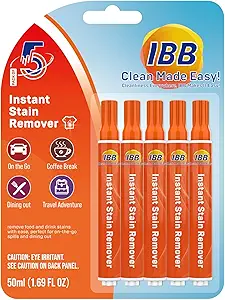
If the real problem is that whites have already gone gray or pink, a dye catcher cannot reverse it, because it only works on dye still in the water. A color run that has already set needs a color remover or an oxygen based treatment, and products such as the IBB stain remover or the sodium percarbonate stain remover are the aisle for that, with the usual caution that an oxidizer works on dye whether or not the dye is wanted.
If the driver is sensitivity rather than color, a fragrance free detergent addresses more of the problem than a fragrance free sheet does, and the All Free Clear liquid detergent is the mainstream option. The wider laundry selection sits under liquid detergent.
Who should buy it and who should not
Buy it if you routinely wash mixed loads, you have new dark items in rotation, or you share a machine and cannot control what goes in it. A pack of a hundred is a long supply and the color change on a used sheet is a useful signal.
Do not buy it as a stain remover, whatever the category says. Do not rely on it as permission to stop sorting brand new saturated darks, since the listing’s own instructions quietly admit the limit. And do not expect it to fix a color run that has already happened, because by then the dye is no longer in the water.