


Description
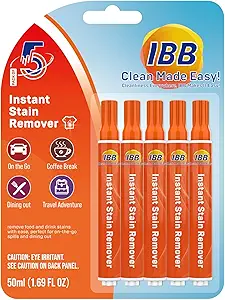
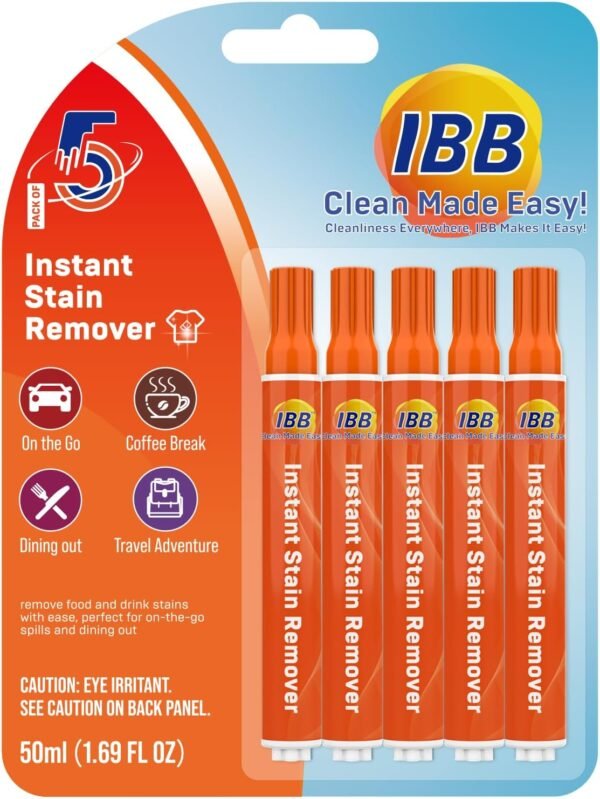
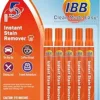
This is a five count pack of IBB stain remover pens, sold as portable sticks for treating a spill on clothing while you are away from a washing machine. The whole pack ships at just over four ounces, so each pen holds a small volume, and the format is built around one idea: reaching a stain in the first minutes rather than the first wash.
Why treating a stain early matters more than the product
Most of what determines whether a stain comes out is time, not chemistry. A fresh spill sits on the surface of the fibers and lifts away easily. The same spill left for a day begins to bond, and a heat cycle in a dryer sets many stains permanently. A pen in a bag exists to close that gap, and that timing advantage is genuinely worth more than any difference between one formula and another.
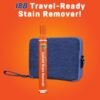
The household this fits is a mobile one: a work bag, a school bag, a car glovebox, a suitcase. Five pens lets you distribute them, which is the sensible way to buy this format, since a pen at home when the spill happens in a restaurant is a pen you did not use. What it is not is a laundry solution. A pen holds enough product for a small spot, and a full wash still has to happen afterward.
The claims, and the information that is missing
IBB lists a wide range of targets: coffee, wine, grease, tomato juice, ketchup, barbecue sauce, grape juice, tea and chocolate syrup. That mix spans pigment stains, tannins, sugars and oils, which are different problems chemically, and the listing offers nothing about how one formula addresses all of them. The description language leans hard on speed and on the word magical, and no dwell time, rinse step or wash instruction appears anywhere.
The bigger gap is the formulation. There is no ingredient list, no surfactant, no enzyme, no solvent, no pH and no concentration on this page. The listing is also thin on the seller: no manufacturer is named in the specification block, which contains only package dimensions, a first availability date of March 2024, an ASIN and ranking data placing it 86th among laundry stain removers. For a product applied to clothing that then sits against skin, the absence of an ingredient panel online is the main thing to notice, and the printed pen label is the only place to find one.
The claim to be most careful about
IBB states that the pen is safe for all types of fabrics, including cotton and silk, and that it is bleach free and gentle. Bleach free is a useful statement because it rules out the harshest risk. Safe for all fabrics is a much broader claim than any manufacturer can support, and silk is the specific example that should raise an eyebrow, because silk is a protein fiber that reacts badly to alkaline products and to rubbing, both of which a stain pen involves. This review will not extend that claim. Test on an inside seam of anything delicate, and treat wool and silk as needing a specialist product rather than a general one.
How to use a pen so it works
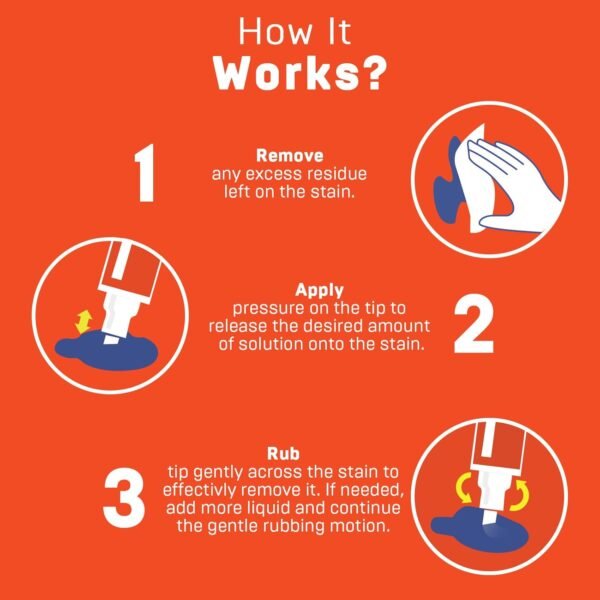
Blot first, do not rub. Lift as much of the spill off the fabric as you can with a napkin or a cloth, pressing rather than scrubbing, because rubbing pushes the stain deeper into the weave and can damage the fibers. Then apply the pen to the stain, work it gently, and blot again with something clean.
Two habits make the difference afterward. First, wash the garment as soon as you reasonably can, since a treated stain is a stain that has been loosened rather than removed, and the wash finishes the job. Second, and this is the one people get wrong, check the stain before the garment goes into a dryer. Heat sets any residue that survived the wash, and once it is set no second attempt will help. If the mark is still visible after washing, treat it again and wash again before drying.
Handling and storage
Keep the pens out of reach of children. A small pen sized object that smells faintly of cleaning product is exactly the sort of thing a child investigates, and the listing publishes no ingredients and no warnings at all, so there is no way to judge from the page how hazardous the contents are. Store them capped, upright, at room temperature and away from heat, and check the cap before dropping one into a bag, since a pen that leaks in a handbag has ruined more than the shirt.
Keep the product off skin and out of eyes, and wash hands after use. If a spot of the product itself lands on a garment away from the stain, treat it like any other spill and rinse it out rather than leaving it to dry in place.
One rule applies even to a small pen. Do not use it on a garment that has already been treated with another product, and never combine a stain pen with bleach, a soak solution or any other cleaner on the same wet patch. Mixing cleaning chemicals is how household chemical accidents happen, and a treated stain should be rinsed before a different product is tried. If a stain does not respond, wash the garment first, then escalate to a soak or a dedicated remover on a clean, dry mark.
Cost, and what else belongs in the cupboard
The cost structure of a pen is per stain rather than per load, and per stain it is expensive compared with any bottle. What you are buying is portability, and that is a fair thing to pay for. Five pens will not cover a household’s laundry needs, and treating them as a substitute for a proper stain product at home is the way to spend the most money for the least result. The sensible pattern is pens in bags, a bottle at home.
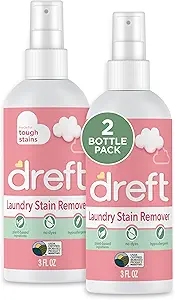
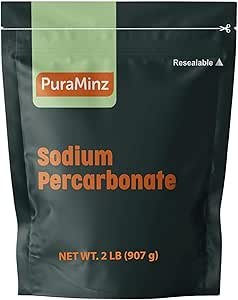
For the home half of that pairing, our review of the Vanish pre treat stain remover covers a sprayed pre treatment that reaches a whole garment, and the Bissell Oxy stain remover covers an oxygen based option. For a whole garment soak with a single ingredient you can dose precisely, the sodium percarbonate stain remover is the simplest chemistry, and the stain removers category collects the options.
Some stains need a specialist rather than a generalist, and ink is the clearest example. Our write up of the Amodex ink stain kit covers that case. Whatever pre treatment you use, the wash that follows still does most of the work, and the liquid detergent category covers that side.
Who should buy it, who should not
Buy the five pack if you want stain pens distributed across bags and cars and you understand that a pen buys you time rather than finishing the job. Skip it if you need to know what is in a product before it touches clothing, if your concern is delicate fabrics such as silk or wool where the blanket safety claim should not be relied on, or if you were looking for a laundry product to use at home, where a bottle costs far less per stain.