


Description
The specific problem a gel solves
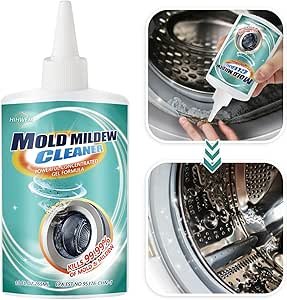
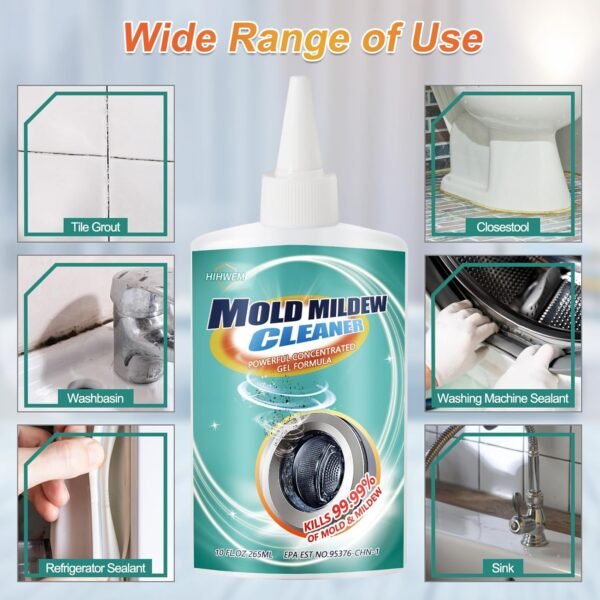
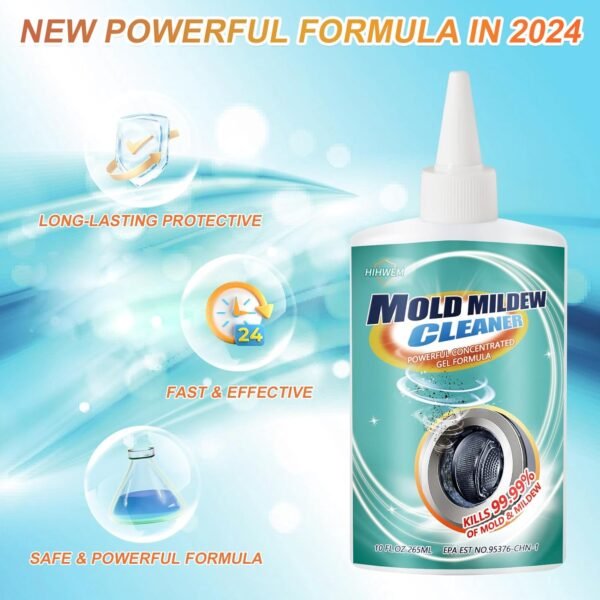
Lurongda sells this 10 fluid ounce product as a mold and mildew gel for the places a spray cannot hold onto: the silicone seal around a refrigerator door, the rubber gasket on a front loading washing machine, tile grout, caulk lines, the joint where a bathtub meets the wall, window frames and shower corners. Those are all vertical or inverted surfaces, and a liquid runs off them within seconds. A thickened gel stays where it is put, which is the entire reason this format exists.
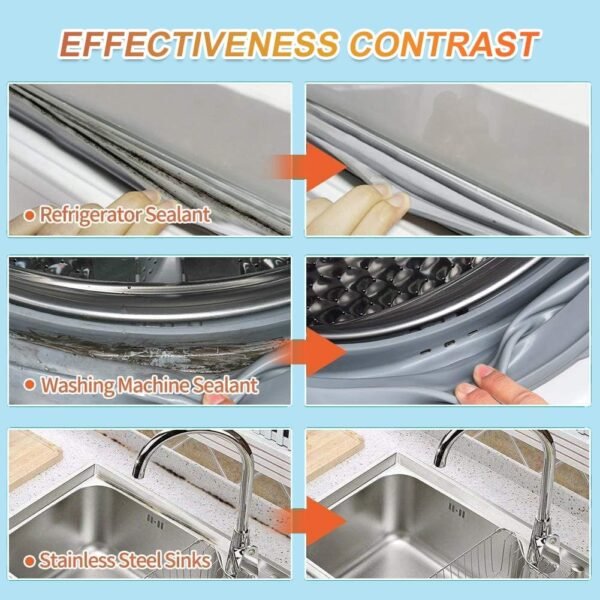
The staining in question is usually in the flexible silicone rather than on it. Mold grows into the surface of a soft sealant, which is why scrubbing a black gasket does very little and why a product designed to sit in place for hours has a better chance than one you wipe on and off. Lurongda directs the user to apply the gel evenly, leave it in place for three to ten hours, then rinse with water or wipe with a towel, with no scrubbing. That published dwell time is the most useful number in the listing and it is unusually long, which tells you something about how the product is meant to work.
The chemistry, and a claim that does not hold together
No ingredient list, no active ingredient and no concentration are published. What the listing offers instead is one specific and surprising claim: that the formula adds lysozyme, which it says penetrates into the mold roots for rapid decomposition and long lasting protection.
Why the lysozyme claim deserves scrutiny
Lysozyme is an enzyme that breaks down the cell walls of certain bacteria. It is not a bleaching agent and it does not remove the dark pigment that makes a moldy seal look black. Whatever is lifting the stain in a product like this is doing chemistry the listing does not describe, and the buyer is left unable to tell what it is. That gap has direct safety consequences, because the two most common approaches in this category behave very differently: an oxidizing bleach chemistry demands strict separation from acids and ammonia, while a surfactant or enzyme product does not. Since this listing will not say, the only safe course is to treat the gel as an unknown oxidizer and follow the strictest handling rules. Read the printed label on the tube.
The same bullet block also describes the product as a “Ready-to-Use Powerful Concentrated Gel Formula”, which uses two mutually exclusive terms in one phrase. Ready to use means no dilution; concentrated means the opposite. And the closing bullet promises to eliminate mold and mildew “once and for all”, a permanence claim that no cleaning product can support, because mold returns wherever the moisture that fed it returns.
Surfaces named, and the ones to be careful with
Lurongda lists refrigerator silicone seals, washing machine seals, kitchen sinks, wall surfaces, tile grout and caulk, toilets, washbasins, bathtubs, showers and window frames. Silicone and grout are the intended targets and the ones where the format earns its place.
Several cautions are absent from the page. Colored grout and colored caulk can be lightened by a bleaching chemistry, so test a hidden section and check it after the full dwell time rather than after ten minutes. Keep the gel off metal fixtures, anodized aluminum, brass and chrome trim, where extended contact with an unknown chemistry is a poor bet, and off natural stone, which is porous and easily marked. Do not use it on painted walls, on wallpaper, on unsealed wood or on fabric, including a shower curtain, since a long dwell on any absorbent material drives the product into the substrate. Inside a refrigerator, rinse thoroughly and air the compartment before returning food. A general bathroom product from our multipurpose bathroom cleaners shelf is the better tool for the surrounding tile and fixtures, and a foaming spray such as the Zep foaming shower, tub and tile cleaner covers broad areas that a gel is too slow to treat.
Applying it safely, over a dwell time measured in hours
The method is simple and the timing is not. A gel sitting on a surface for up to ten hours means the room is out of service for that period, so plan an overnight application in a bathroom with a window that can be left open. Wear gloves and eye protection while applying. Ventilate throughout, not just while you are in the room, because vapor accumulates in a closed bathroom over hours even from a product described as low odor. Keep children and pets out of the room for the whole dwell period and until the surface has been rinsed and dried.
The mixing rule is absolute here. Do not apply this gel to a surface that still holds any other cleaner, and do not follow it with one before rinsing thoroughly. That includes bleach products, acidic descalers and limescale removers, ammonia glass cleaners, and toilet products. Bathrooms are where household chemical mixing accidents happen, and a product with an undisclosed active applied for hours in a small room is exactly the scenario to be careful in. Store the tube upright, capped, out of reach of children, and away from other cleaning chemicals.
One more point that is not on the label and matters more than the product choice. Removing the stain does not remove the cause. Mold in a gasket or a grout line grows because that surface stays wet, so wiping a washing machine seal dry after use, leaving the door ajar, running an extractor fan and fixing a leaking joint are what stop it returning. A machine cleaner such as SplashSpotless washing machine cleaner addresses the drum and the residue that feeds growth, which is the other half of the same job.
Cost, coverage and the alternatives
Ten fluid ounces of gel goes a long way on the narrow lines it is designed for, because you are laying a bead along a seal rather than covering an area. Judged per treatment it is inexpensive, and the real cost is the hours the room is unavailable. A spray covers far more surface for the money but will not stay on a vertical gasket, which is the trade the format makes.
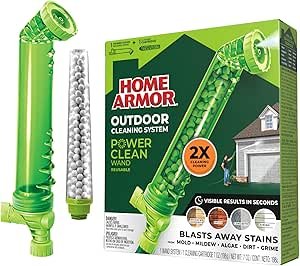
For mainstream alternatives with published labeling, a branded product such as the Lysol mold and mildew remover prints its active ingredient and its warnings, which is worth something on a product you leave in place overnight. For outdoor and marine surfaces the Star brite mildew stain remover covers different ground, and for reaching into a shower corner without a ladder the WM Barr power clean wand is a mechanical answer. The full shelf is in mold and mildew removers.
Remaining oddities: the bullets are prefixed with a decorative arrow character that survived the import, the department field reads unisex adult on a bathroom chemical, and the copy runs words together without spaces in several places, all signs of a listing assembled without editing. The item currently ranks 22nd in the retailer’s household mold and mildew removers chart.
Who should buy this tube
Buy it if you have blackened silicone seals or grout lines and you want a gel that stays put for hours, and you are prepared to ventilate the room and keep it clear for that period. Skip it if you need to know the active ingredient before you commit a surface to an overnight treatment, if your grout or caulk is colored, or if the underlying problem is a leak or ventilation fault that will bring the mold straight back.