
Description
A gallon of concentrate, and the arithmetic that follows
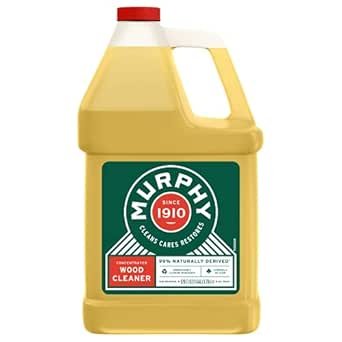
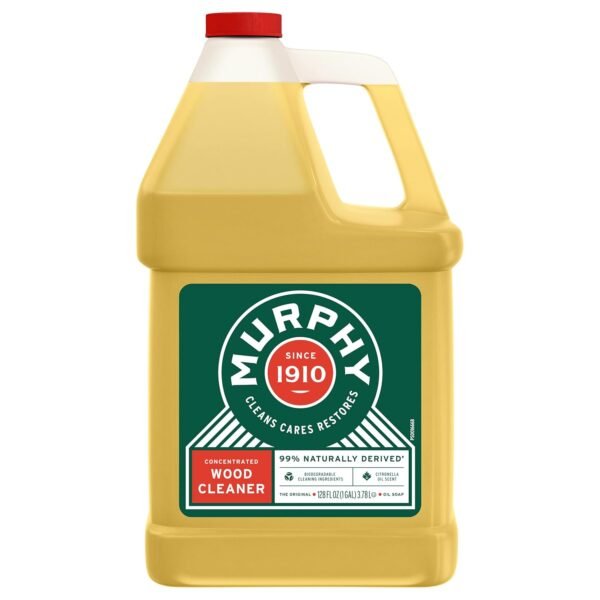
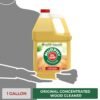
Murphy Oil Soap Wood Cleaner is sold here as a 128 fluid ounce container, one US gallon, of the original concentrated formula, model US05480A. The brand has been on shelves for well over eighty years and the listing leans on that history, describing the traditional scent as representing over eighty years of cleaning tradition.
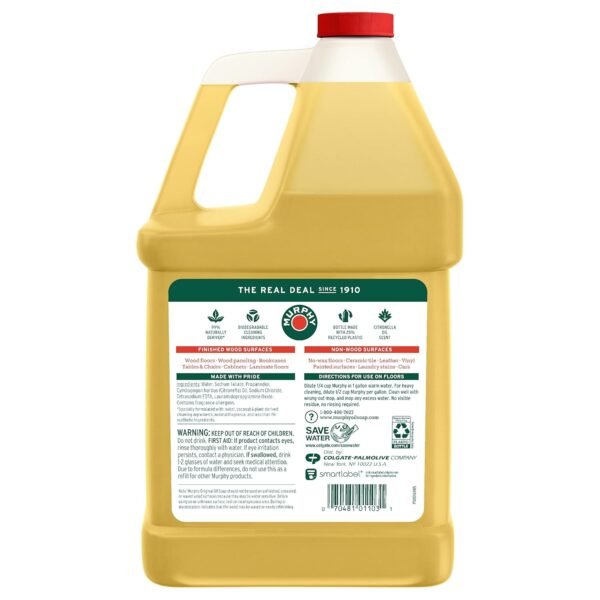
The important thing about this product is that it is a concentrate, and unusually for this catalog the listing publishes the dilution rather than leaving you to guess. For floors, dilute a quarter cup of Murphy Oil Soap in one gallon of warm water. For heavy cleaning, use half a cup per gallon. Clean with a well wrung out mop and mop up any excess water. No rinsing is required.
Work that through and you can see why the gallon size exists. At a quarter cup per gallon of water, 128 ounces of concentrate makes sixty four gallons of mopping solution. That is a very large number of buckets, and it is why this container lasts households years rather than months. The cost per mop is genuinely low, and the price you pay is measuring accurately every time rather than pouring by eye.
What is in it, stated more clearly than most
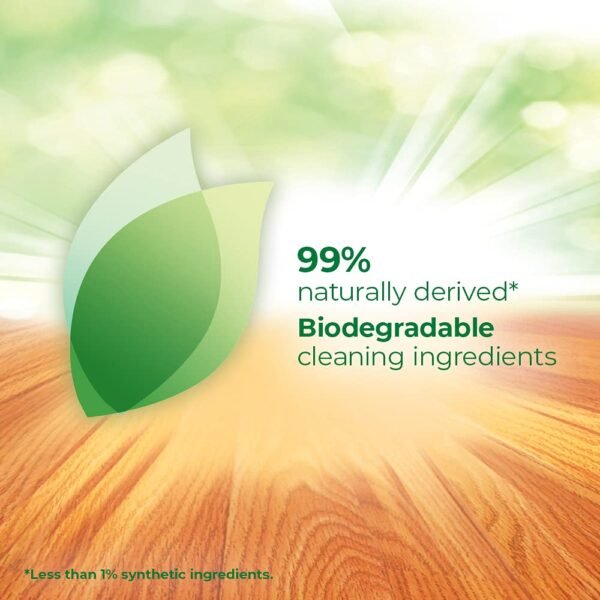
Colgate-Palmolive publishes a composition summary on this listing that is more specific than almost anything else in this catalog. The bullet states the product contains ninety eight percent naturally derived ingredients, and it then breaks that down: water, coconut and plant derived cleaning ingredients, natural fragrance, and two percent synthetic ingredients.
That is not a full ingredient panel and no surfactant is named individually, but it is a real disclosure rather than an adjective. It tells you the base is water and coconut derived surfactant, that fragrance is present, and that the synthetic content is bounded at two percent. Anyone avoiding fragrance should note that natural fragrance is still fragrance.
The listing also states that the product does not contain ammonia or bleach. That is worth knowing for a practical reason as much as a marketing one: it means the product is unlikely to strip or bleach a wood finish, and it means the usual bleach related hazards do not apply to the bottle itself. It does not remove the general rule about mixing, which is covered below.
The manufacturer’s own warning about which wood
This listing carries an explicit warning that deserves reproducing, because it is the single most useful line on the page. Colgate-Palmolive states: do not use on unfinished, unsealed or waxed wood surfaces because they may be water sensitive; before using on an unknown surface, test on an inconspicuous area; dulling or discoloration indicates the wood may be waxed or needs refinishing.
That is a complete instruction and a diagnostic in one. If the test patch dulls, you have a waxed or worn floor and you should stop, because a water based cleaner on a waxed surface produces a patchy, cloudy result that has to be corrected by stripping and refinishing. Do the test.
Surfaces it suits, and where to stop
The listing names finished wood floors, paneling, other large wood surfaces, and finished hard surfaces generally. In practice that covers sealed hardwood, engineered wood floors, wood paneling, cabinetry, doors and trim with an intact finish, plus vinyl and laminate.
Keep it off unfinished, unsealed, oiled or waxed wood, per the manufacturer’s own warning. Keep standing water away from plank joints on any wood floor, since water in a joint is what causes edges to swell and cup, and the instruction to use a well wrung mop and to mop up excess exists precisely for that reason. Natural stone has its own requirements and is not named on this listing. Carpet is not a wood surface and this is not a carpet product.
One more practical point: a cleaner removes soil, it does not build gloss. If a finished floor looks dull after cleaning, the coating is worn and no cleaner will fix that. That is a job for a floor polish or, eventually, for refinishing, and products such as the Howard Products wood polish address the finishing side rather than the cleaning side.
Diluting, storing and handling it safely
Measure. A quarter cup is a quarter cup, and pouring straight from a gallon jug into a bucket is how people end up at three times the dose. Overdosing a wood cleaner leaves a film that attracts soil and shows every footprint, which is the opposite of what the product is bought for. Mix in warm water, use a well wrung mop, and do not flood the floor.
Decant into a smaller labeled bottle for regular use. A gallon jug is heavy and awkward to pour accurately, and a labeled squeeze bottle removes both problems. Label it clearly, keep the original label on the jug, and never decant into a drink container.
Store the jug capped, upright, out of reach of children and away from heat. Wash hands after use and avoid eye contact when pouring at height.
Never combine it with another cleaning product in the bucket or on the floor. The listing’s own comparison bullet name checks bleach sprays and other cleaners, and it is worth being explicit: do not add bleach to a bucket of any cleaner, do not mix chlorine bleach with an ammonia based product or with an acidic descaler anywhere in the house, and rinse and dry a surface before switching products. Combining household cleaners is never necessary and is how avoidable poisonings happen.
A freshly mopped wood floor is slippery. Keep people and pets off it until it dries, and take particular care at the top of stairs.
Cost, data gaps and the alternatives
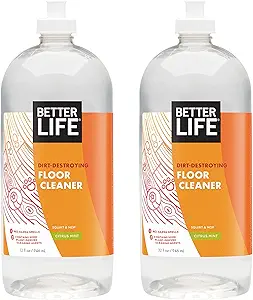
Sixty four gallons of mopping solution from one container is the strongest cost argument in the floor cleaning part of this catalog. Against it, a ready to use spray costs several times more per floor cleaned but never has to be measured, which is a fair trade for someone who cleans one small room. The Weiman hardwood cleaner is the ready to use comparison, and the Better Life floor cleaner sits between the two approaches. For spray mop hardware, the Bona premium spray mop is covered separately, and the full floor cleaner listings and wood polish listings separate cleaning from finishing.
One gap worth flagging: this listing carries no specification block at all. There is no ASIN field, no weight, no dimensions and no manufacturer entry in the structured data, and the title carries two different part numbers. None of that changes what arrives, but shipping weight and pack details cannot be read from the page.
Who should buy this and who should not
Buy it if you have finished wood floors, paneling or cabinetry, you mop regularly, and you want the lowest cost per clean available in this category. The published dilution and the manufacturer’s own surface warning make it one of the easier products here to use correctly.
Do not buy it for unfinished, oiled or waxed wood, which the manufacturer explicitly excludes. Do not buy a gallon if you have one small wood floor and nowhere to store it. And do not expect it to restore shine to a worn finish, because that is a coating problem rather than a cleaning one.