

Description
The job, and the household it fits
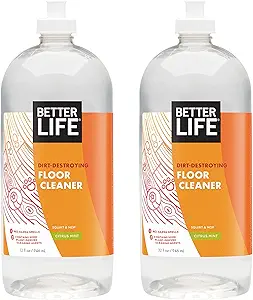
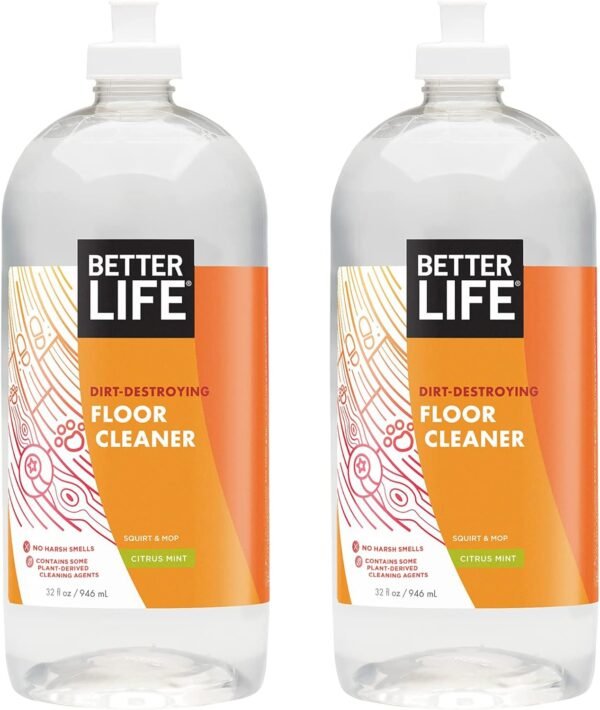
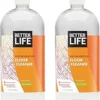
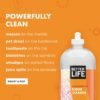
Better Life sells this as Simply Floored, a ready to use liquid floor cleaner in a citrus mint scent, supplied as two 32 fluid ounce bottles. Ready to use is the defining detail: there is no dilution step, no bucket arithmetic and no concentrate to measure. Better Life’s instruction is to squirt the product directly onto the floor and work it with any damp mop head, with no rinsing required.
That method suits a particular way of cleaning. It is a spray and mop routine for a floor that is already swept, in a home where the mopping happens in short bursts rather than as a weekly bucket job. It is less suited to a heavily soiled floor or a large area, where a concentrate diluted in a bucket goes further for the money. If you mop a large tiled area regularly, a diluted product from the floor cleaners category will cost less per square foot. The listing records this product as ranked 21st in Household Floor Cleaners and 4,030th across Health and Household, with a first availability date of October 2009, making it one of the longer established items in this catalog.
What Better Life discloses about the formula
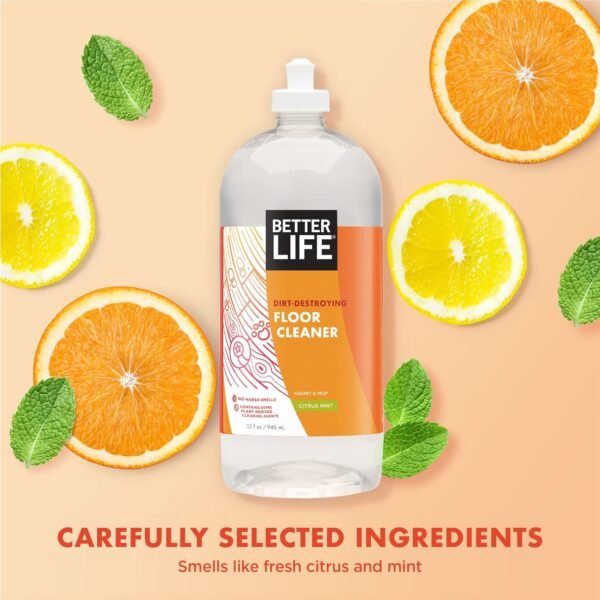
This listing does something most in this catalog do not: it names ingredients. Better Life identifies soapbark, describing it as a bark extract from an evergreen tree native to Chile used as a cleaning agent, and lemon, giving Citrus limon peel extract as the source of the scent. Soapbark is the common name for quillaja, a plant material containing saponins, which are naturally foaming surface active compounds. That is a real explanation of how the product works rather than an adjective.
Named ingredients are not a full ingredient list
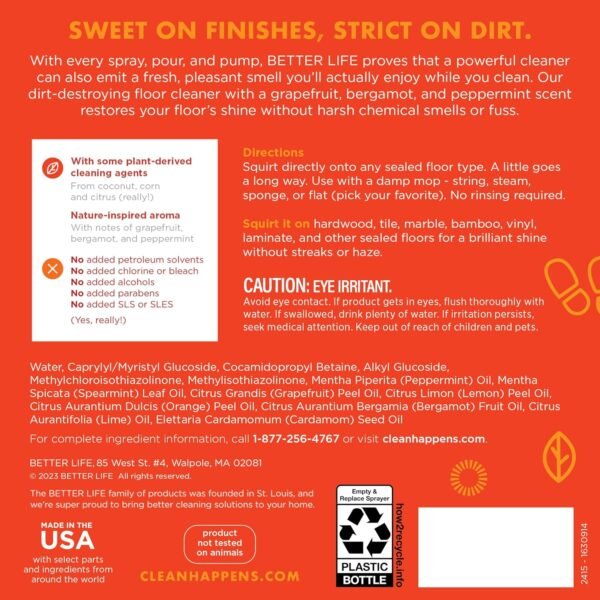
The heading in the listing is Main Ingredients, and two entries is not a formulation. There is no pH figure, no preservative named, no solvent, no chelating agent and no statement of what else is in the bottle. Better Life instead publishes a list of what is absent: no petroleum solvents, no chlorine or bleach, no added alcohols, no added parabens, no SLS and no SLES. The company describes the result as gentler on your eyes, nose and skin, describes the range as earth friendly, and says it uses some plant derived elements that are kinder to children and pets. All of those are the manufacturer’s own statements, and terms like earth friendly and green are marketing categories rather than defined measures, so read them as claims rather than as findings.
Two other data points on this record are unreliable. The Customer Reviews field contains a sales rank string instead of a star rating, so there is no rating figure to quote. And one feature bullet refers to “our line of gentle bathroom cleaning supplies” in the middle of a floor cleaner listing, which reads as text carried over from a different product page.
Floors it covers, and the contradiction in the listing
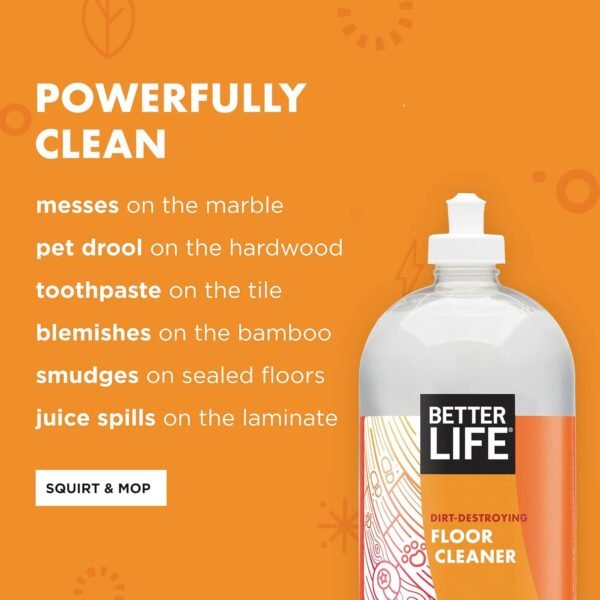
The surface lists on this page do not agree with each other. The product title names wood, tile, laminate, vinyl and bamboo. The feature bullet names hardwood, tile, marble, laminate, vinyl and other sealed floors. The product description names tile, wood, stone, laminate, linoleum and cement. Sealed is doing a lot of work in the middle list, and the description then names cement, which in a domestic setting is very often unsealed. Both cannot be right, and the safe reading is the narrower one: use it on sealed floors.
Marble deserves its own note because it appears on the bullet list and it is the surface most easily damaged by the wrong cleaner. Marble, limestone, travertine and onyx are calcite based and are etched by acids, which leaves dull patches that no amount of further cleaning removes. This listing publishes no pH, so there is no way to confirm from the page that the product is neutral. If your floor is polished marble, either test in a hidden corner and check it in raking light after drying, or use a product that states a neutral pH on the label, such as a dedicated stone cleaner from the same shelf as the Weiman hardwood cleaner family for wood or a stone specific spray for stone.
The no rinsing instruction is worth taking at face value only if you use the amount the label intends. Better Life notes that a little goes a long way, and over applying a no rinse cleaner is the usual cause of a dull film that builds up over weeks. Unsealed wood, waxed wood and unsealed cork should be kept dry regardless of the cleaner, since the damage there comes from the water rather than the chemistry.
Using it correctly, and storing it
Sweep or vacuum first. A mop drags grit across a floor, and grit scratches finishes far more than any cleaner does. Squirt sparingly onto a small section rather than the whole room, so the liquid does not dry before the mop reaches it, and use a damp mop rather than a wet one on wood and laminate, where standing water reaches the seams. Work in overlapping passes and change the mop head or rinse it when it stops looking clean.
Storage and handling are simpler than for most products on this site because there is no bleach, no ammonia and no acid declared. That does not make it a toy. Keep the bottles capped and out of reach of children, keep it off skin and out of eyes, and never decant it into an unlabeled container. The rule that applies to everything in a cleaning cupboard applies here too: do not mix it with another cleaner. A citrus scented product with an undisclosed full formulation should not be combined with bleach in a bucket, and there is no situation where combining two floor cleaners produces a better result than using one properly.
Cost structure and the alternatives
Ready to use liquid is the most expensive way to buy floor cleaner per finished ounce, and that is the honest trade. You are paying to ship water, and 64 ounces across two bottles is a modest amount of cleaning for a large home. What you get in return is no measuring, no bucket and no risk of a wrong dilution, and for spray and mop routines that is genuinely worth something. The 2009 listing date suggests a stable formula with a long track record, which is not nothing either.
Worth comparing: the Attitude 10510 floor cleaner, which competes on similar formulation claims, the Murphy oil soap floor cleaner, which is the long established wood option and works differently, and the Armstrong Once N Done for resilient flooring. If the appeal is the spray and mop method rather than this particular liquid, a cartridge system such as the Bona premium floor spray mop builds the same routine into the tool, and the wet and dry mops category covers that approach.
Who should buy it, and who should not
Buy it if you have sealed hardwood, laminate, vinyl or tile, you clean in short spray and mop sessions, and you want a product that at least names its main cleaning agent rather than hiding behind adjectives. Skip it if your floors are unsealed, waxed or polished marble, if you mop a large area and need a concentrate, or if you need a full ingredient list or a stated pH before putting a liquid on an expensive floor. Note also that the recorded package dimensions describe a single bottle while the weight matches two, so the listing data is not internally consistent about what ships.