
Description
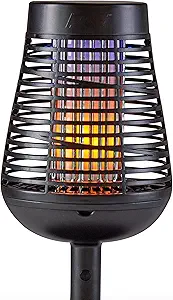
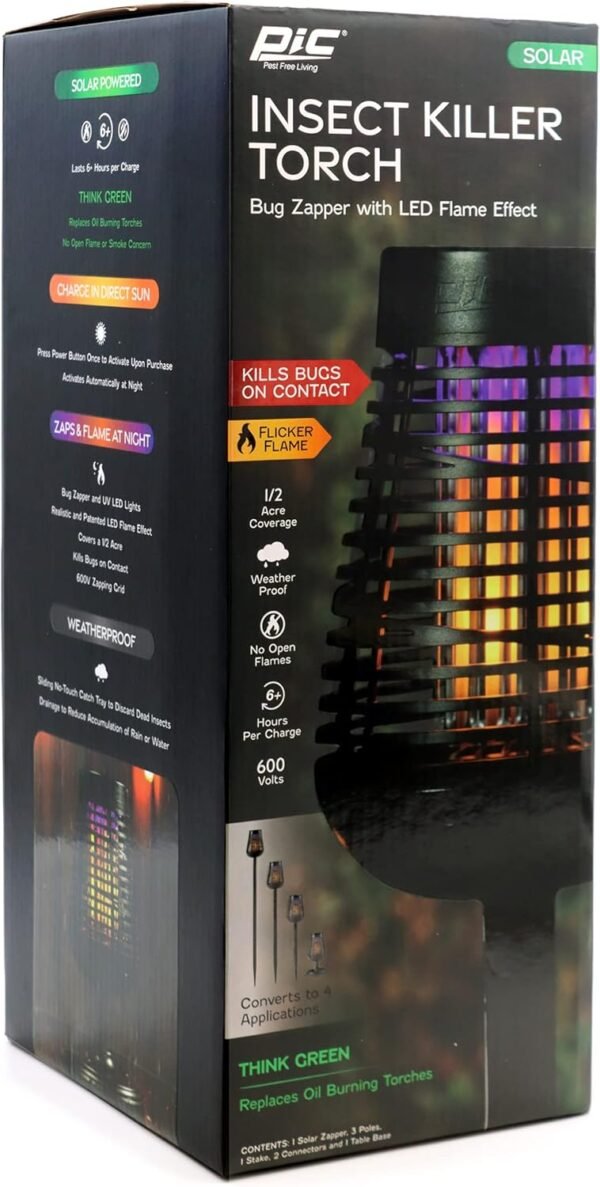
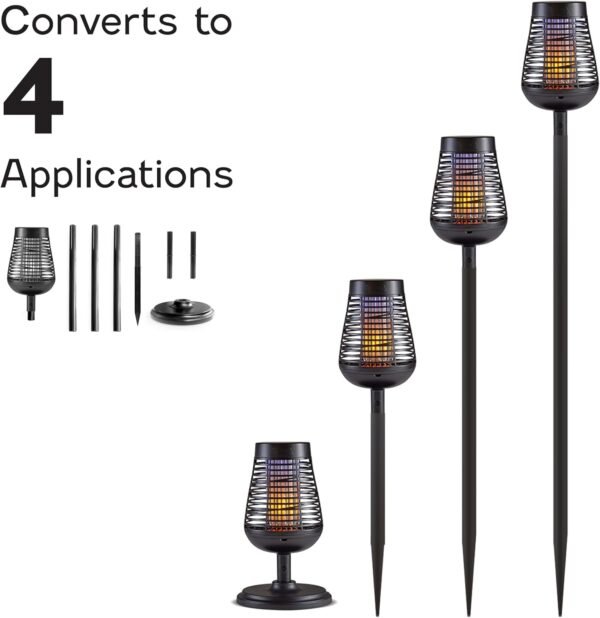
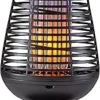
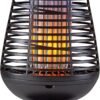
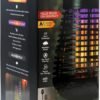
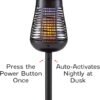
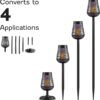
The PIC solar insect killer torch is a garden stake that does two jobs at once. A flickering amber LED imitates an open flame for decoration, and a blue ultraviolet LED sits above an electrified grid meant to attract and kill flying insects. It charges from sunlight, carries a lithium ion battery, and ships with three pole sections, two connectors, a ground stake and a tabletop base so it can stand at roughly forty eight, thirty six or twenty four inches.
What this device is for, and the yard it fits
This is a decorative light with a zapper built in, and the order of those two words matters. The flame effect is the part that runs all evening and the part most buyers notice, while the grid is a secondary function. PIC positions it as a replacement for oil burning garden torches, stating that one unit can replace up to ninety refills of torch fuel and that it produces no air pollutants compared with an oil flame. That is the manufacturer’s comparison rather than an independent measurement, but the underlying point is fair: there is no fuel to buy, no wick to trim and no live flame in a yard where children or pets are moving around.
How the attraction and the kill actually work
The listing describes a blue ultraviolet LED that helps attract flying insects, and a grid that kills bugs on contact. That is the standard mechanism for a light based zapper: ultraviolet output draws phototactic insects toward the unit, and any insect bridging the charged grid completes a circuit. The listing names fly and mosquito as target species and states that the unit is electric, powered by one included lithium ion battery charged by the solar panel.
The honest limitation belongs here rather than buried at the end. Ultraviolet light attracts many flying insects strongly, but published research on the effectiveness of light based zappers against biting mosquitoes has produced mixed results, and mosquitoes are generally understood to home in on carbon dioxide and body heat rather than on light alone. This listing provides no independent test data, no trap counts and no species breakdown to support the mosquito claim it makes in its own marketing. PIC lists mosquito as a target species; that is the manufacturer’s statement, and the page offers nothing to verify it. Expect the unit to catch moths and small flies far more reliably than mosquitoes.
Why placement changes the result
A zapper attracts insects toward itself. That single fact decides where it should go. Putting one on the table where people are eating draws flying insects into the area you are trying to protect, and the same unit placed twenty or thirty feet away, at the edge of the space, pulls them in the other direction. The listing supplies a tabletop base, which makes the wrong placement the convenient one. Use the ground stake and the taller pole sections where you can, keep the unit upwind of seating, and treat the tabletop option as decoration rather than pest control.
Build, power and where it can be installed
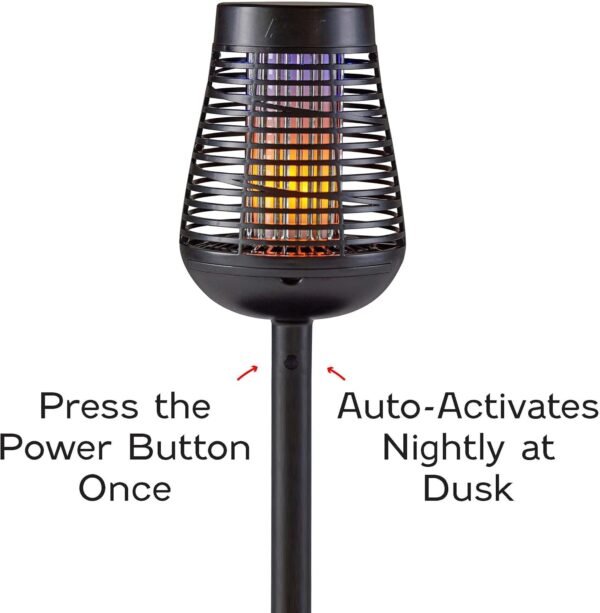
The body is plastic, listed as black, in a style the specification calls modern, measuring roughly seven inches wide by fifteen and a half inches tall for the head unit and weighing about two pounds. PIC describes it as weatherproof and states that it can be left outside in the elements while it charges from natural sunlight. No ingress protection rating appears anywhere in the listing, which is the specification that would normally quantify a weatherproof claim, so treat the description as a general statement rather than a tested standard.
Solar charging is the constraint that determines whether the unit works well. A panel in shade for most of the day charges slowly, and a partly charged battery means shorter run time after dark. Placement therefore has to satisfy two competing requirements at once: enough direct sun during the day for the panel, and enough distance from seating at night for the zapper to be useful. In a shaded garden the first requirement usually wins, and the device becomes primarily a light.
Using it safely and looking after it
An electrified grid is the safety point that matters most. Grids of this type are designed so that fingers cannot easily reach the live parts, but the assumption breaks down with small children and with anything thin enough to push through a gap. Site it out of reach, keep it away from where children play, and switch it off or unplug the battery before cleaning. Never clean the grid while the unit is active and never hose it down.
The unit carries a lithium ion battery, which brings its own handling rules. Do not puncture or crush it, do not leave the device in extreme heat, and dispose of the battery through a proper collection point rather than in household trash at the end of its life. If the unit stops holding charge after a few seasons, that is normally the battery rather than the electronics.
Maintenance is simple but not optional. Dead insects accumulate on and around the grid, and a coated grid arcs less effectively and looks unpleasant. Brush it out with the power off, using a dry brush rather than a wet cloth. Wipe the solar panel too, since dust and pollen on the panel surface reduce charging more than most owners expect. One more point worth making plainly: a zapper kills whatever flies into it, including moths, beetles and other insects that are doing no harm. If that matters to you, run it only on evenings you are outside rather than every night.
Running cost, and what else to consider
The cost structure is the strongest part of the argument. There is no fuel, no refill and no mains electricity, so once bought the running cost is effectively the eventual battery replacement. Compared with an oil torch that consumes fuel every evening, the arithmetic favors the solar unit over a season or two, and PIC’s own comparison against ninety fuel refills is making exactly that point. Set against that, there is no consumable to buy but also no way to boost performance when it underperforms.
If you want more capable insect control, the mains powered and higher output units are a different class of device. Our reviews of the Lulu Home bug zapper and the Devogue electric bug zapper cover units that trade the decorative angle for output. For dealing with individual flies indoors, where a garden stake is no help at all, a handheld device such as the Mosiller electric fly swatter is the more direct tool. The bug zappers category lists the formats together.
If mosquitoes specifically are the problem, a zapper is the wrong starting point regardless of brand. Removing standing water is the measure with the strongest support, and a repellent product such as the mosquito repellent ball works on a different principle. The repellents category covers that approach.
Who should buy it, who should not
Buy it if you want a fuel free garden light with a flame effect and you treat insect kills as a bonus. Skip it if you are buying primarily to reduce mosquito bites, because the listing supplies no independent data to support that, or if your garden lacks the direct sun the panel needs. Buy it also if the appeal is removing a live flame from a yard with children in it, since that benefit is real and does not depend on the zapper working at all.