
Description
A caustic degreaser, and the listing says so
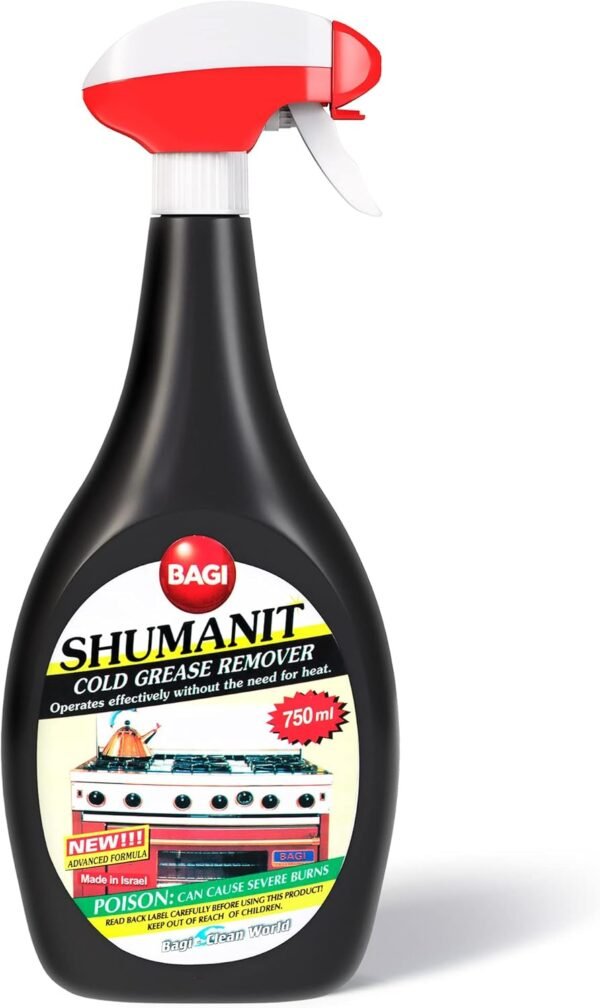
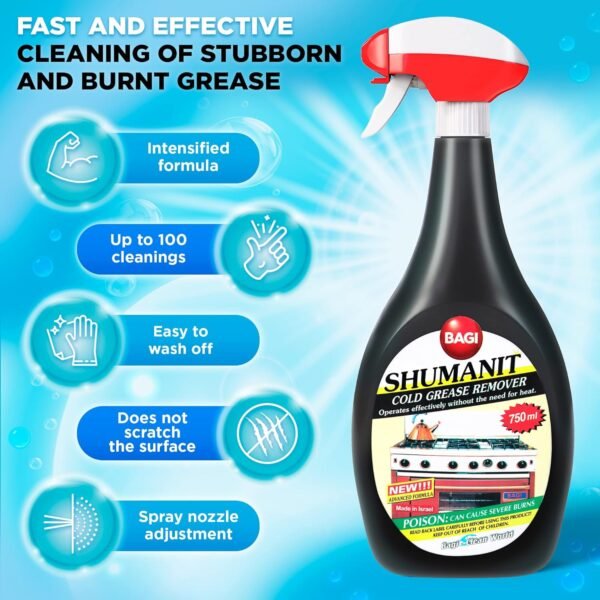
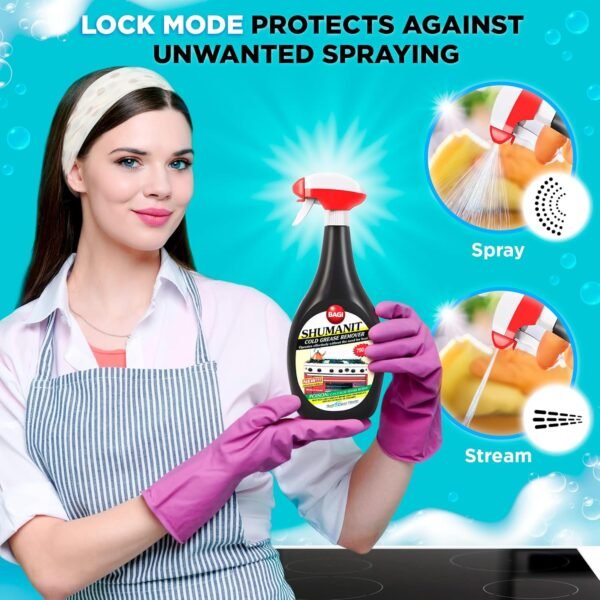
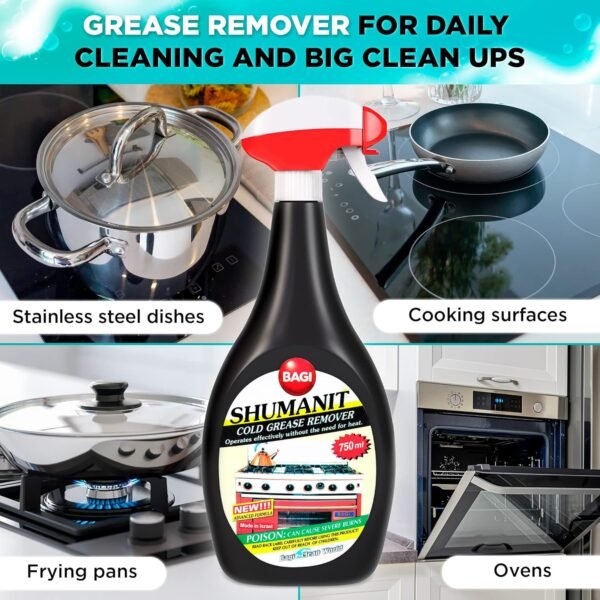
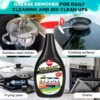
SHUMANIT Cold Grease Remover is a 25.36 fluid ounce spray sold for burnt and baked on grease on ovens, stovetops, barbecue grates, pans and cookware. Cold in the name means it works without the surface being heated first, which is the practical selling point against oven cleaners that want a warm cavity.
Buried at the end of the description, after all the marketing, is the single most important line on the page: the product composition is given as sodium hydroxide at 5 to 15 percent, plus a complexing agent whose percentage is cut off mid sentence. Sodium hydroxide is lye, and at 5 to 15 percent this is a strongly caustic product. That disclosure is genuinely useful and puts this listing ahead of most in the catalog, but it changes how the rest of the page should be read. Everything the bullets say about spraying and wiping needs to be understood as instructions for handling a corrosive chemical.
How a caustic degreaser works, and why that is the right tool here
Sodium hydroxide removes grease by saponification: it reacts with fats and oils and converts them into soap, which is then soluble in water and can be rinsed away. That is why a caustic cleaner dissolves baked on cooking residue that a surfactant based spray only softens, and it is why the surface goes slippery as it works, because you are literally making soap on the pan.
The surfaces caustic chemistry attacks
Aluminum is the critical one and the listing never mentions it. Sodium hydroxide reacts vigorously with aluminum, pitting and blackening the metal and releasing hydrogen gas as it does so. Keep this product off aluminum pans, aluminum foil, aluminum grill parts, anodized finishes and unpainted aluminum trim entirely.
Cast iron is the second, and here the listing contradicts itself. One bullet names cast iron among the safe surfaces, but seasoning on cast iron is polymerized oil, and a caustic cleaner is exactly what removes polymerized oil. Using this on a seasoned skillet will strip the seasoning back to bare metal. That is a legitimate technique when you deliberately want to restore a rusty pan, and it is a disaster if you were expecting to clean a pan you had spent a year building up. Assume seasoning will come off.
The rest of the surface list, and the ones to avoid entirely
Also keep it away from painted surfaces, powder coating, sealed and natural stone, wood, leather, fabric, acrylic and anything with a printed graphic. Self cleaning oven cavities are a separate case: most oven manufacturers state that chemical cleaners must not be used on a self cleaning liner, so check the oven’s manual before spraying anything into the cavity. The surfaces the listing does name, stainless steel, enamel, glass oven doors and ceramic tile, are the ones that tolerate a strong alkali well.
Using it, and the protection that is not optional
Wear chemical resistant gloves and eye protection. A caustic at this concentration causes chemical burns to skin and serious damage to eyes, and unlike an acid it does not sting immediately, so contact can go unnoticed until the damage is done. Long sleeves are sensible. If it contacts skin, rinse with plenty of water for a long time; if it gets into an eye, rinse and seek medical attention.
Ventilate the room thoroughly, open windows and run the extractor, and do not spray toward your own face or overhead into an oven cavity without eye protection. Cover the floor and anything nearby, because overspray on a laminate floor or a painted cabinet does damage that is not reversible.
The listing gives no dwell time. The description says to spray, wait and wipe without a number, while the bullets promise results in seconds, and those are not the same instruction. Follow the printed label. Do not leave a caustic on a surface indefinitely on the theory that longer is better, and rinse thoroughly with clean water afterward; unrinsed alkali keeps working on the finish and on the next thing that touches it.
The mixing rule is absolute. Never combine this with an acid, with a bleach product, with an ammonia cleaner, with vinegar or with any other cleaner, and do not spray it onto a surface still wet with one. Strong alkalis and strong acids react violently, and a caustic plus a hypochlorite bleach is a combination with no upside. Store it upright, capped, out of reach of children and pets, away from other cleaning chemicals, and never decant it into an unlabeled bottle. Dispose of leftover product through a local hazardous waste route rather than pouring it away.
Cost, and the gentler options for lighter work
Twenty five ounces of a concentrated caustic goes a long way because the format is spray on and rinse rather than scrub and repeat, and for a genuinely neglected oven or a set of barbecue grates it will do in one session what a mild cleaner will not do in five. The value question is really about frequency: if you deep clean an oven twice a year, this is the right tool, and if you wipe a stovetop daily, it is far more chemical than the job needs.
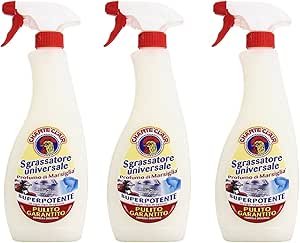
For daily kitchen surfaces, a diluted general cleaner such as Zep multi purpose concentrate is cheaper and far safer to have out on a counter. For pans and cooktops, a mild abrasive like Bar Keepers Friend powder cleanser or the Campester soft cleanser bundle handles marks without corrosive chemistry. Where a gel that clings to a vertical grate is what you want, the Kona Safe Clean grill cleaner takes a different approach, and a European style degreaser such as Chante Clair Sgrassatore covers the same job with far less published about it. The broader shelf is under all purpose cleaners, and the shine products are in metal polishes.
Oddities in the record. The composition statement is truncated: the complexing agent is named without a percentage and the sentence simply stops. No manufacturer is named anywhere in the specification block. The bullets are prefixed with decorative emoji that survived the import, and they claim the product is trusted by chefs and restaurants worldwide with nothing behind that. The claim that grease disappears in seconds sits against the description’s own instruction to spray, wait and wipe. And a product with 5 to 15 percent sodium hydroxide carries no hazard statement, no first aid information and no protective equipment guidance anywhere on this page. The item currently ranks 314th in the retailer’s all purpose household cleaners chart and has been listed since 2018.
Who should buy it
Buy it if you have a badly neglected oven, grill grates or cookware, the surfaces are stainless steel, enamel, glass or tile, and you will wear gloves and eye protection and ventilate the room. Do not buy it for aluminum, for seasoned cast iron you want to keep seasoned, for a self cleaning oven cavity, or for routine daily wiping, and do not treat it as an ordinary all purpose spray, because at this concentration it is not one.