

Description
The narrow job a bottle of steam mop water is for
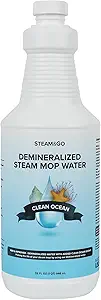
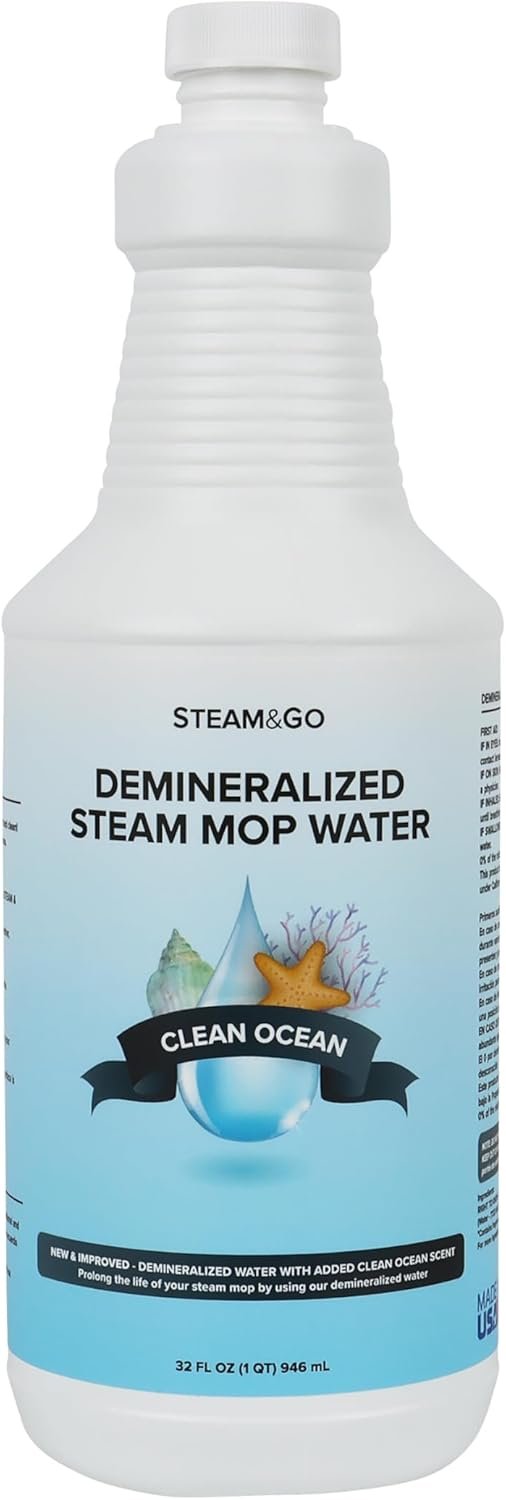
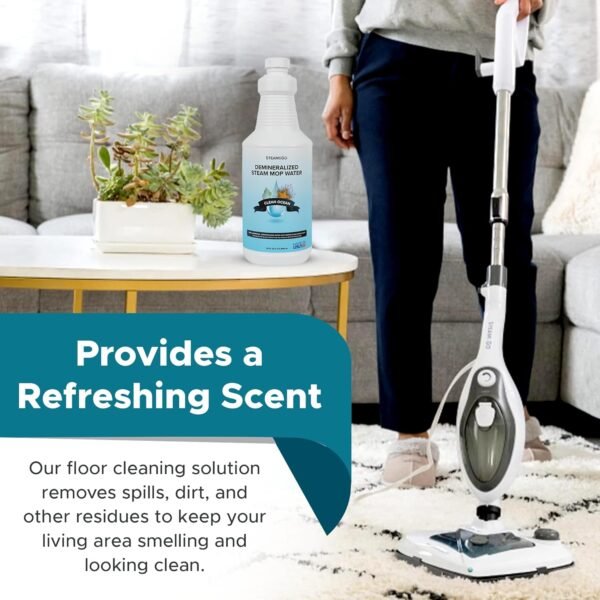
Steam and Go sells this 32 ounce bottle as demineralized water for steam mops and floor steamers. The problem it addresses is real and specific: a steam mop boils whatever you pour into it, and everything dissolved in that water stays behind in the boiler and the steam nozzle when the water leaves as vapor. In a hard water area that residue is calcium and magnesium scale, and it builds until the heating element runs hot, the steam output drops and the jet spits mineral flecks onto the floor. Water with the minerals already removed leaves nothing behind, so the machine keeps its output and its lifespan.
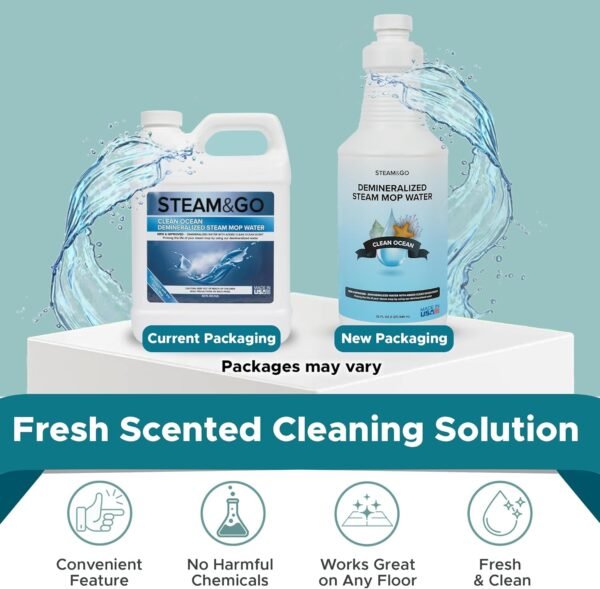
That is the entire argument for the category, and it is a sound one. Whether it is an argument for this particular bottle is a separate question, because this is not plain demineralized water. The listing describes it as a multisurface cleaner, states that it is PVC free, and gives it a clean ocean scent. A fragrance is a dissolved additive by definition, which sits awkwardly beside the word demineralized. Steam and Go never publishes what the additive is.
What is in the bottle, and the gap in the listing
No ingredient list appears. There is no named fragrance component, no surfactant, no preservative and no statement of conductivity or total dissolved solids, which is the number that would actually tell you how demineralized the water is. What the listing does say is that the blend is pre mixed, ready to pour, PVC free, and needs no measuring, mixing or rinsing.
Why the added scent is the detail to think about
Most steam mop manufacturers tell owners to use water only, and several state in their manuals that adding any cleaning solution, descaler, fragrance or vinegar to the tank voids the warranty and can damage the boiler. This listing does not name a single compatible mop model. It claims the formula is designed to work with all steam mop models and refers to well known brands generically, without naming one. Before pouring anything scented into a tank, read the manual for your own machine, because the manufacturer of the mop, not the manufacturer of the water, decides what the warranty covers. If your mop’s manual says water only, the safe purchase in this category is unscented distilled or deionized water rather than a scented blend.
The PVC free claim deserves a note too. PVC is a rigid plastic. Describing a liquid as PVC free communicates nothing about the liquid, and at most refers to the bottle. It is the kind of claim that reads as an environmental benefit without carrying one, and it should not factor into a buying decision.
Floors it is offered for, and the ones to keep steam away from
Steam and Go names sealed hardwood, tile, stone and laminate. Sealed is the operative word on two of those. Steam forces hot moisture into any seam or crack it finds, so unsealed wood, worn finishes, older laminate with swelling edges and unsealed natural stone are all poor candidates for a steam mop regardless of what liquid is in the tank. Many hardwood floor finish manufacturers advise against steam entirely, and a warranty on a wood floor can be voided by steam cleaning. If you have hardwood and you are unsure of the finish, a damp mop system such as the Bona multi surface spray mop avoids the question altogether, and a wood specific cleaner like the Weiman hardwood floor cleaner is formulated for the finish rather than for the machine.
Steam is genuinely good on glazed ceramic and porcelain tile, on grout, and on sealed vinyl, which is where a mop and this bottle make the most sense. Keep it off waxed or oiled floors, where heat softens the finish, and off anything with a laminate seam already lifting.
Filling, running and storing it correctly
Usage is as simple as the listing says: open the cap, fill the tank, run the mop. There is no dilution and no measuring, which is the format’s real convenience. Two habits protect the machine. Empty the tank after each session rather than leaving liquid sitting in a warm boiler, and let the unit cool fully before refilling, because pouring cold water into a hot boiler stresses the element and can spray steam back at you.
Treat the bottle as a household chemical rather than as drinking water, because it contains an undisclosed fragrance additive. Keep it capped, label it if you decant it, store it out of reach of children and pets, and never add anything else to it. Do not mix this with a floor detergent, a bleach product or a vinegar solution in the same tank; combining cleaning products is a bad practice generally, and it is a worse one when the contents of one of them are not published. If you want a detergent in the mix, use a machine that is designed to take one, such as the systems supported by the Dreame multi surface floor cleaning solution for robot mops.
Running cost, and the cheaper paths to the same result
This is where a buyer needs to be clear eyed. A 32 ounce bottle is one or two tank fills for most steam mops, so the cost per use of a branded, scented water is high compared with the alternative, which is a gallon of distilled water bought as a grocery staple. Distilled water contains no minerals at all, no fragrance and no undisclosed additive, and it is what most mop manuals actually specify. The convenience premium here buys a scent and a screw cap, not better descaling.
Judged against that, this bottle makes sense for people who dislike the smell of hot mop water and want a fragrance in the steam, and for anyone whose mop manual explicitly permits an additive. Everyone else is buying packaging. If descaling an appliance is the underlying worry, purpose built descalers exist for that job, including the Lemi Shine washing machine cleaner for laundry appliances and the Rutledge dishwasher cleaner for the kitchen. The rest of the floor care shelf is in floor cleaners, and the hardware sits under wet and dry mops.
Several contradictions in the listing should be named rather than resolved. It is sold as demineralized water and simultaneously as a multisurface cleaner, which are different product classes with different expectations. One bullet says the product prevents limescale while another says it helps limit mineral buildup, a materially weaker statement. It says no rinsing is required, which is a cleaner’s claim, while also implying the liquid is essentially water. And the package weight is given as 2 pounds for a 32 ounce bottle, which is consistent with water plus packaging but leaves no room for a meaningful concentration of anything else. The item currently ranks 35th in the retailer’s household floor cleaners chart.
Who should pour this in the tank
Buy it if you own a steam mop, you live with hard water, your mop’s manual allows a scented additive, and you value grabbing a bottle over keeping distilled water in the house. Skip it if your manual says water only, if you want to know what you are boiling into the air of your own home, or if you simply want the descaling benefit at the lowest cost, in which case plain distilled water does the same job.