

Description
The job, and the household that reaches for a powder
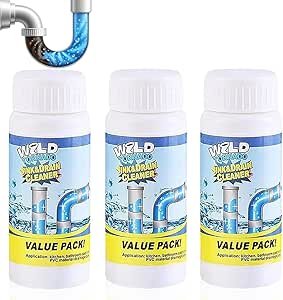
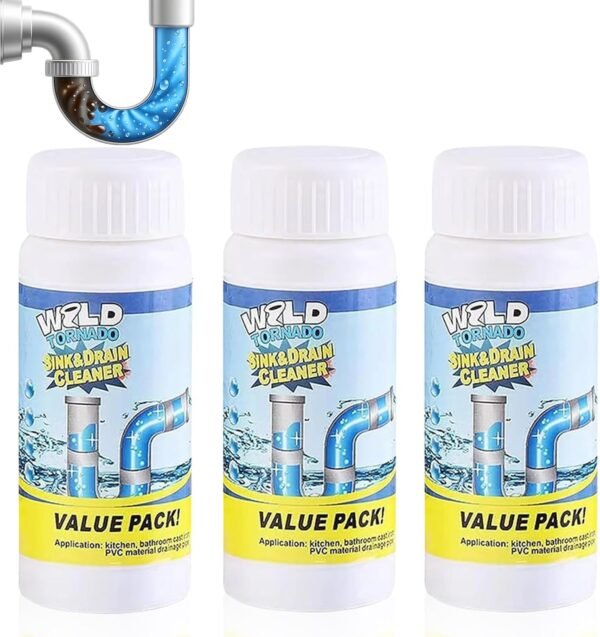
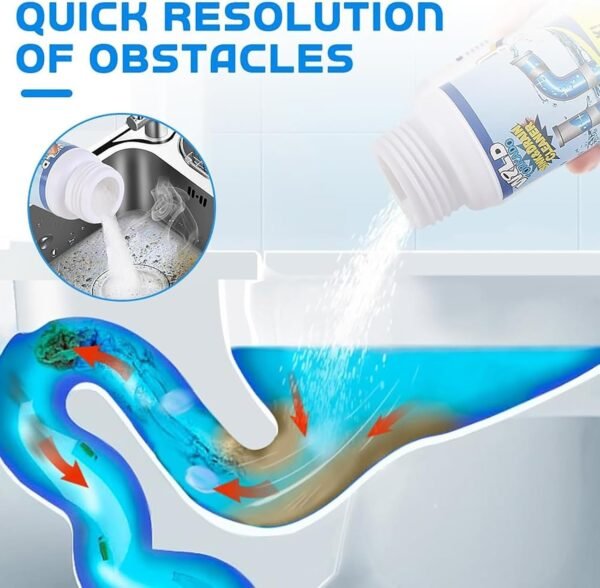
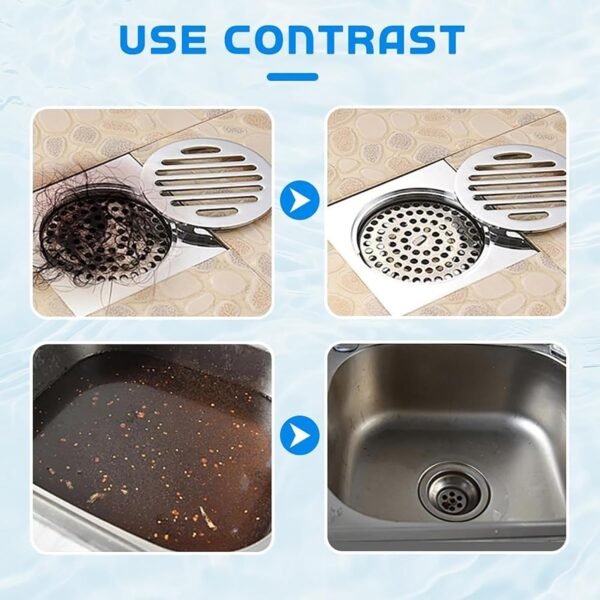
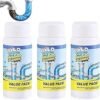
Wild Tornado is a powdered drain opener sold in small single use bottles, listed here as a pack of three. Each bottle is given as 110 grams, measuring roughly 4 inches by 1.6 inches, and the intended use is a slow or blocked line rather than routine maintenance. WHDEOW names kitchen sinks, bathroom basins, toilets, shower and floor drains, and describes the target residues as food waste, oil buildup and hair.
Powdered openers store compactly and disperse into standing water rather than sinking straight through as some gels do. The trade is that a powder has to be activated with water, and what happens during that activation is what a buyer needs to understand before opening a bottle. This listing is unusually forthcoming about the method and completely silent about the chemistry.
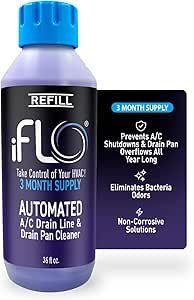
If your drains run normally and you simply want to keep them that way, a reactive opener is the wrong purchase and a slow release maintenance product such as the iFlo three month cartridge is the right category.
The method WHDEOW publishes, and the gap inside it
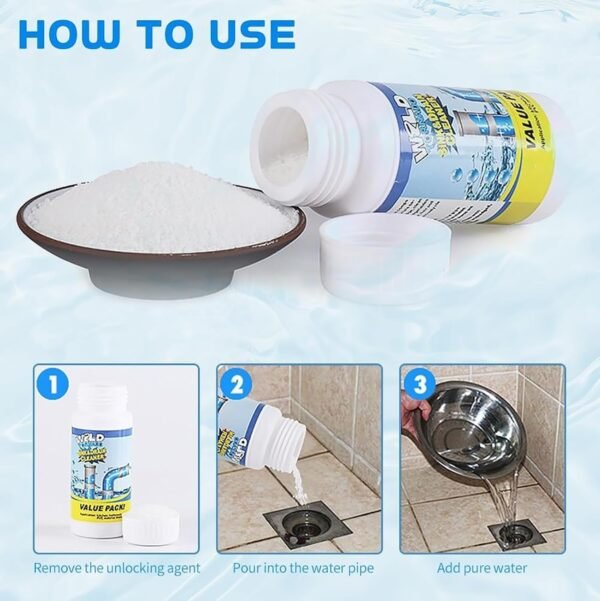
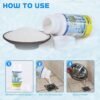
The directions are worth quoting closely because they are more detailed than most in this category. Pour an appropriate amount of the agent into the bottle cap. Pour it into the drain, followed by 1000 milliliters of hot water. Avoid contact with your skin during this process. Let it sit for 20 minutes, then rinse with hot water. The listing adds that for mild to severe blockages the effect will be seen within 24 to 48 hours, and that more severe blockages may need multiple bottles.
Two problems sit inside that. The first is the dose: an appropriate amount is not a quantity, and the cap is offered as a measure without saying how many capfuls a drain takes. The second is the timing, which contradicts itself. A 20 minute dwell followed by a hot water rinse describes one thing. An effect appearing 24 to 48 hours later describes another. Both statements are on the same page and they cannot both describe the same process. The printed bottle is the only place to resolve either, and both need resolving before you pour anything.
No active ingredient is published at all
There is no ingredient, no chemical family, no concentration and no pH anywhere on this listing. What the listing does say is that you pour the powder in, add water, and let the foam activate. A powder that foams and generates its effect on contact with water is doing a chemical reaction in your pipe, and reactions of that kind commonly produce heat and gas as well as the intended result. That is why the instruction to add a full liter of hot water matters, and why the manufacturer’s own warning about skin contact is on the page.
Until you have read the label, treat this as a hazardous reactive chemical. That means eye protection, chemical resistant gloves, a ventilated room, and standing back rather than leaning over the drain while the water goes in. Do not look into the drain during activation. Reactive openers meeting standing water can spit back out.
Pipes, fixtures and the one use to be careful with
WHDEOW states the product works on glass, iron, copper, stainless steel, plastic and PVC pipes. Aluminum is conspicuously absent from that list, and aluminum is the metal most often damaged by strongly caustic drain products, so take the omission as meaningful rather than accidental.
The use to think hardest about is the toilet, which the listing names twice. A reactive powder sitting in a toilet bowl behaves differently from one in a sink line: the bowl holds a large standing volume, the trap is porcelain rather than pipe, and heat generated in a confined ceramic fixture is a genuine risk to the glaze and in extreme cases to the bowl itself. A blocked toilet is also more often a solid obstruction than a residue buildup, which is a plunger or an auger job rather than a chemical one. If the toilet is the problem, deal with it mechanically first.
Keep the powder off every visible fixture surface, off chrome and enamel, and off skin. Wipe splashes away immediately with plenty of water. If the drain feeds a garbage disposal, a dishwasher or a washing machine standpipe, check those manuals before pouring anything reactive into a line that connects back to a machine. And if your house is on a septic system, be aware that reactive openers can disturb the bacterial culture the system depends on, which is why a bacterial product is the usual choice there. The septic treatments category covers that alternative.
Handling, storage and the rule that is not negotiable
Never combine it with another drain product, a bleach product or an acidic cleaner. This is the most important sentence on this page. Mixing drain chemicals is one of the more common routes to a serious gas exposure in a home, and it can also produce a violent reaction in a confined pipe. If a first product has not worked, flush the line thoroughly with water, ventilate the room, and wait before trying anything else. Do not stack treatments.
The listing’s own suggestion that severe blockages may need multiple bottles should be read as sequential rather than simultaneous, and even then, repeated chemical treatment of a line that will not clear usually means the problem is not a residue buildup. At that point a snake or a plumber is the answer.
Store the bottles sealed, dry, upright and out of reach of children and pets, and keep them away from every other cleaning chemical in the cupboard. Do not decant the powder into another container. A reactive powder that has absorbed moisture in storage is unpredictable, and small unlabeled bottles are exactly the thing that gets picked up by the wrong person.
Cost, quantity and the alternatives
Small single use bottles are bought for convenience rather than economy: you use one, and there is nothing left over to store. The recorded package weight of 4.76 ounces is consistent with a single 110 gram bottle plus packaging rather than the three the title advertises, so confirm the count on the product page before ordering. The listing is also very new, first available in June 2025, and it carries no star rating on this record, only a rank of 312th in Chemical Drain Openers.
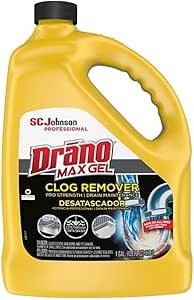
Better documented alternatives are worth pricing against. A gel such as the Drano Max Gel clog remover publishes its pour volume, and a foaming product such as the Unloshe drain foam cleaner is designed to hold contact with the upper pipe wall. Another granular option, the Thrift Marketing IS-100, shares the same problem of publishing no ingredients. For a gentler routine treatment, the Rejuvenate lavender drain opener sits at the other end of the range. Compare across the drain openers category, and weight your choice toward products that publish an ingredient list.
Who should buy it, and who should not
Buy it if you want compact single use doses for an occasional slow sink, you are comfortable working from a printed chemical label, and you will use eye and skin protection. Skip it if you need to know what is in a product before pouring it into your plumbing, if the blockage is in a toilet, if your home is on a septic system with no guidance either way, or if you cannot resolve the dose and the timing from the label. The missing ingredient list, the vague dose and the contradiction between a 20 minute dwell and a 24 to 48 hour result are the three things this listing needs to fix.